Omnichannel AI Sales Chatbot: Drive Conversions & Sales Advisory
1. What Is an Omnichannel AI Sales Chatbot?
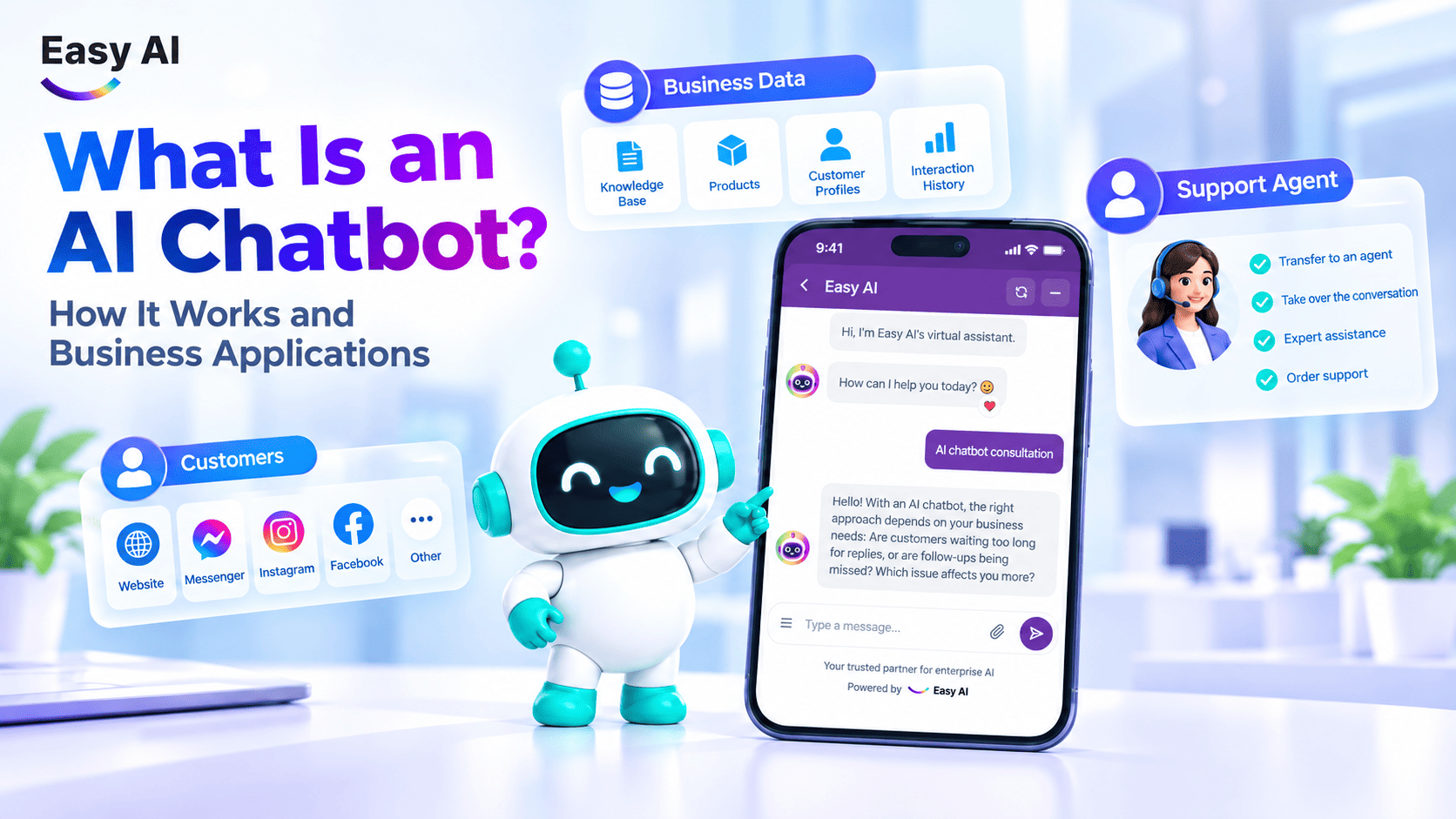
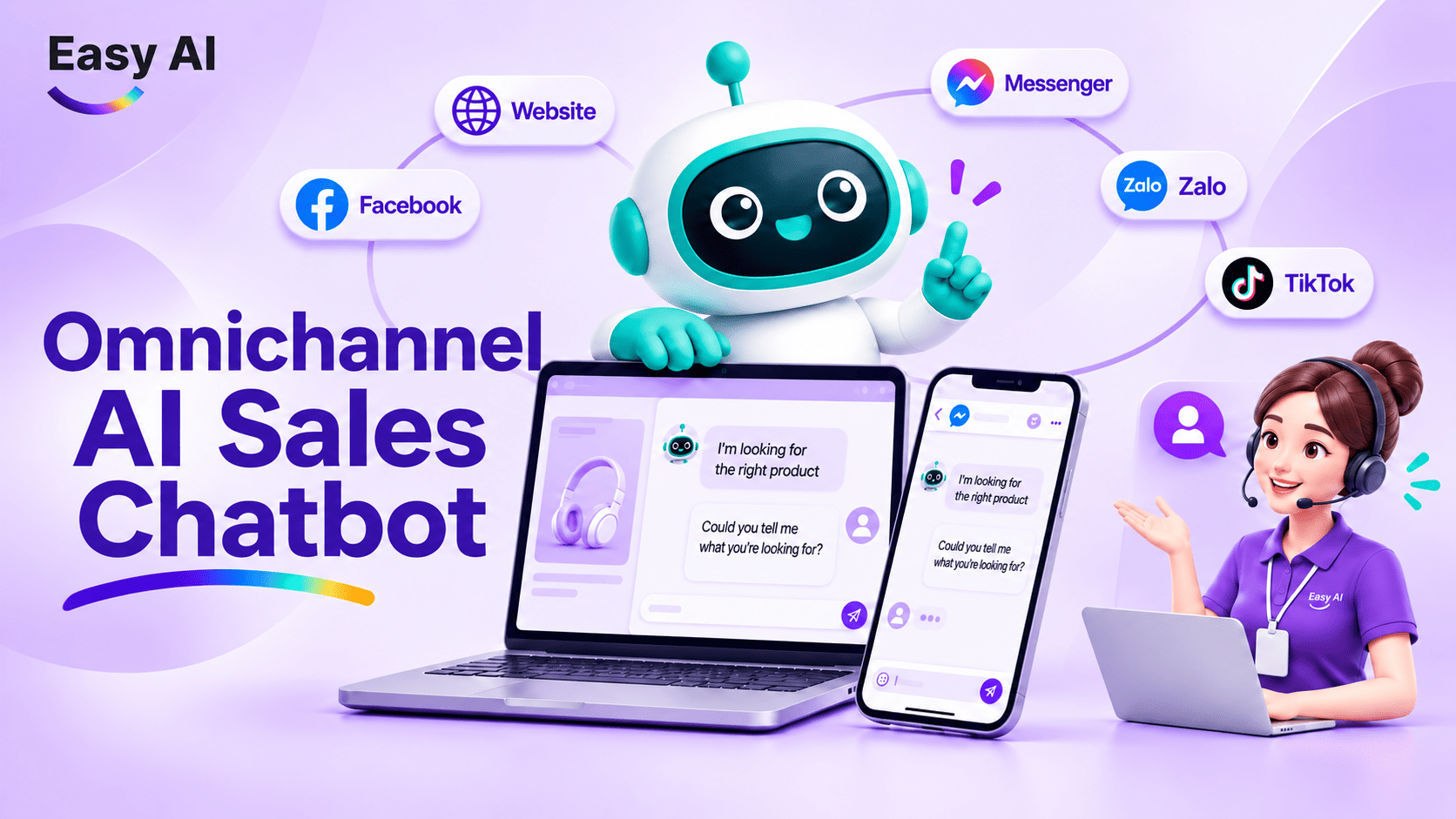
An omnichannel AI sales chatbot uses artificial intelligence (AI) to receive, understand, and respond to customer requests across multiple channels integrated by a business. Depending on the system, the chatbot can identify intent, context, and natural-language phrasing to find relevant information, provide advice, or hand off a conversation to an employee.
When customers send messages through Facebook, Zalo, a website, or other sales channels, conversations often sit in separate places. Employees may respond slowly, ask customers to repeat information they have already provided, or miss opportunities to advise them during peak hours.
An omnichannel AI sales chatbot helps businesses receive and handle interactions across connected channels, retrieve relevant information, and help employees track the customer journey. Its value does not come from simply being present on multiple channels, but from coordinating information and processes across connected channels. This article explains how it works, what to consider when choosing one, and how businesses use it in practice.
Some solutions may use natural language processing (NLP), Machine Learning, or large language models (LLMs). However, not every chatbot uses all of these technologies. Results also depend on data quality, configuration, and the scope of tasks the chatbot is allowed to handle.
AI chatbot vs. AI sales chatbot: AI chatbots can support a range of activities, such as providing information, offering technical support, and assisting customers. An AI sales chatbot has a more specific focus on the shopping journey: understanding needs, recommending products, answering questions, recording lead information, and supporting conversion. Depending on its data and integrations, a chatbot may participate in one or more steps of the sales process.
2. How Does an Omnichannel AI Sales Chatbot Work?
A typical implementation flow has five steps. The scope of each step depends on the connected channels, available data, and the business’s operating rules.
Step 1: Receive conversations through integrated channels: Customers send questions through channels the business has connected to the system.
Step 2: Analyze intent and context: AI identifies whether a customer is asking about price, comparing products, looking for a policy, or seeking other support.
Step 3: Retrieve information from business data sources: The chatbot searches configured knowledge sources, such as product catalogs, sales policies, or instructional content.
Step 4: Provide advice and recommend a next step: AI responds, asks follow-up questions to clarify needs, collects information, or suggests contacting an employee.
Step 5: Hand off the conversation to an employee when needed: An employee takes over requests requiring in-depth handling, exception management, or decisions beyond the AI’s scope.
Example: A customer asks about a phone’s price and availability
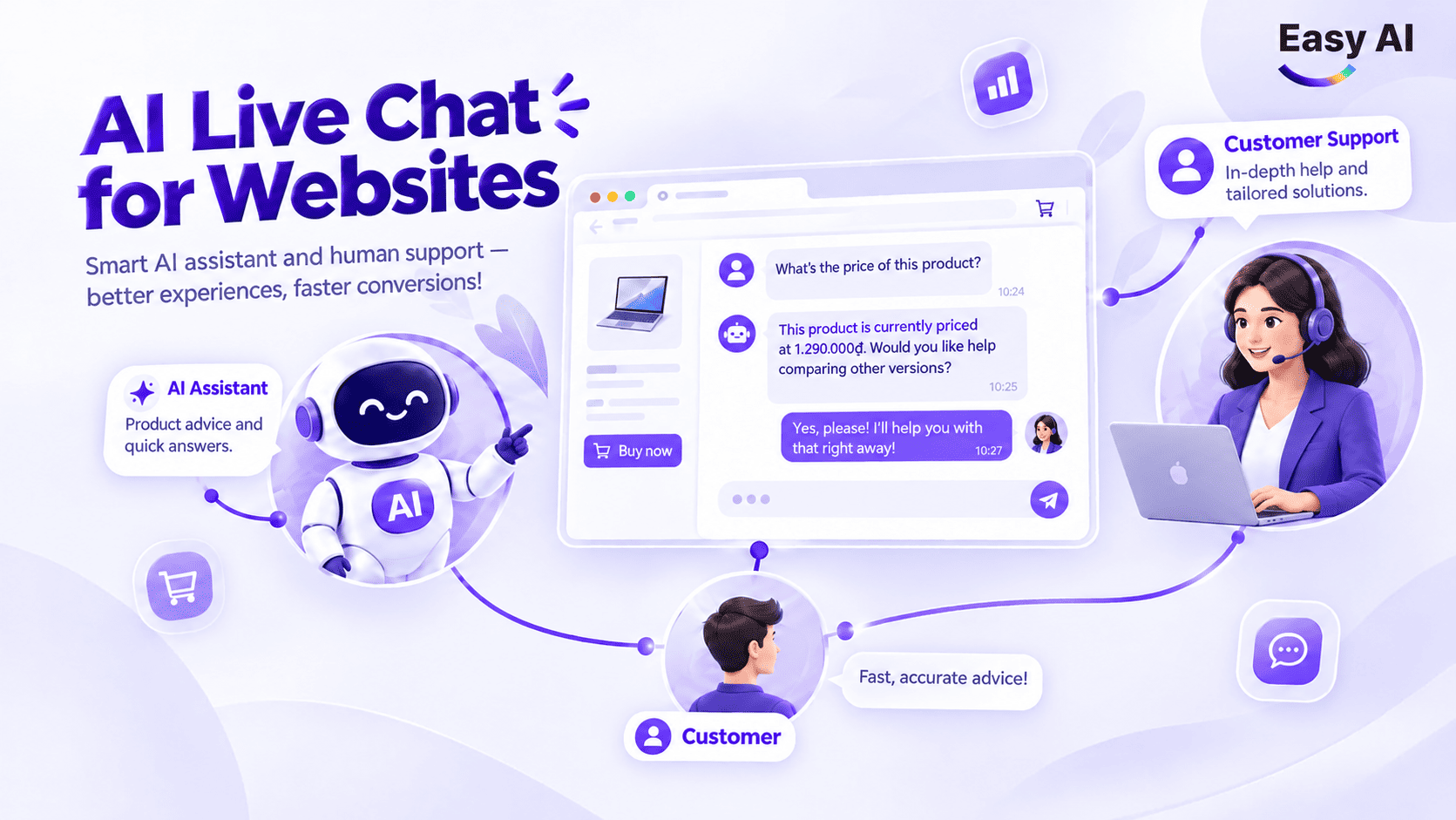
A customer messages: “Is this phone available at a store near me, and what’s the current price?” The chatbot can look up the price and inventory if the business has integrated the relevant data source, the data is up to date, and access permissions are configured.
If there is no inventory integration, the chatbot should not claim that the product is in stock. The system can explain the limits of the information available, ask for the customer’s location, or hand off the question to an employee for confirmation.
This coordination model is often called Human-in-the-loop: AI handles tasks that fit the configured data and rules; people step in when specialized expertise, exception handling, or authorized action is required.
3. Key Features of an Omnichannel AI Sales Chatbot
When evaluating a sales chatbot, businesses should look at its ability to bring conversations into real processes, rather than focusing only on its ability to generate answers.
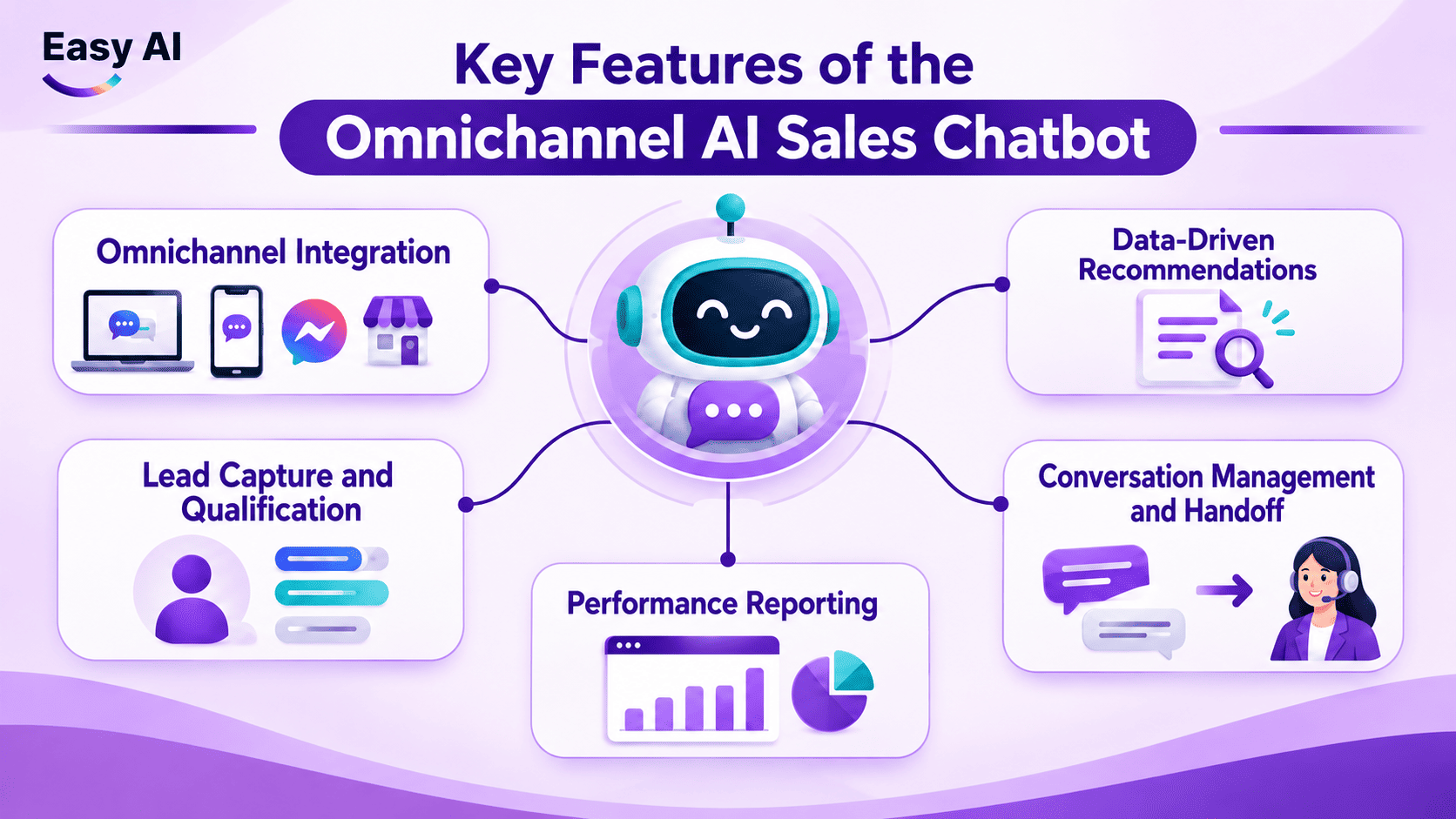
Channel integration: Receive conversations from the channels the business uses, depending on platform capabilities and integration configuration.
Data-based recommendations: Retrieve product, price, or policy information from sources provided by the business. Looking up prices, inventory, or order data requires an appropriate integration.
Lead collection and classification: Record needs, contact details, or products a customer is interested in according to established processes. A lead recorded by a chatbot is not automatically a qualified lead; the business must define its qualification criteria.
Conversation management and handoff: Keep conversation context, assign an owner, and support handoff if the system includes these features.
Performance reporting: Track metrics such as first response time (FRT), first contact resolution rate (FCR), automation rate, handoff rate, and conversion rate. Each metric needs a clear definition and measurement scope.
4. Benefits of an Omnichannel AI Sales Chatbot for Businesses
A chatbot can respond to requests within the scope of its configured data and rules, helping customers get initial information without waiting for an employee to be available. Actual service levels also depend on conversation volume, data quality, and how the system is operated.
When conversations are received and assigned according to a process, businesses have a better basis for preventing messages from being missed. Sales and customer service teams can also spend less time handling repetitive questions and dedicate more resources to in-depth consultations, leads, or situations that need flexible handling.
Well-managed data helps keep advice more consistent across touchpoints. A chatbot can also help identify customer needs and shorten some steps in the Customer Journey, but revenue and conversion still depend on the product, price, customer experience, lead source, and sales process.
5. Comparing Omnichannel AI Sales Chatbots with Other Chatbot Solutions
| Criteria | Rule-based chatbot | Single-channel AI chatbot | Omnichannel AI sales chatbot |
|---|---|---|---|
| Technology | Preconfigured question-and-answer flows | AI processes language on a single channel | AI processes conversations across multiple integrated channels |
| Response approach | Follows options or branches in a script | Analyzes questions and responds based on configured data | Responds based on data, context, and connected processes |
| Questions outside the script | Usually asks the customer to choose again or reaches a limit | Can be more flexible; scope depends on data and configuration | Can identify the request, answer, ask follow-up questions, or hand it off |
| Channel coverage | One or more scripted placements, which may operate separately | One channel | Multiple channels if the platform supports integration |
| Context handling | Limited to configured branches | May maintain context within a session or channel | May continue context across channels if data and systems are synchronized |
| Sales applications | Answers FAQs and provides scripted guidance | Initial recommendations on one channel | Advises, captures needs, helps classify leads, and coordinates handoff |
| Best suited for | Simple needs that change infrequently | Businesses focused on a single channel | Businesses with high interaction volumes and a need to manage multiple touchpoints |
There is no single model that works best for every business. Choose based on the channels customers use, interaction volume, question complexity, available data, and current Sales–Customer Service processes.
6. Which Businesses Should Deploy an Omnichannel AI Sales Chatbot?
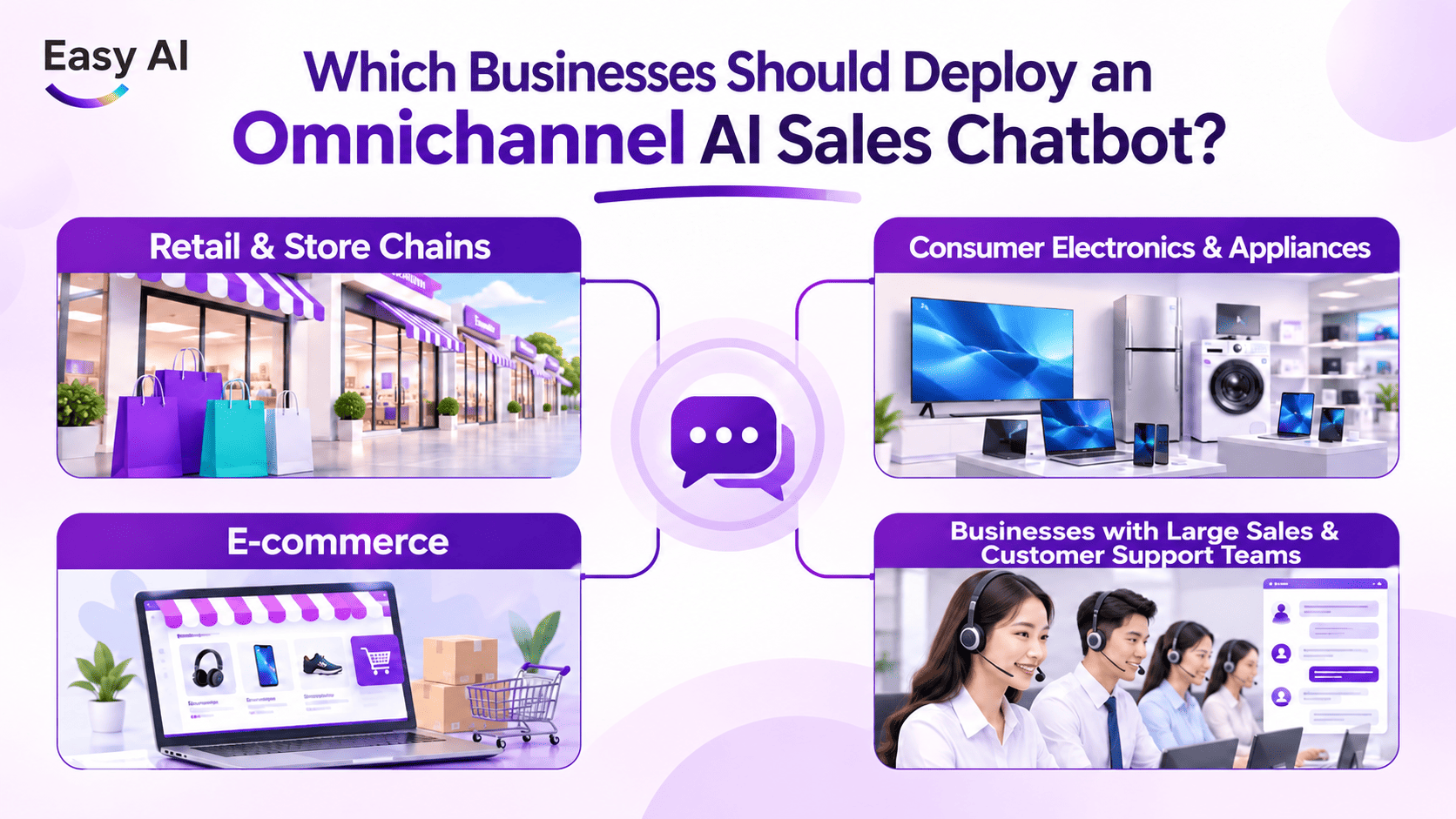
Retail and store chains: Customers often ask about products, prices, promotions, store locations, and policies. For chains with multiple stores, information needs to be managed so employees and chatbots use it consistently; checking stock by store requires an integrated inventory source.
Consumer electronics and appliances: Customers may need to compare specifications, models, warranties, or accessories. A chatbot can provide initial information and clarify needs; situations requiring in-depth technical advice can be handed off to an employee.
E-commerce: Common questions include product information, payment, shipping, and orders. A chatbot can look up order status or inventory only when the relevant data is connected and appropriate permissions are in place.
Businesses with large Sales and Customer Service teams: When multiple employees handle conversations, a centralized management system can support assignment and process tracking. Before implementation, businesses should assess chat volume, number of channels, question complexity, data quality, and how Sales and Customer Service hand conversations over to one another.
7. Criteria for Choosing the Right Omnichannel AI Sales Chatbot
Use the checklist below to evaluate a solution against your operational needs:
Channels and integration types: Which channels does the solution support? How are they connected? What data is synchronized?
Context and knowledge sources: Which sources can the chatbot retrieve information from? How does the system respond when information is missing?
CRM and data: Is data read, written, or synchronized in both directions? How are customer profile management rules configured?
Handoff and assignment: Does the employee receiving a conversation retain its context? How are handoff rules and ownership defined?
Security and permissions: Businesses should consider access rights, data management, and internal security requirements.
Scalability and total cost: Include platform, integration, configuration, operations, and support costs.
Operational KPIs: Define how to measure FRT, Resolution Rate/FCR, Automation Rate, Handoff Rate, Lead Conversion Rate, and CSAT.
Before comparing providers, agree on how each KPI will be calculated, the measurement period, the channel group, and which conversation types are included. If definitions differ, the same metric may represent different scopes.
8. Case Studies: Businesses Using AI Chatbots to Drive Revenue and Improve Omnichannel Operations with Easy AI
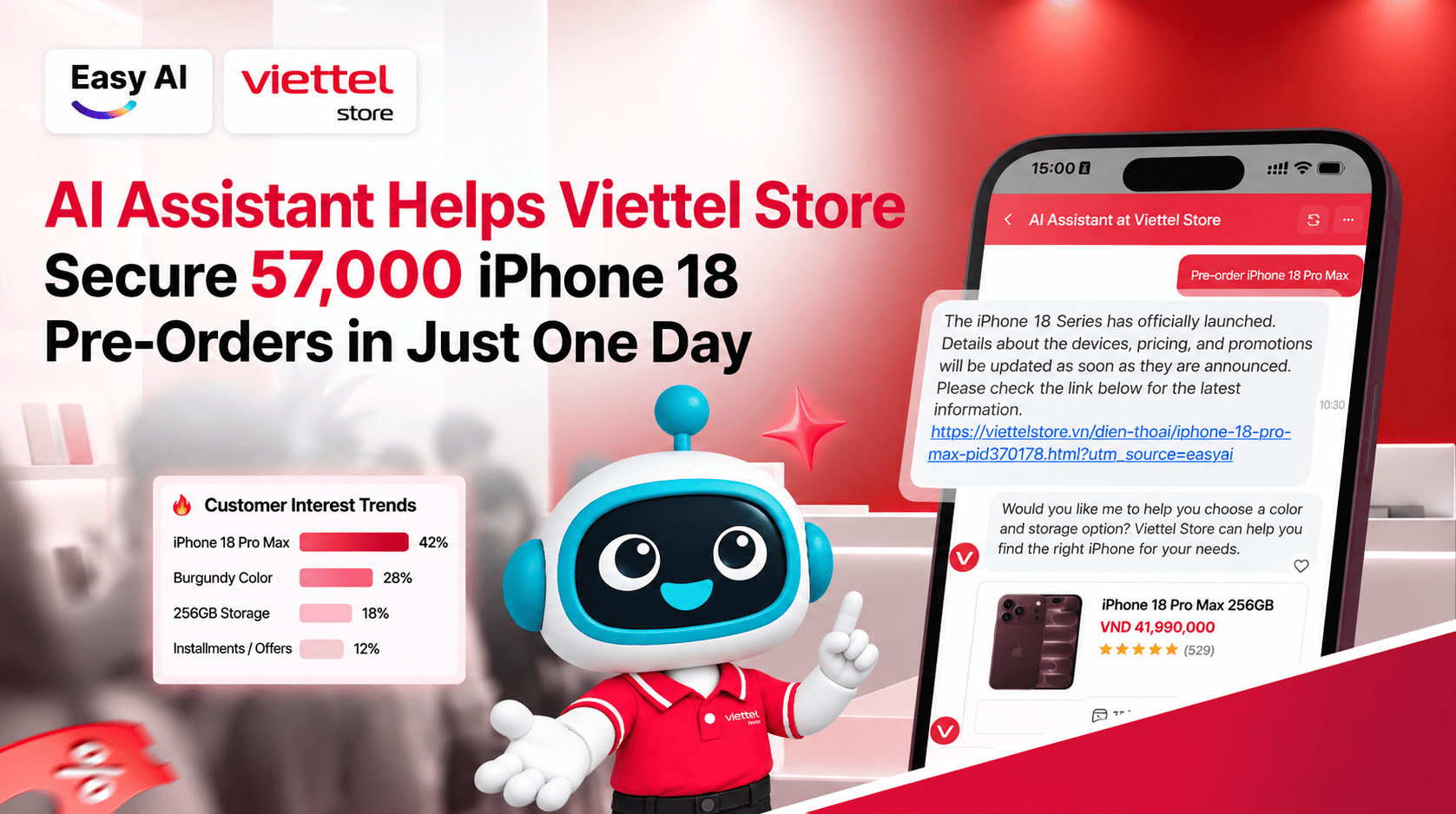
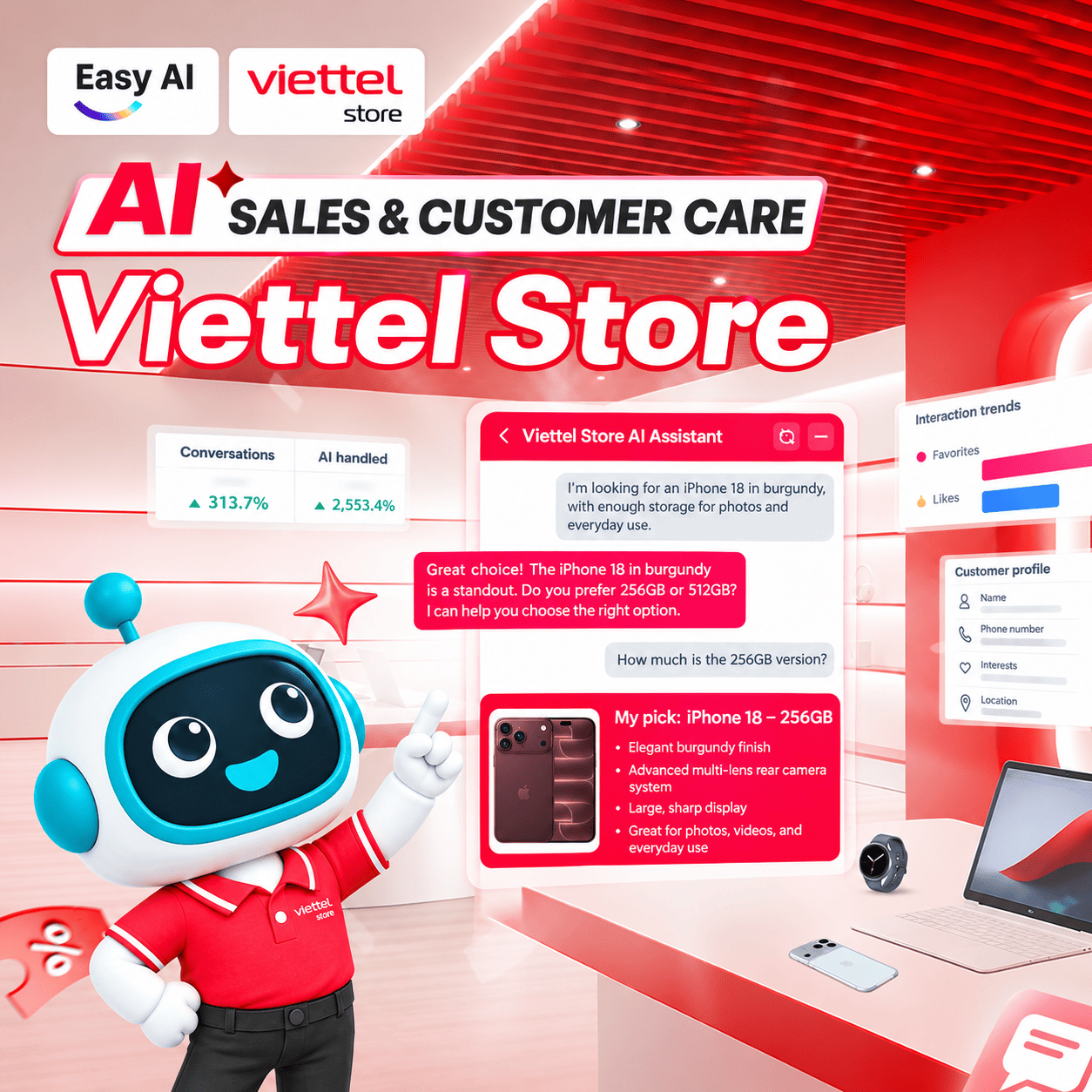
Viettel Store: A large-scale AI sales assistant for peak season
Challenge: During the iPhone 18 launch season, Viettel Store received a high volume of inquiries across multiple channels, particularly its website, putting significant pressure on its Sales and Customer Service teams. The risk of inaccurate advice caused by frequent changes to product information and prices, along with missed leads outside working hours, directly threatened sales opportunities.
Solution: Easy AI deployed an AI sales advisory system available 24/7 on an integrated platform, built on a standardized knowledge base containing product information, prices, promotions, and policies. The system answered questions simultaneously across multiple channels and supported an Upsell & Cross-sell strategy by recommending suitable versions and related accessories. It also smoothly handed off in-depth consultations to Livechat.
Results: Successfully handled more than 15,000 requests in a short period, helping Viettel Store maintain continuous advisory service, significantly reduce pressure on its staff, and contribute to successfully meeting demand for 57,000 pre-orders in within less than one day.
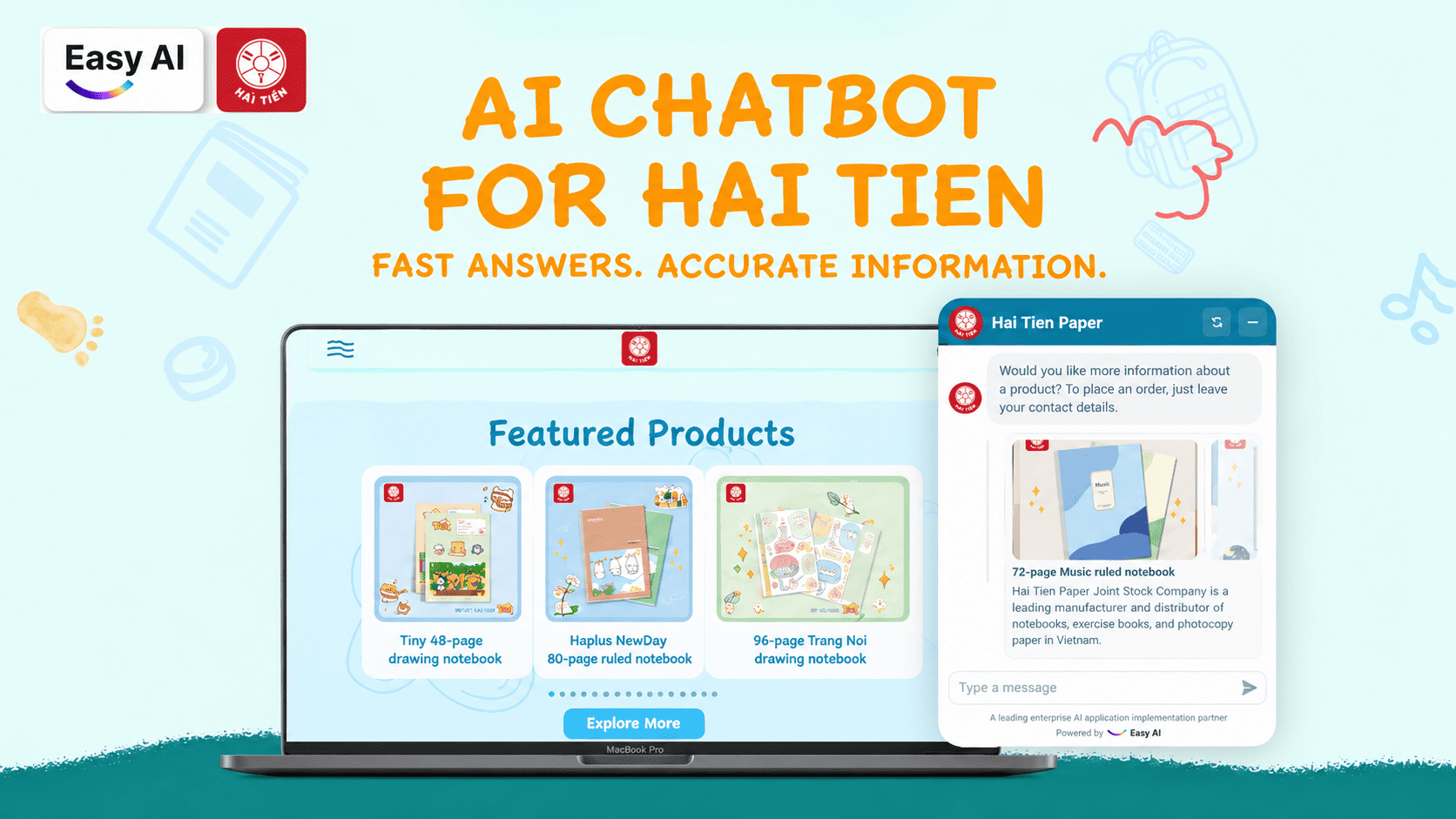
Hai Tien Paper: Standardizing advice and coordinating the omnichannel customer journey
Challenge: Hai Tien Paper, a long-established paper and stationery manufacturer, expanded its reach across digital touchpoints such as its website, contact forms, Zalo, and Facebook. Its main challenge was to provide consistent, accurate advice, capture the needs of B2B customers—including distributors, schools, and contract manufacturing partners—and closely track their conversion journeys.
Solution: The company integrated an AI-native platform combining an omnichannel AI chatbot with a centralized data management platform (CDP). The chatbot received conversations immediately across all channels, automatically classified customer profiles—retail customers, wholesale customers, and contract manufacturing partners—and helped look up product information and route requests to the right department without losing context.
Results: AI handled 100% of conversations, enabling immediate responses to customers and maintaining a satisfaction and neutral feedback rate of up to 98%. The system brought all omnichannel data together in one place and helped the team use its time more effectively, focusing on high-value partnership opportunities.
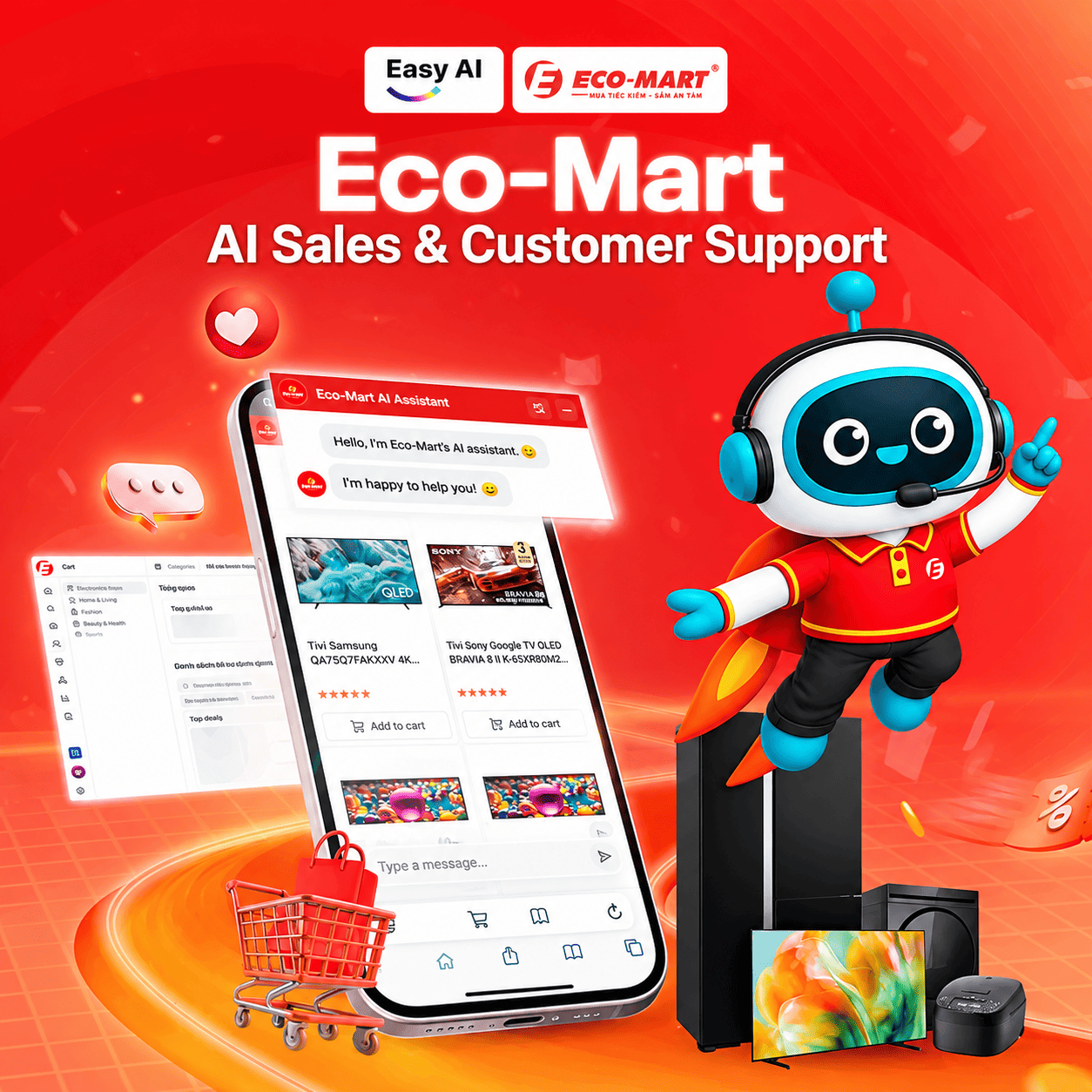
Eco-mart Electronics: Unifying omnichannel data and achieving a 35.14% AI conversion rate
Challenge: Eco-mart Electronics operates a chain of large electronics supermarkets with multichannel sales across its website, Messenger, personal Zalo accounts, and Zalo OA. It faced a major bottleneck when message volume surged during promotional seasons. Data was scattered across multiple channels and its ERP system, so employees often had to ask customers to repeat information, disrupting the shopping experience.
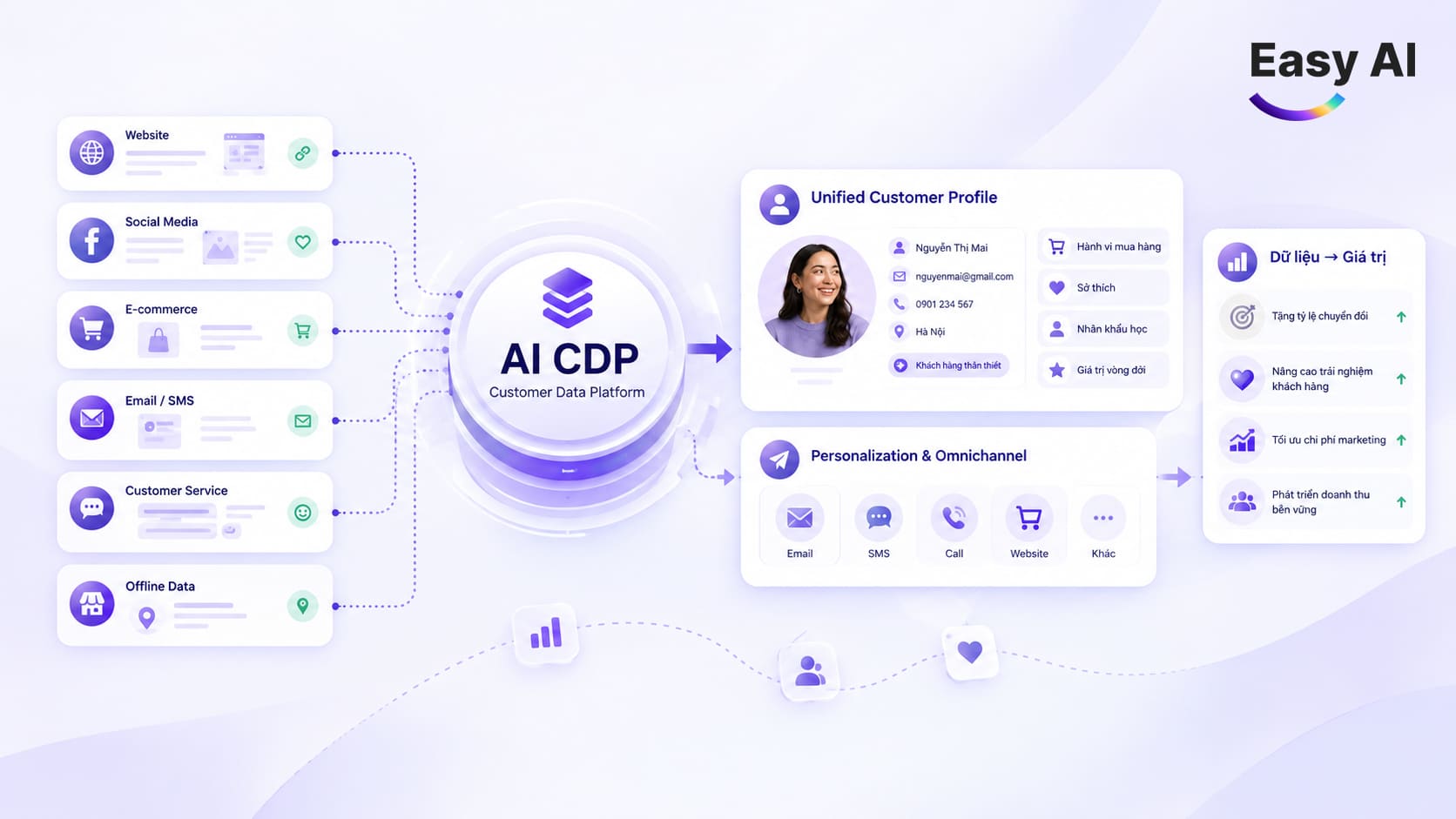
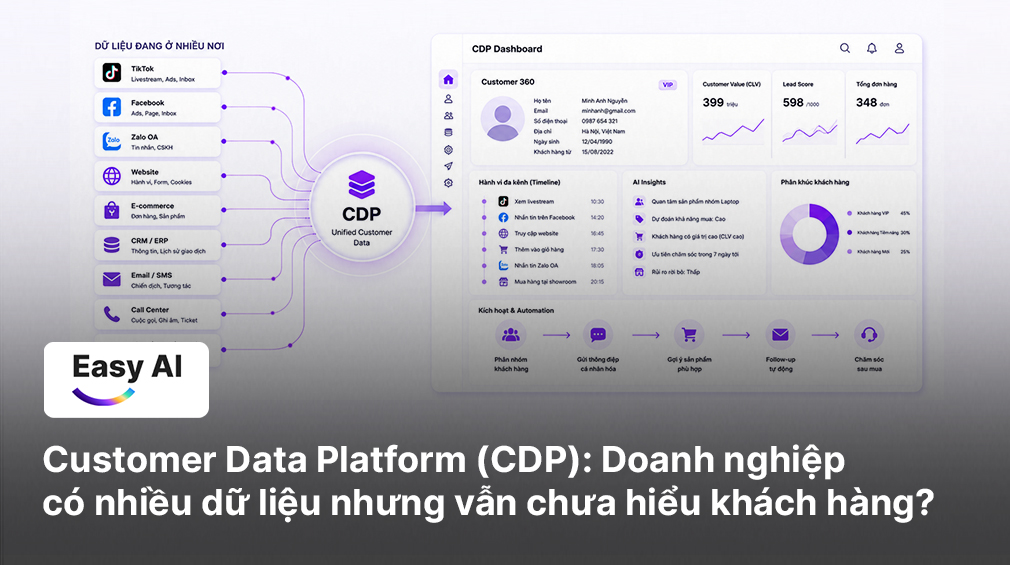
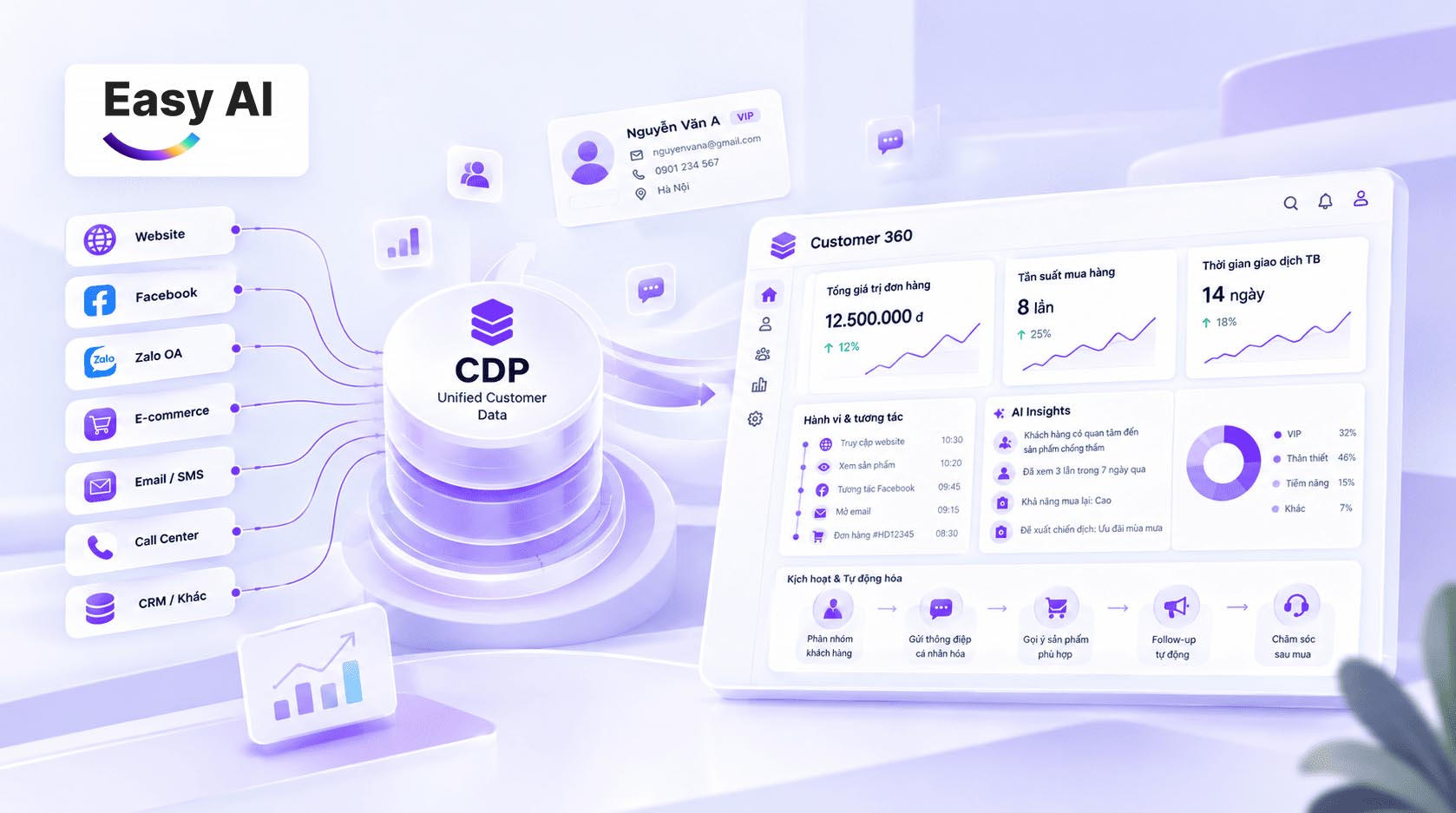
Solution: The company deployed an AI Sales & Customer Service platform that brought all channels—Zalo, Messenger, and website—into a single unified inbox. The AI chatbot connected directly to the MyERP system to access real-time inventory and prices. It also used CDP to recognize conversation history, personalize recommendations, and automate customer care scenarios before, during, and after purchase.
Results: AI automatically handled 50% of all conversations, reduced average response time to 5 seconds, maintained a satisfaction rate of 92%, and delivered a 35.14% order conversion rate from conversations directly advised by AI.
9. Easy AI: An AI Chatbot Solution for Omnichannel Sales and Customer Service
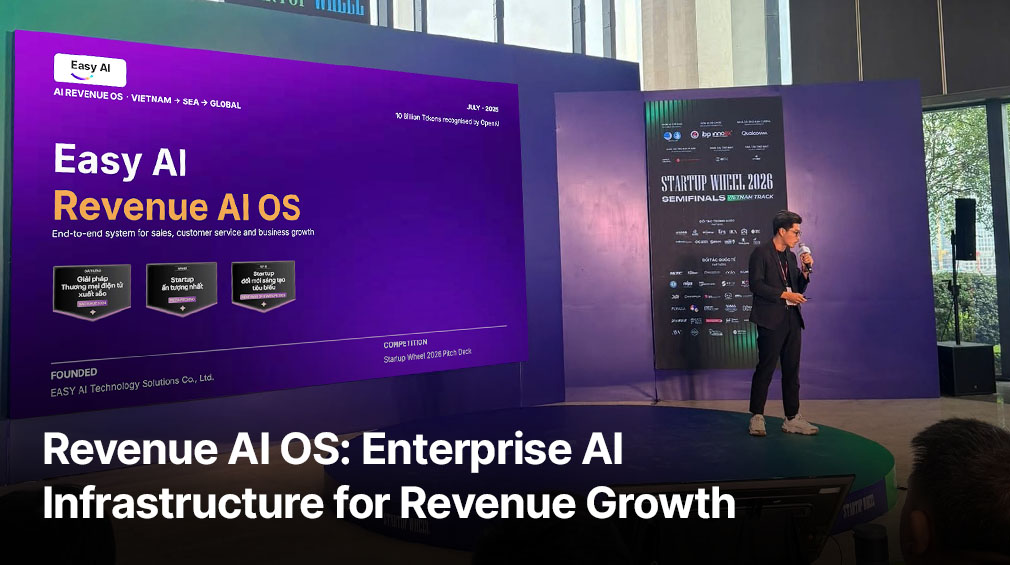
Easy AI is a Revenue AI OS—an AI operating system for revenue growth. It goes beyond being a standard automated response tool: Easy AI connects AI-native technology, customer data, and operational workflows, bringing every conversational touchpoint directly into the revenue-generating processes of Sales, Marketing, and Customer Service.
To address real-world omnichannel sales needs, Easy AI’s AI chatbot solution is built on the following core technologies and operational capabilities:
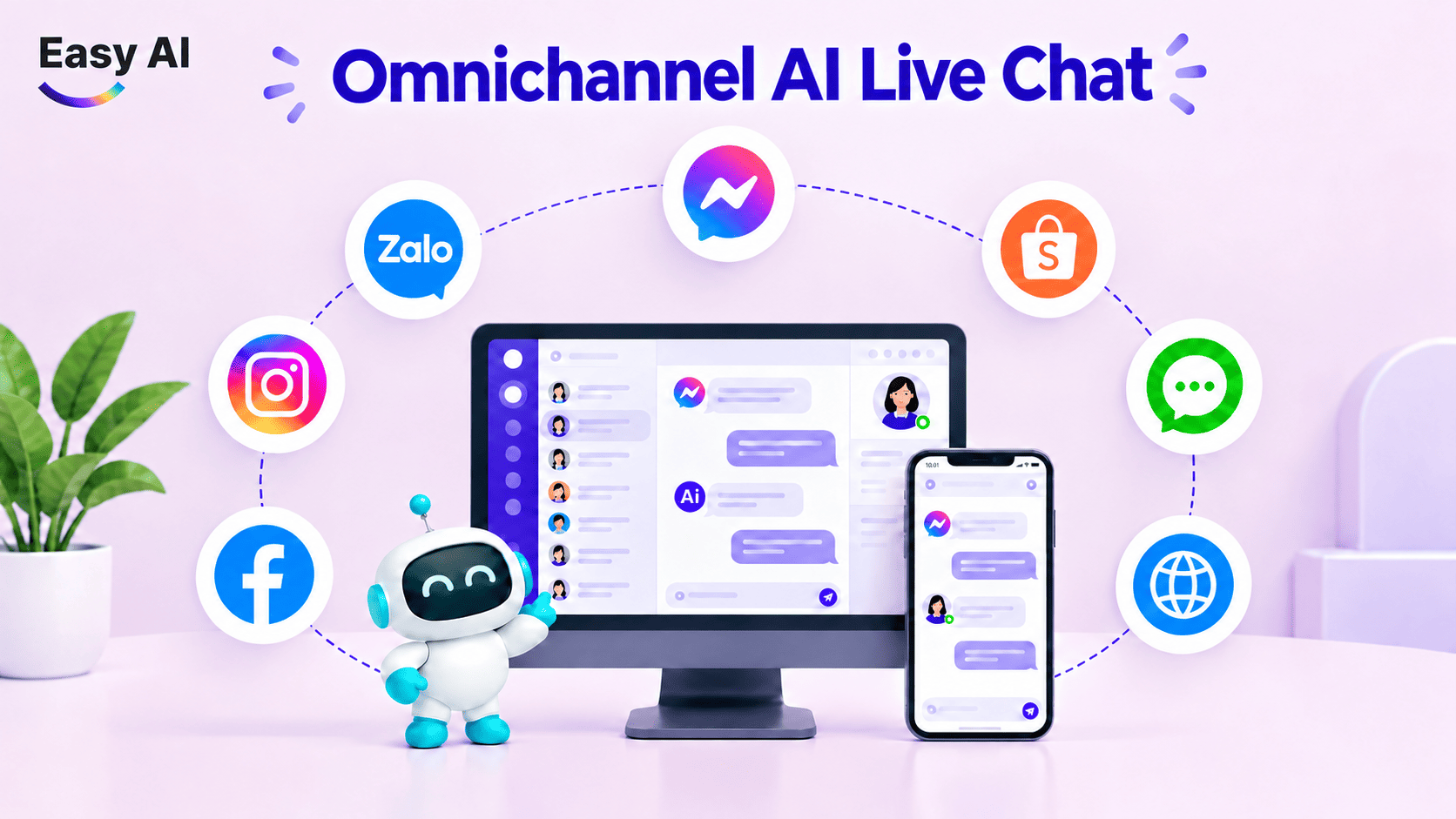
Unified omnichannel inbox (Omnichannel Livechat): Brings conversations from websites, Zalo, Facebook, and TikTok into one centralized interface; automatically recognizes and synchronizes customer context when they switch channels.
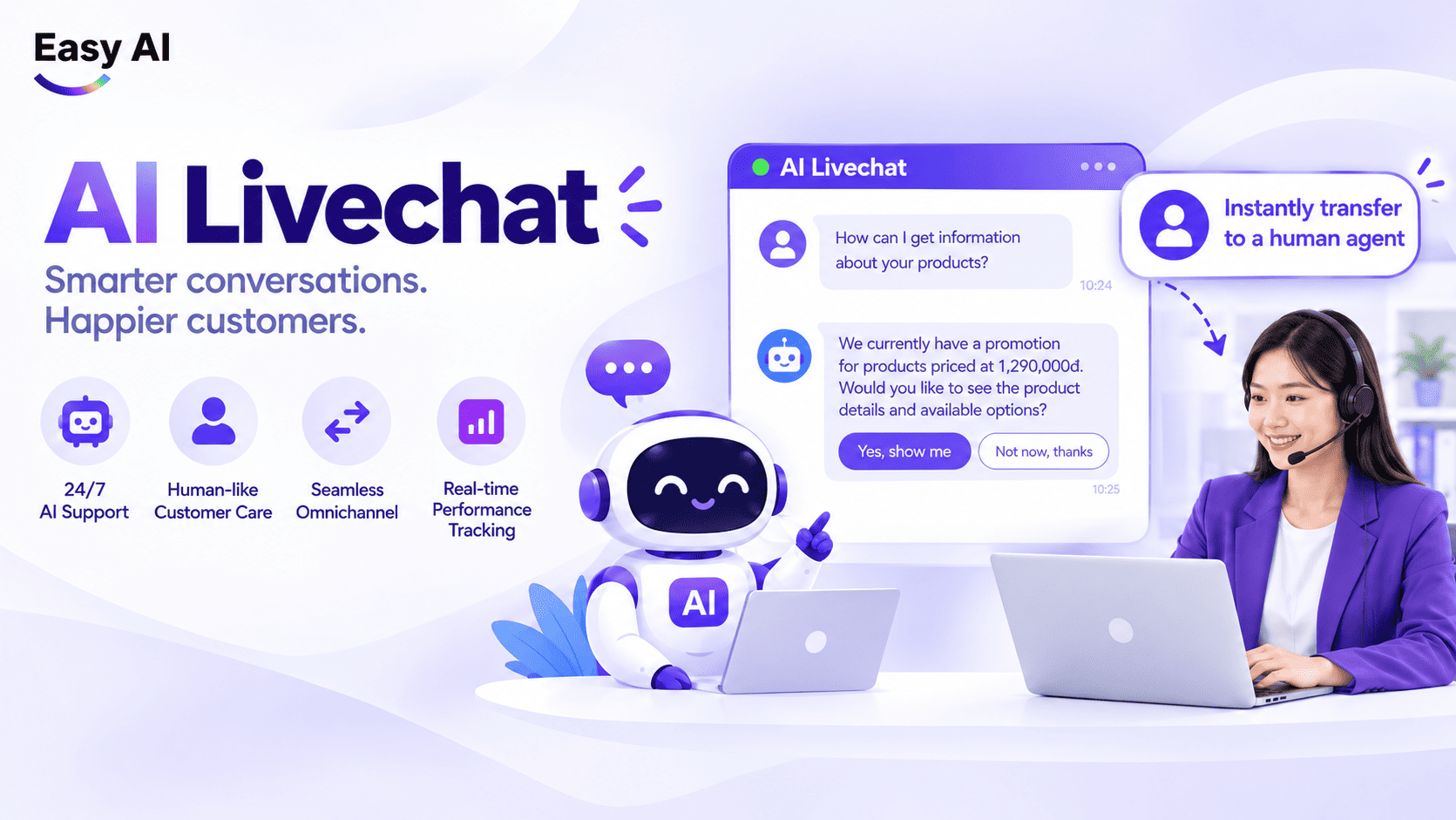
Smooth Human-in-the-loop process: AI answers basic requests 24/7 and automatically creates a Ticket to hand off difficult cases or high-value sales opportunities to employees through Livechat.
Standardized knowledge base (RAG): AI learns from price lists, policy files, and product catalogs, and uses configured safety guardrails to prevent fabricated information.
Two-way data synchronization (CDP & ERP/CRM): Automatically classifies leads, identifies customer profiles—retail customers and B2B—and connects through APIs to look up real-time inventory and orders.
Automation and reporting (Marketing Automation & Analytics): Triggers automated customer care and nurturing scenarios based on behavior, and measures FRT, CSAT, automation rates, and conversion rates in detail.
Practical division of responsibilities: AI handles speed and high volumes; people focus on specialized expertise and closing transactions.
10. Conclusion
An omnichannel AI sales chatbot can help businesses receive questions, provide data-based advice, capture needs, and manage interactions across connected channels. Its practical value depends on data quality, integration, and the process for coordinating AI with Sales and Customer Service. Before choosing a solution, businesses should define the channels they need to manage, the types of questions they receive, their data sources, and the KPIs they need to measure.
Easy AI connects AI, customer data, and workflows to help businesses build processes that fit their existing operations. We are ready to work with businesses to build a tailored AI chatbot solution—connecting customer data (CDP), ERP/CRM systems, and omnichannel workflows to deliver measurable business results.
>>> Explore AI solution pricing or register for a one-on-one consultation and a demo of the Easy AI platform to discuss your business needs.
Topics
FAQ
Recommended for you