What Is an AI CDP? How It Works, Benefits, and Real-World Applications
1. Understanding CDPs and the Evolution to AI CDPs
1.1 Customer Data Platform (CDP)
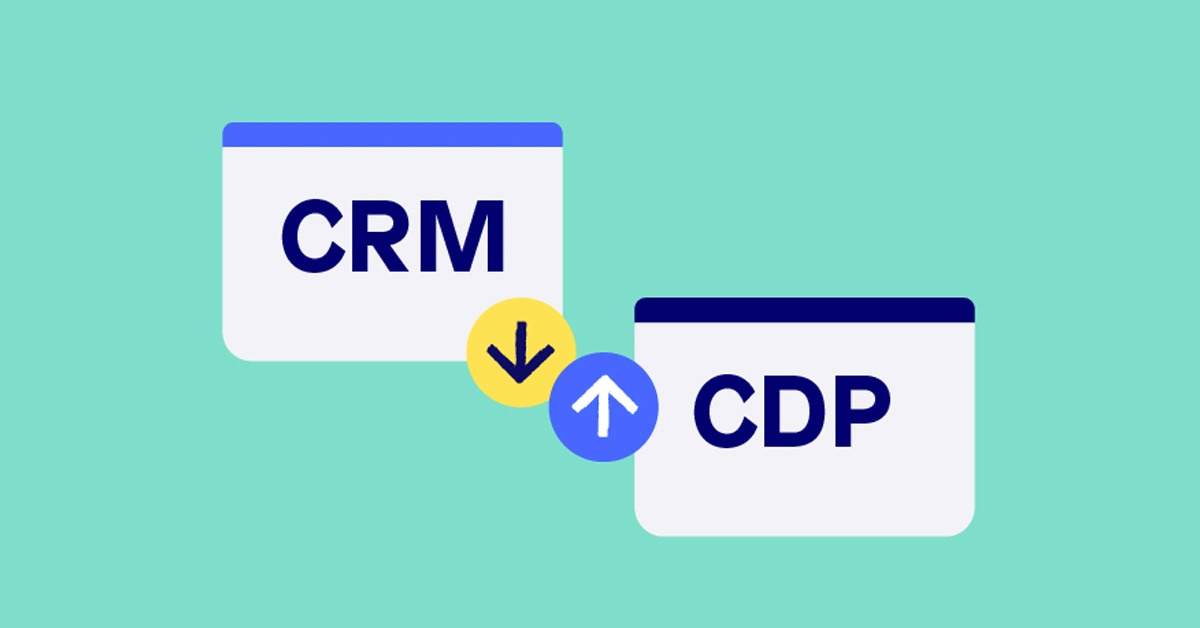
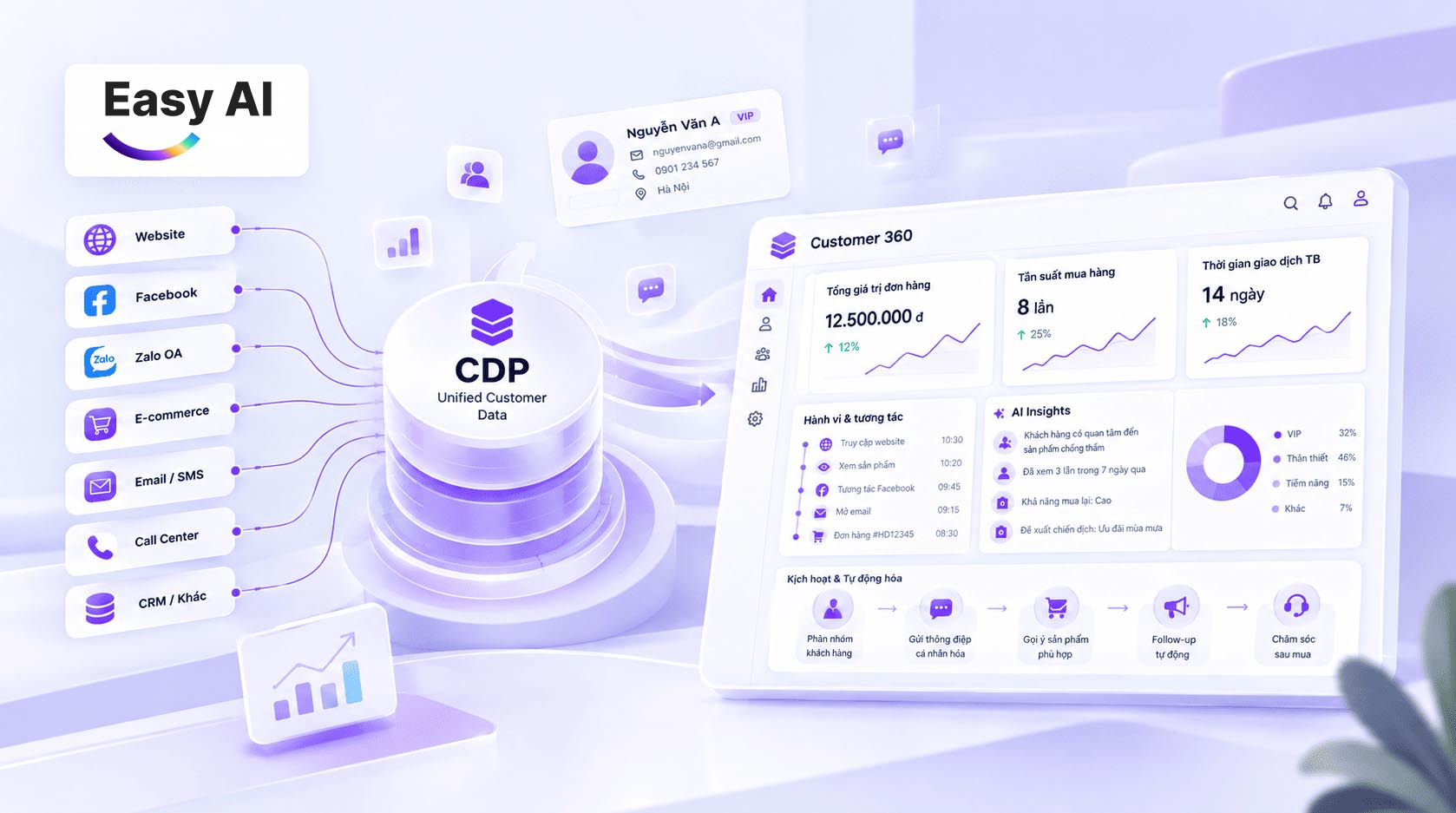
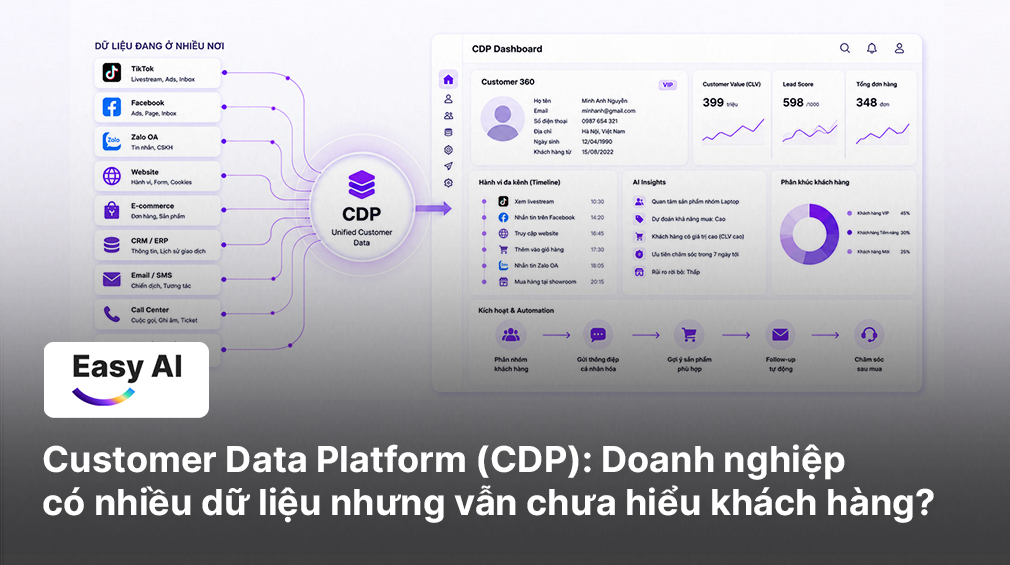
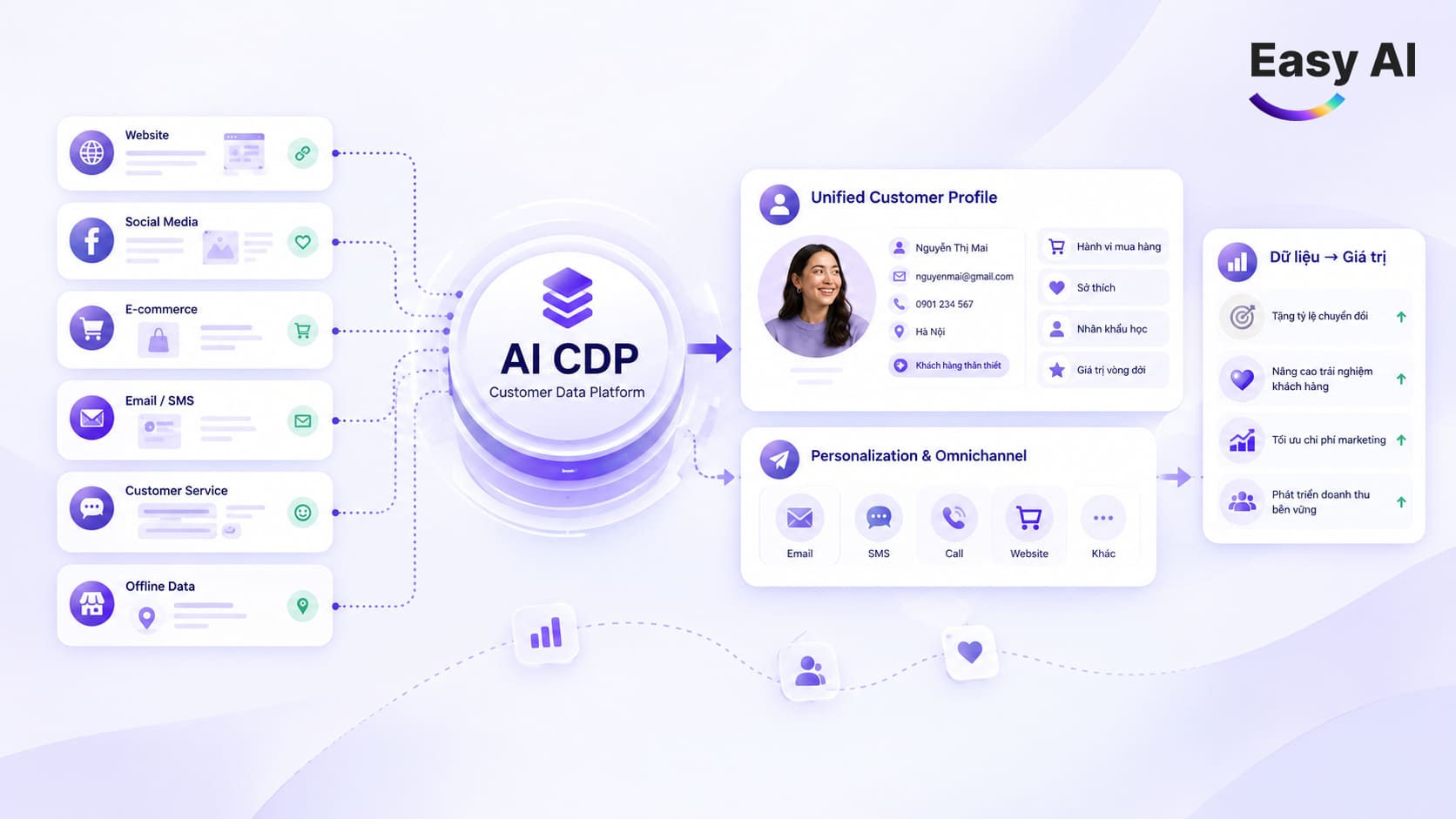
According to the CDP Institute, a CDP collects data from multiple systems, links that data to customers, and makes customer profiles available to systems that need them. The identity resolution capability and actual level of unification depend on the data, rules, and implementation configuration. Put simply, a Customer Data Platform (CDP) helps a business bring customer data from different sources into one unified system. Instead of data being scattered across Facebook, websites, CRM, POS, or chatbots, a CDP connects it into a single Customer 360 profile.
A CDP process typically starts with data from websites, apps, CRM systems, advertising platforms, messaging channels, or in-store systems. The platform needs to process duplicate data, standardize formats, and determine when multiple records may belong to the same person.
1.2 Artificial Intelligence Customer Data Platform (AI CDP)
An AI CDP unifies customer data while using AI to analyze signals, update segments, and support the selection of next actions. Rather than simply storing profiles, it helps businesses put data to work in activities such as personalized interactions, re-engagement, and performance measurement.
AI CDP is commonly used to describe a CDP with additional AI capabilities for analysis, segmentation, prediction, or action recommendations. The term alone does not define a standardized set of features. Businesses need to assess each platform’s data sources, integration capabilities, and operating requirements.
The difference is not that an AI model replaces the data platform. AI still requires suitable data, sufficiently reliable identity resolution, clear business objectives, and people responsible for reviewing how results are used. Static stored data answers the question, “Which group does this customer belong to under the rules we have configured?” AI-assisted dynamic segmentation can help detect behavioral changes and recommend segment updates. Model predictions are probabilities, not certain conclusions about an individual.
2. How Do Traditional CDPs and AI CDPs Differ?
Differences between traditional CDPs and AI CDPs are best understood as a trend in the depth of capabilities, not as a hard boundary between all products. Some CDPs already offer analytics, prediction, or automation features; the specific implementation depends on the product architecture and scope.
| Criteria | Common CDP capabilities | Capabilities an AI CDP may add |
|---|---|---|
| Data unification | Collects, standardizes, and connects data from multiple sources | Helps detect anomalies, duplicate data, or signals that need review |
| Speed | Updates on a schedule or according to the system’s connection mechanism | Can analyze and activate data in streams or near real time if the architecture supports it |
| Segmentation | Creates groups based on defined rules, attributes, and conditions | Supports dynamic segmentation based on behavioral patterns and new signals |
| Prediction | Primarily describes current states and historical data | Estimates the probability of behavior, such as churn or response likelihood |
| Real-time personalization | Depends on the ability to connect with channels and activation systems | Can help select more relevant content or actions when data and channels allow |
| Activation/automation | Sends segments to Marketing tools or CRM | Supports recommending, coordinating, or automating actions based on configured conditions |
AI CDP 360 is commonly used to describe a comprehensive customer view: data from multiple touchpoints is linked to support analysis and consistent interactions. It is not the name of a certified technical standard. Businesses should assess data sources, identity resolution, data freshness, and activation capabilities rather than relying on the label alone.
3. The Role of CDPs in Marketing, Sales, and Customer Service
A CDP helps Marketing teams use customer data to make decisions about audiences, messages, channels, and interaction timing. Its value lies not only in providing a centralized profile, but also in using that profile to improve measurable Marketing processes.
- Reduce waste from inaccurate targeting. When transaction and interaction data are connected, Marketing teams can exclude or adjust groups who have already purchased, are not a fit, or need different content. Performance should be assessed using metrics such as cost per conversion, response rate, and revenue by group, rather than assuming that a new segment will automatically reduce costs.
- Clarify the funnel. Data on visits, consultation requests, transactions, and post-purchase support helps businesses identify where customers are dropping off. With sufficiently reliable identity resolution and event data, teams can analyze conversion rates between stages instead of looking only at total interactions.
- Coordinate remarketing and omnichannel engagement. Segments can be sent to appropriate channels such as email, messaging, or advertising platforms, depending on system integrations and the basis for using the data. A customer who has just completed a transaction should not receive the same message as someone who is only beginning to explore a product.
- Support retention and CLV. Purchase, interaction, and service histories can help teams identify groups that may need re-engagement. CLV (customer lifetime value) is estimated or calculated using the method a business chooses. Actual recorded figures should be distinguished from predicted values.
4. Practical Benefits of AI CDPs in Vietnam
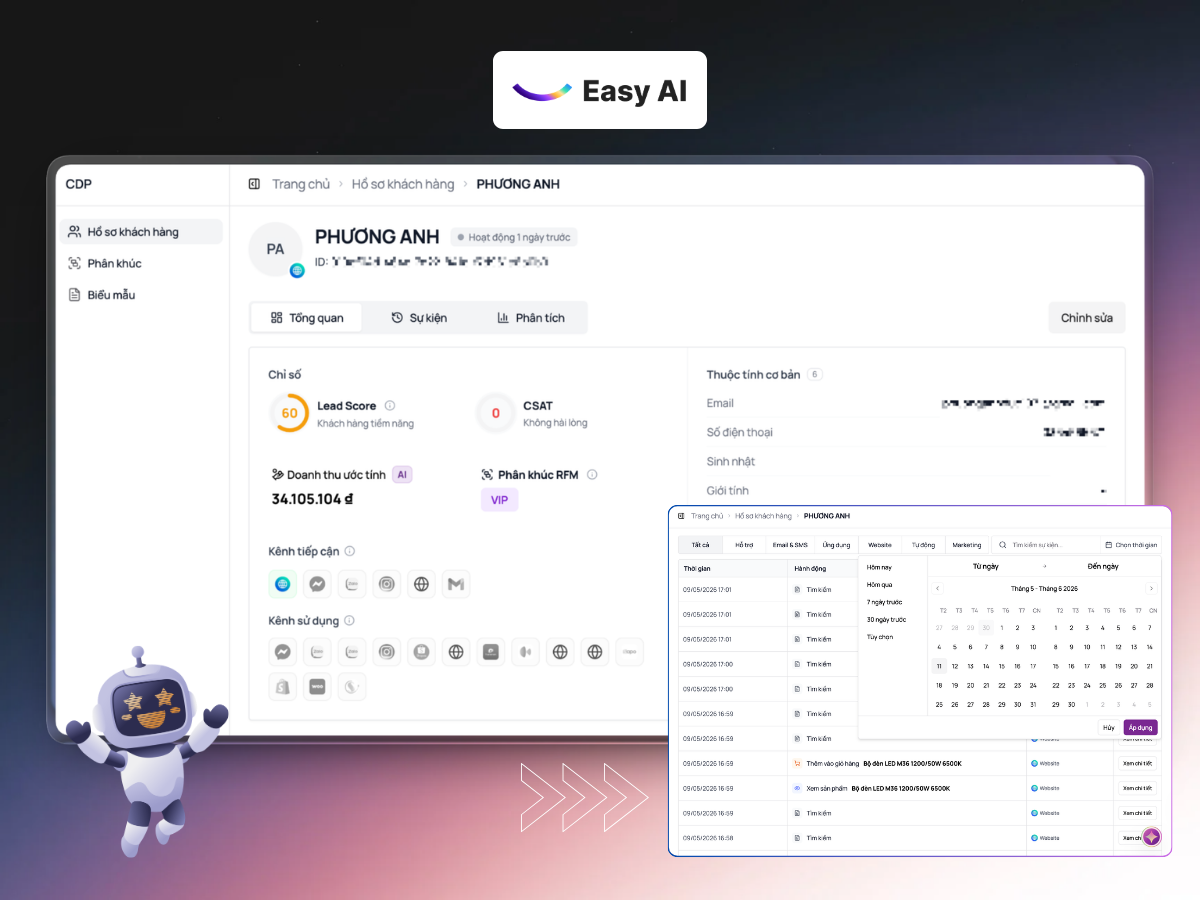
- Break down data silos: Connect online and offline data from websites, CRM systems, social media, call centers, and physical stores to support the creation of unified customer profiles. Data linkage depends on identity quality and the right to use the data.
- Prioritize customers based on signals: An AI CDP can analyze available history and signals to estimate the likelihood of responding, reducing engagement, or being ready to buy. These are probability-based predictions for teams to consider, not certain conclusions about individual behavior.
- Automate lead and customer-care processes: Businesses can configure rules for classification, assignment, and follow-up reminders. The system can trigger workflows based on events or segments if the data, channels, and rules have been configured. Teams should track whether leads are handled on time, the rate of handoff to Sales, and the results of each workflow.
- Build an advantage through governed data: Clean, current, and consistently used data helps Marketing, Sales, and Operations teams work together more effectively. Having more data does not, by itself, guarantee accurate insights; identity quality and the processes for using data determine its practical value.
- Build data protection into the design: When processing personal data, businesses need to review the legal basis, purpose of use, and access controls. This content does not replace legal advice.
5. Applying AI CDPs to Business Growth
5.1 Key AI CDP Applications
An AI CDP creates value when unified data is put into a specific process. Depending on the data sources, system integrations, and company policies, key applications may include:
- Unify profiles and interaction histories: Connect customer data from sources the business is permitted to use to support a unified view across Marketing, Sales, and customer service.
- Dynamic segmentation and lead prioritization: Use attributes, events, and behavioral signals to update customer groups or help teams identify which leads to handle first. Any predictive score should be treated as an estimate.
- Personalization and remarketing: Send segments into relevant workflows, such as following up with people who asked about a product, reminding customers who have not completed a transaction, or excluding recent purchasers from a campaign that is no longer relevant.
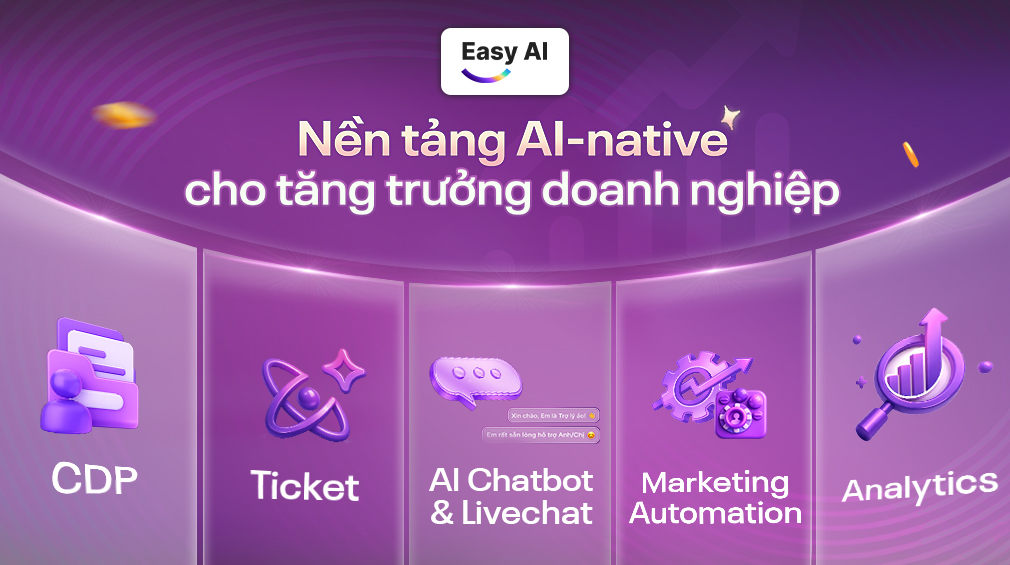
- AI-assisted conversations: Chatbots and livechat can answer frequently asked questions based on connected data. Complex cases or questions for which information is missing should be transferred to an employee.
- Measure and improve operations: Track metrics by channel, customer group, and workflow to identify bottlenecks instead of looking only at total interactions.
5.2 Omnichannel AI Customer Service Case Study at Laptop88
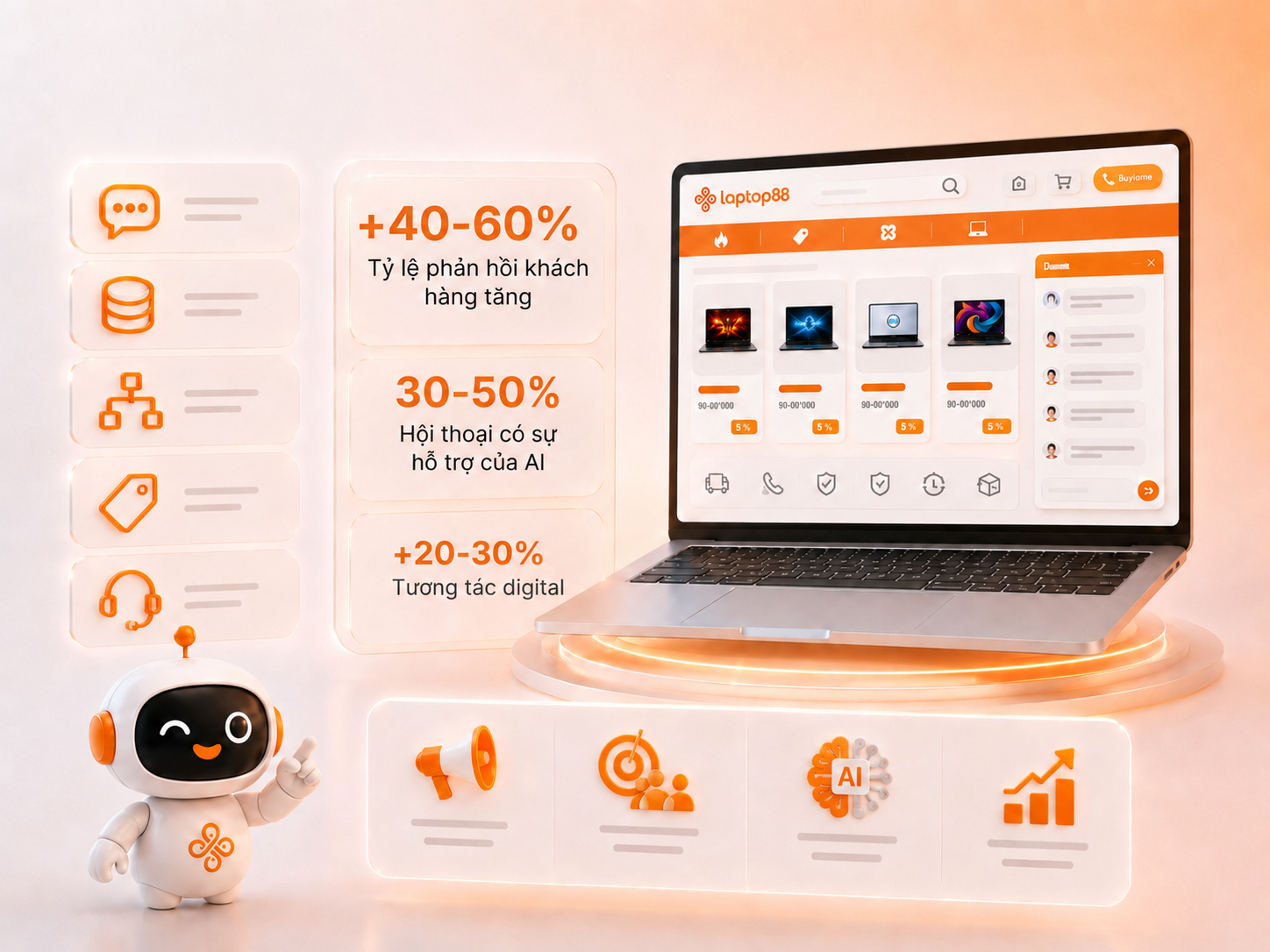
To see how an AI CDP can support day-to-day operations, consider Laptop88, an omnichannel technology retail chain operating across its website, Facebook, Zalo OA, and CareSoft. Previously, fragmented data and manual routing led to slow responses and the risk of missing customers outside business hours.
After implementing Easy AI’s solution, customer data was unified into a single 360° profile in the CDP, alongside a 24/7 AI Chatbot and Marketing Automation. The system automatically classifies customer needs, recommends configurations, and smoothly hands conversations over to employees with the full context.
Results after 3 months of implementation:
- A 40–60% increase in the customer response rate.
- AI-assisted automation of 30–50% of conversations.
- A 20–30% increase in digital interactions across the system.
Laptop88’s success demonstrates that Easy AI is a trusted choice for leading businesses in Vietnam, pioneering an AI-native platform and Revenue AI OS to optimize operations and accelerate revenue growth.
6. Four-Layer Reference Architecture for an AI CDP
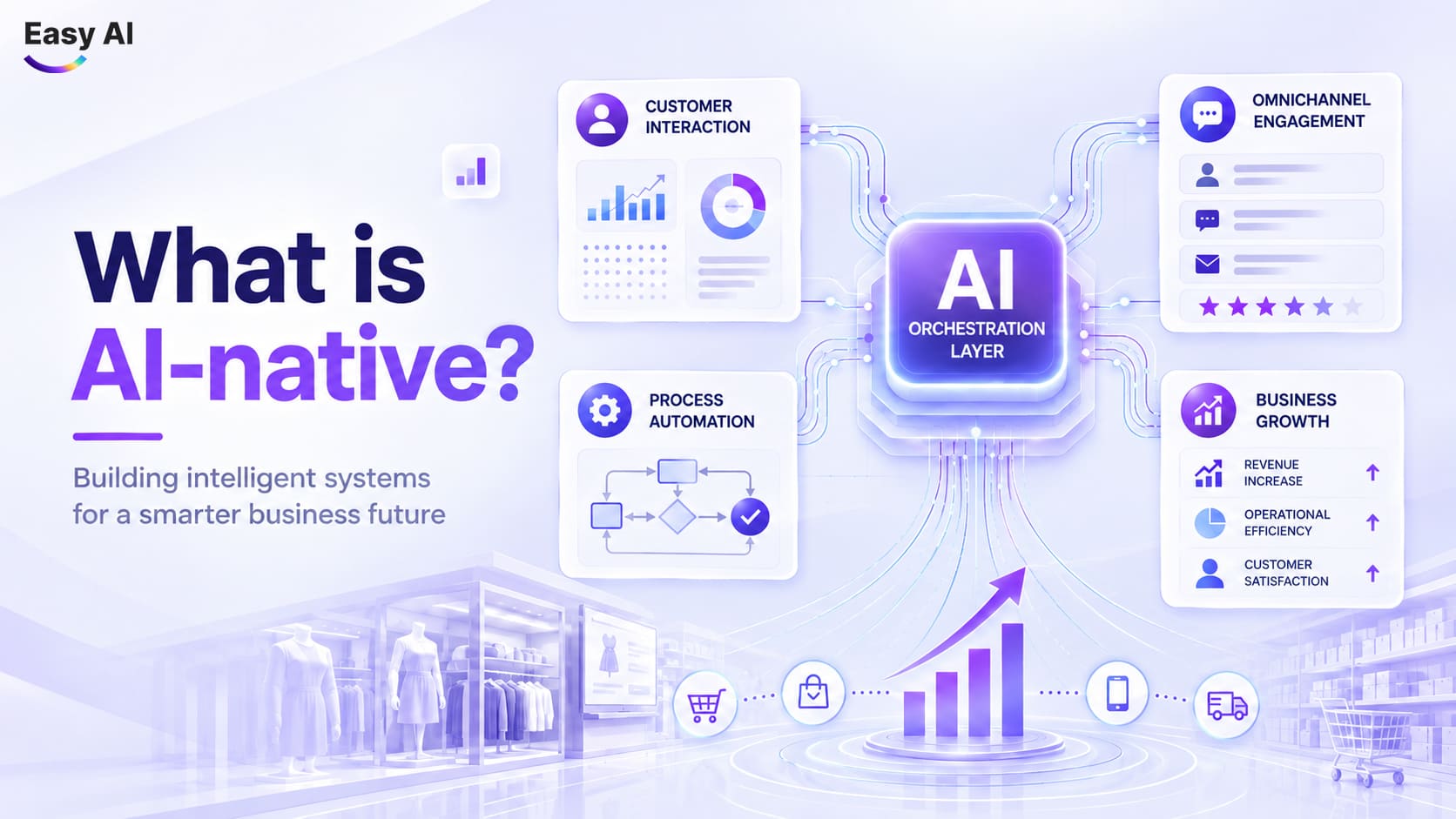
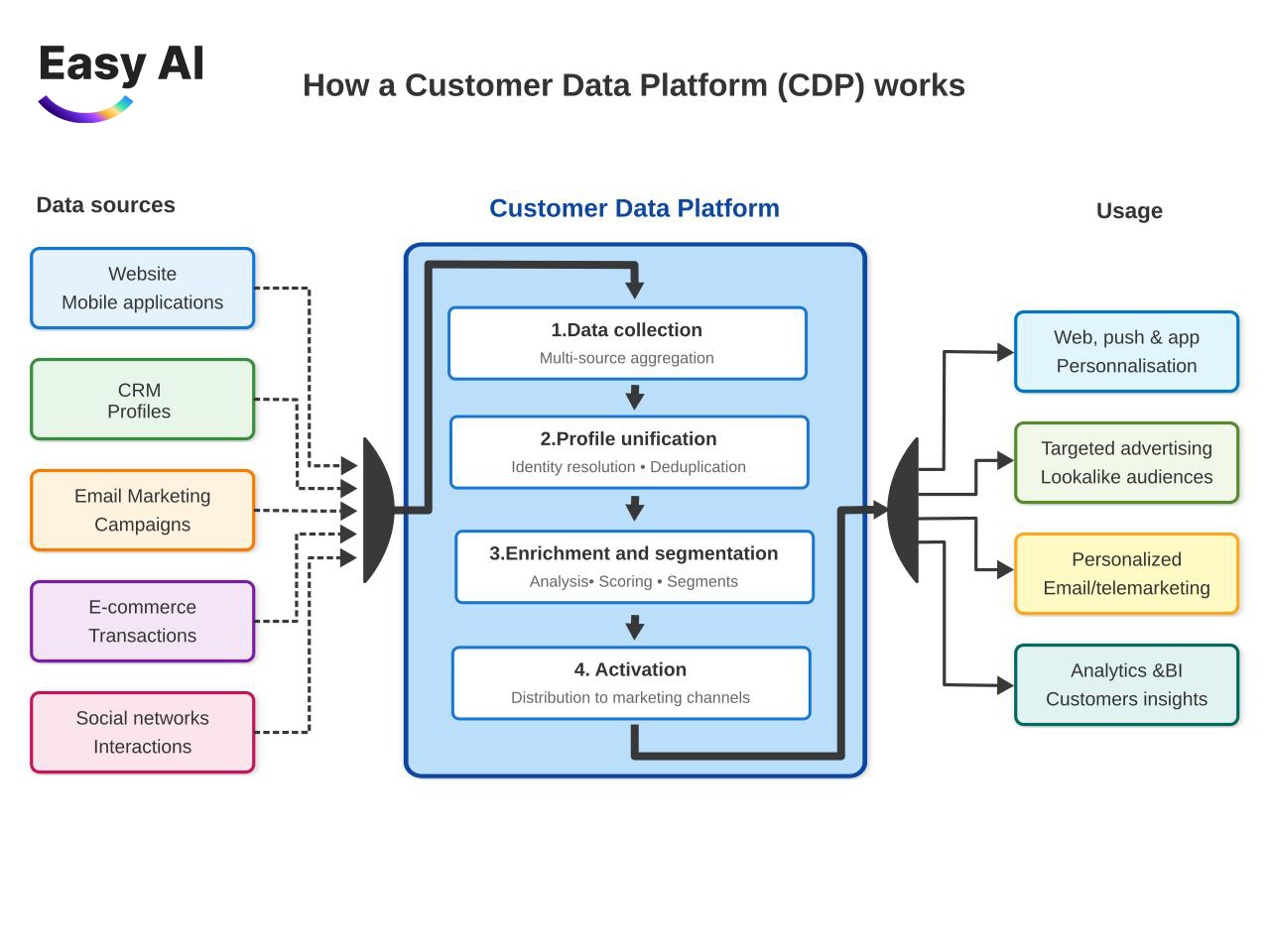
The four layers below are a reference model to help businesses understand how an AI CDP platform may operate. They are not a commitment to Easy AI’s specific architecture or a mandatory description for every product.
Layer 1: Ingestion — Data Intake
Data may come from websites, CRM systems, POS, advertising platforms, social media, apps, or customer-care systems. Businesses need to determine which sources to connect, which data they are permitted to use, and the appropriate update frequency.
Layer 2: Identity Resolution — Matching and Unification
This layer standardizes attributes and identifies records that may belong to the same customer. Rules may use identifiers such as phone numbers, email addresses, or customer IDs, depending on data quality and company policy. Businesses should not automatically merge profiles simply because one data field matches without first assessing the risk of misidentification.
Layer 3: AI and Analytics — Analysis and Predictive Support
The analytics layer generates reports, identifies patterns, and helps estimate the probability of specific behaviors. Businesses should assess input data quality, how the model is evaluated, and whether predictions are suitable before using results to make decisions.
Layer 4: Activation & Action
Segments or signals can be sent to Marketing systems, CRM, messaging channels, or customer-care workflows if integrations allow. At this layer, businesses need to define trigger conditions, contact frequency, handoff mechanisms, and how results will be measured.
7. Common AI CDP Implementation Mistakes and How to Address Them
| Common mistake | How to address it |
|---|---|
| Using unchecked input data: Missing data, incorrect formats, or outdated information reduce the reliability of analysis. | Inventory sources, standardize data fields, and establish a quality-check process before expanding integrations. |
| Using overly simple customer identity resolution: Matching profiles using a single data field can result in duplicate or misidentified customers. | Define identity resolution rules for each source, assess conflicts, and create a review process for records that need confirmation. |
| Storing data without activating it: Centralized profiles create no value if they are not used in customer-facing processes or measurement. | Start with a specific use case, such as lead classification or re-engaging a customer group, then define the channel and metrics to track. |
| Insufficient coordination between Data, Marketing, and Sales: If teams have different definitions of a lead, active customer, or conversion, it will be difficult to reconcile reports. | Align on definitions, data ownership, access rights, and processing responsibilities before building segments. |
| Expecting immediate results: Predictions and automation require suitable data, testing, and iteration. | Deploy in stages, set verifiable KPIs, compare results against a baseline, and clearly record actual outcomes separately from model estimates. |
>>> Learn how an AI CDP addresses business challenges and can turn existing customers into a sustainable source of revenue in the following video:
8. Conclusion: Start with a Measurable Business Problem
An AI CDP is more than a place to store centralized profiles. It is infrastructure that helps businesses turn data into analysis, dynamic segmentation, and real business actions. The platform’s actual value depends on input data quality, accurate identity resolution rules, system integration capabilities, and effective collaboration across departments.
When evaluating an AI CDP platform, business leaders should start with three core questions:
- Which channels’ data needs to be unified first?
- Which business decisions or customer-care workflows need AI support?
- Which specific KPIs (CR, CSAT, AOV, CLV) will confirm whether the implementation is effective?
Rather than transforming everything at once, start with a sufficiently clear operational process to test and validate the data before expanding across the organization.
Easy AI is a trusted choice for leading businesses in Vietnam, pioneering an AI-native platform and Revenue AI OS to optimize operations and accelerate revenue growth. We are ready to work with your business to clean data, design automated workflows, and build sustainable growth infrastructure.
Ready to standardize your data and accelerate revenue growth with Easy AI?
Don’t let valuable customer data go to waste across disconnected systems. Contact the Easy AI expert team today for advice on an AI CDP and Revenue AI OS implementation roadmap suited to your business model.
Register here for an in-depth consultation on AI CDP solutions with Easy AI.
Topics
FAQ
Recommended for you