


Revenue AI OS (Revenue AI Operating System): AI Infrastructure for Revenue Growth
AI is transforming how businesses automate tasks, process data, and improve efficiency. However, as AI adoption grows, businesses face fragmented data, disconnected systems, inconsistent context, and rising integration costs. More importantly, they still struggle to measure how AI contributes to revenue and business outcomes.
Based on our experience working with large enterprises, businesses need more than standalone AI tools. They need a unified operational layer that connects data, AI, and workflows while measuring their impact on revenue growth. This is the foundation of a Revenue AI OS—and the direction Easy AI is building toward.
1. Decoding the Revenue AI OS: The Emerging AI Platform for Enterprise Operations
A Revenue AI OS (Revenue AI Operating System) can be understood as an AI-powered operational layer designed around revenue generation. Its role is to connect customer data, AI capabilities, business workflows, and measurement systems within a unified architecture. Unlike a standalone chatbot or AI agent, a Revenue AI OS operates at a broader architectural level. It needs to answer four fundamental questions:
- What data does the business have?
- What context does AI use to understand that data?
- What actions is AI authorized to perform within business systems?
- What business outcomes do those actions generate?
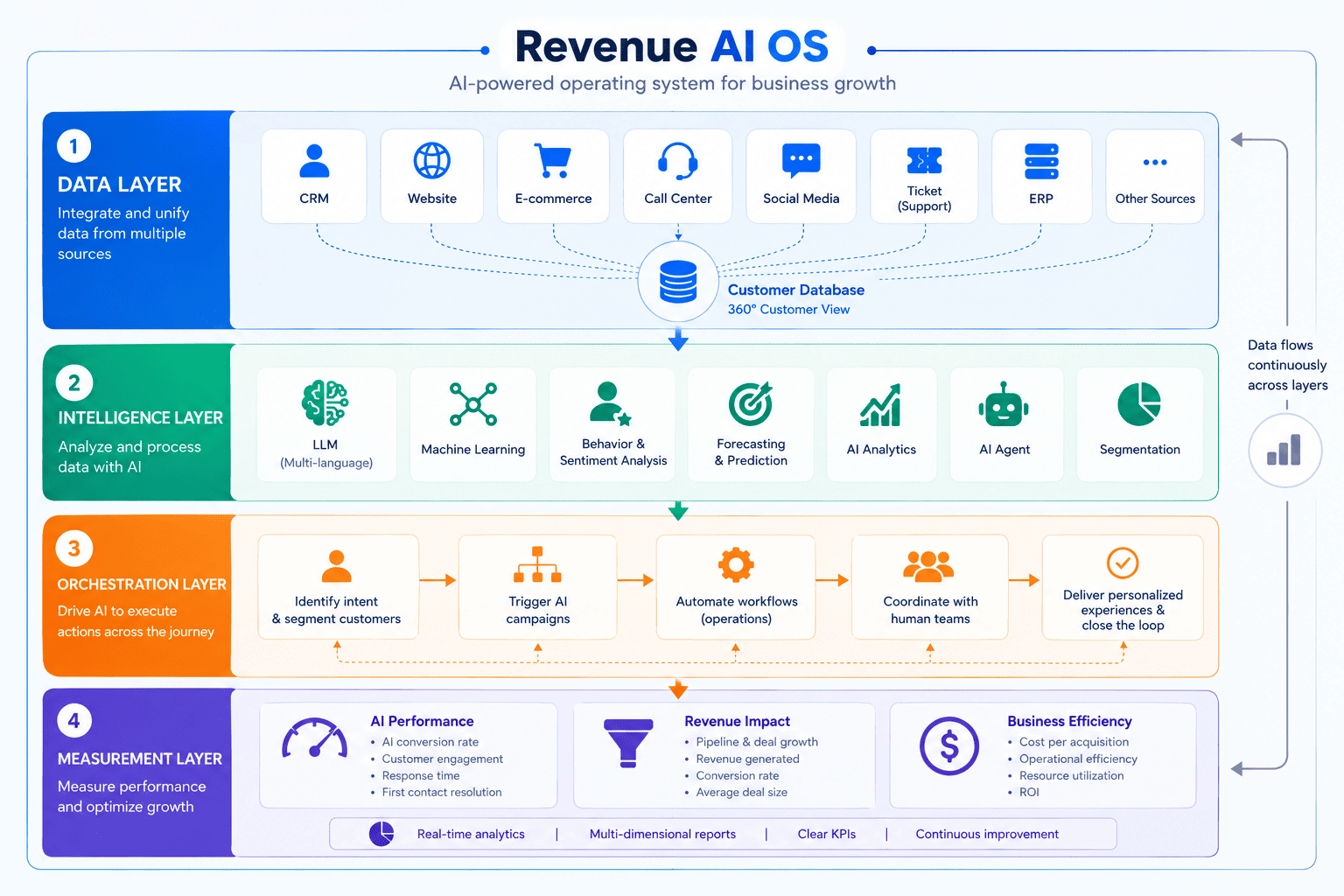
1.1 Data Layer: The Foundation of Enterprise AI
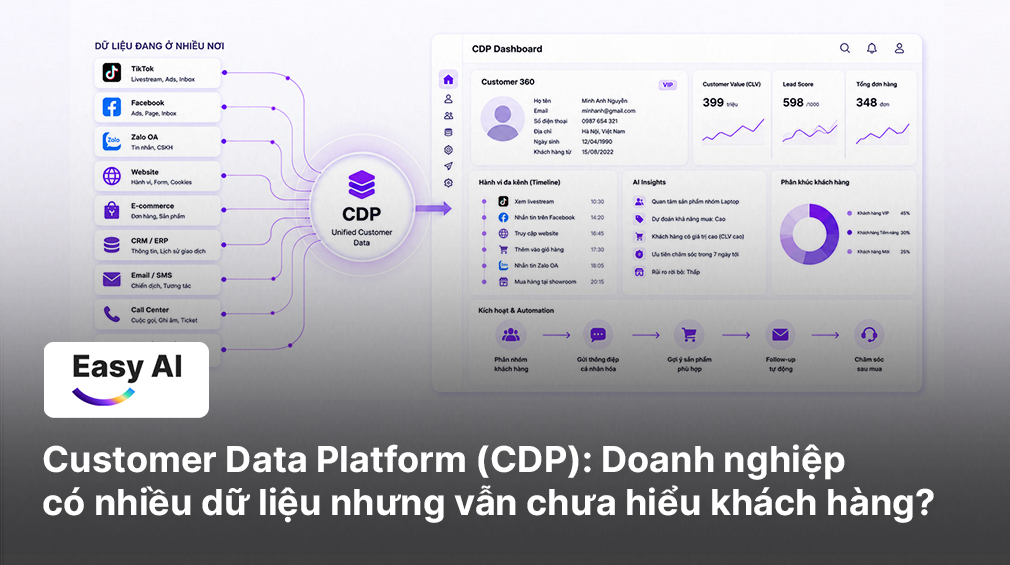
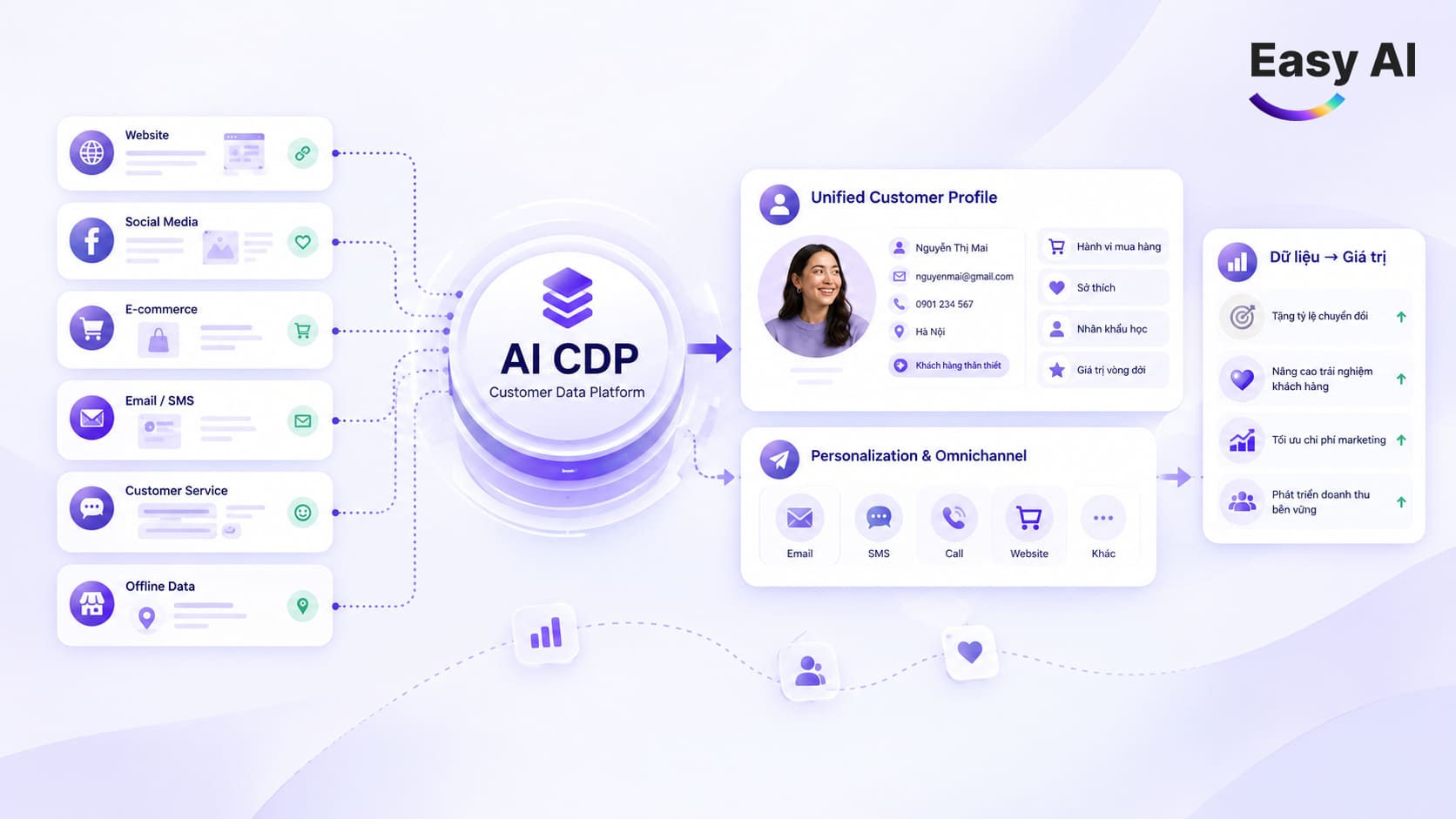
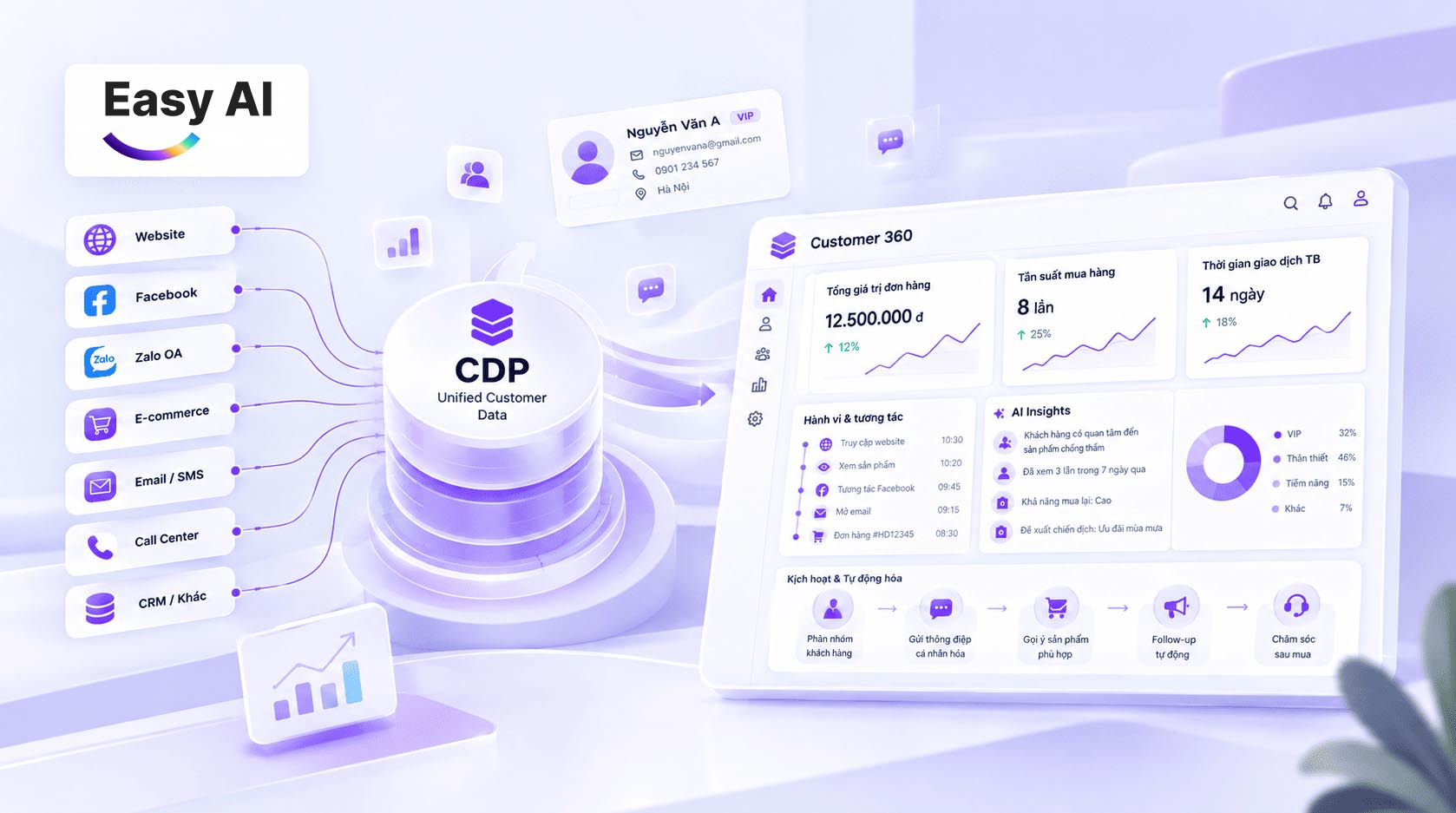
AI can only make effective decisions when it has access to the right data. In an enterprise environment, data typically comes from CRM systems, websites, e-commerce platforms, sales systems, contact centers, social media, ticketing systems, ERP platforms, and many other sources.
The challenge is not simply bringing all this data into one place. Businesses need to establish customer identity, standardize data, resolve duplicates, manage access permissions, and keep data sufficiently up to date for AI to use in real time or near real time. This is a familiar role for Customer Data Platforms (CDPs). However, within a Revenue AI OS, customer data must go one step further—into AI and workflow layers where it can be turned into actionable outcomes.
1.2 Intelligence Layer: Turning Data into Decisions
The Intelligence Layer includes LLMs, machine learning, AI agents, classification systems, recommendation engines, scoring models, forecasting, and other analytical capabilities. The key is to match the right AI capability to the right business problem.
An LLM that performs well for content generation and conversational tasks may not be the optimal choice for demand forecasting. Likewise, an AI agent designed for customer service workflows may not be authorized to execute high-risk transactions automatically.
Enterprise AI architecture therefore needs to clearly define the role of each intelligence capability, the data it is allowed to access, and the actions it is permitted to take. When the objective is revenue growth, AI should also be evaluated against business KPIs. An AI Sales Agent may be measured by qualified-lead rate, conversion rate, or response time. An AI Customer Service Agent may be evaluated using resolution rate, CSAT, and handling time.
1.3 Orchestration Layer: Connecting AI to Real-World Workflows
AI creates operational value only when information can be translated into action. For example, a high-intent prospect may need to be classified, recorded in the appropriate system, assigned to a sales representative, or enrolled in the right nurturing workflow. The Orchestration Layer connects AI capabilities with business processes and enterprise systems. At scale, this layer must also manage access permissions, human approval checkpoints, activity logs, and coordination across multiple AI agents. This is what allows AI to move beyond being a support tool and become an active component of business operations.
1.4 Measurement Layer: Measuring AI's Contribution to Revenue
A Revenue AI OS needs an end-to-end measurement framework across the AI lifecycle. Businesses can track multiple layers of metrics:
- At the AI layer, metrics may include automation rate, accuracy, escalation rate, and response time.
- At the operational layer, metrics may include lead qualification, conversion rate, resolution rate, and sales cycle length.
- At the business layer, businesses need to consider revenue contribution, cost to serve, retention, and margin.
This approach is consistent with the AI governance principles of NIST. The NIST AI Risk Management Framework (AI RMF) defines four core functions—Govern, Map, Measure, and Manage—with measurement applied throughout the AI lifecycle to evaluate system performance, risks, and impacts.
For AI systems directly involved in revenue-generating activities, the Measurement Layer should therefore not be treated simply as a reporting dashboard. It should serve as a feedback mechanism that helps businesses identify which workflows are performing well, which agents need adjustment, and which use cases are genuinely creating value.
2. Why Is the Revenue AI OS Becoming an Enterprise AI Trend?
AI is rapidly becoming a common enterprise capability. According to McKinsey, 88% of organizations use AI in at least one business function, while only 39% report an impact on enterprise-level EBIT (McKinsey & Company, 2025). This gap suggests that the market challenge is no longer simply about deploying AI. It is about turning AI into measurable business outcomes.
As AI is deployed across more functions, businesses increasingly need a system-level approach. AI must participate in revenue-generating activities—from identifying customer intent and supporting sales to customer service, automation, and process optimization. As a result, performance needs to be measured through conversion rates, revenue, cost to serve, productivity, and margins rather than simply by the number of chatbots, agents, or AI use cases deployed. This is the gap a Revenue AI OS is designed to address.
Instead of treating AI as a collection of standalone tools, a Revenue AI OS places AI within an operational layer directly connected to revenue growth. When data, AI capabilities, execution workflows, and measurement are brought together within a unified architecture, businesses gain a clearer view of where AI creates value, which operations should be optimized, and which use cases are worth scaling.
The Revenue AI OS trend is therefore not driven by a need for another AI technology. It emerges from the need to elevate AI to the operational level, where its ultimate value is determined by business outcomes.
3. Easy AI Is Building a Revenue AI OS for Enterprise Growth
Easy AI is building a Revenue AI OS—an AI infrastructure layer that connects data, models, enterprise systems, and revenue-generating customer touchpoints within a unified operating architecture. We focus on enabling AI to participate across the customer interaction lifecycle, enterprise knowledge workflows, and business execution.
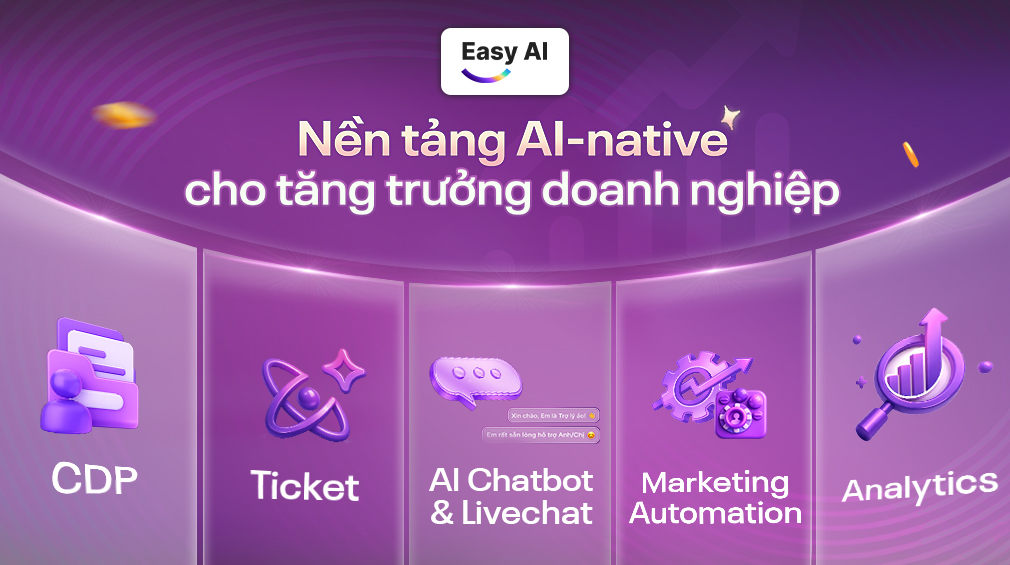
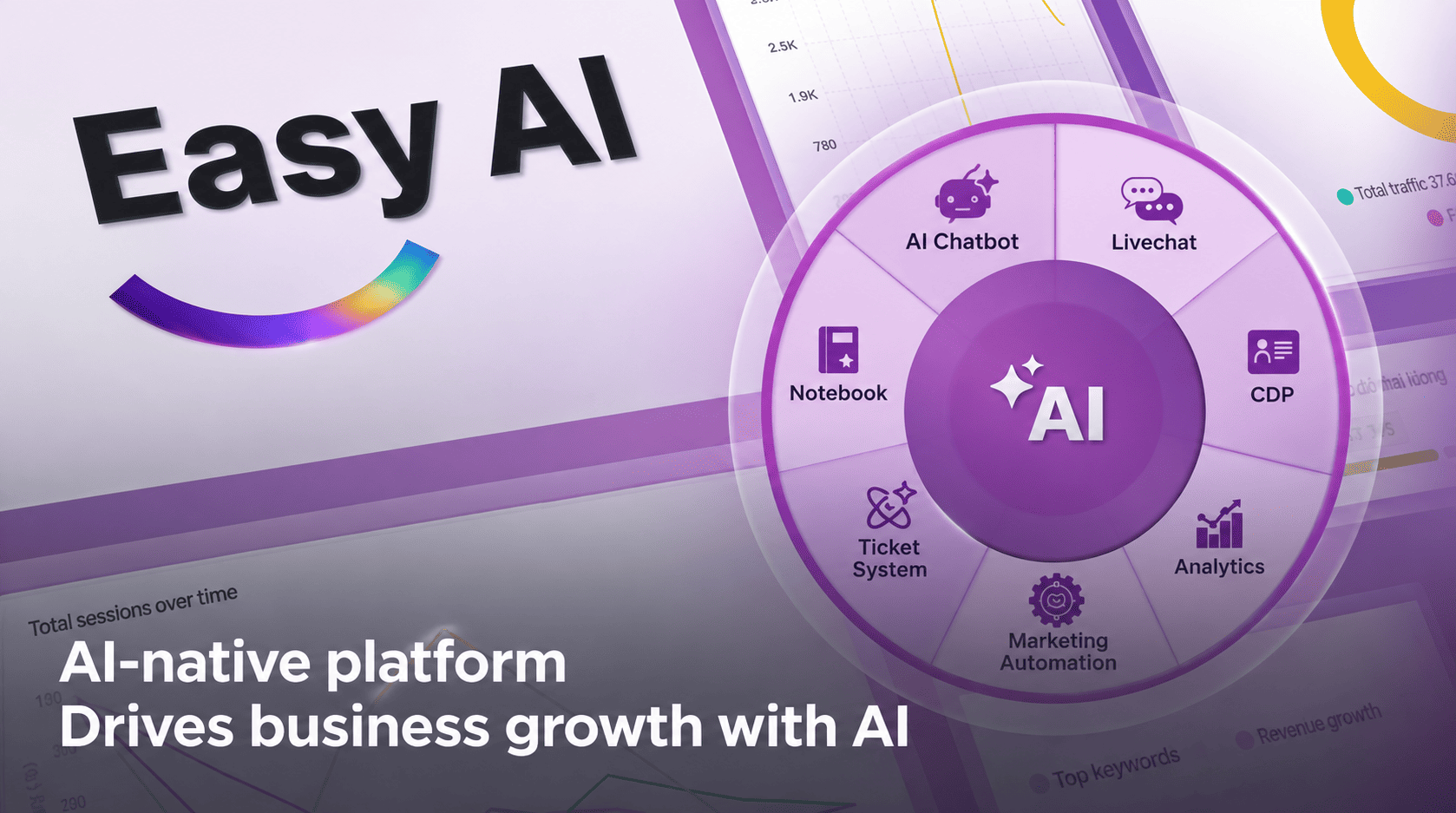
The Revenue AI OS ecosystem is built on a shared technology core comprising Easy AI Platform for customer engagement and growth, Easy AI Notebook for knowledge management and internal operations, and Easy AI Harness as the infrastructure layer for orchestrating AI capabilities.
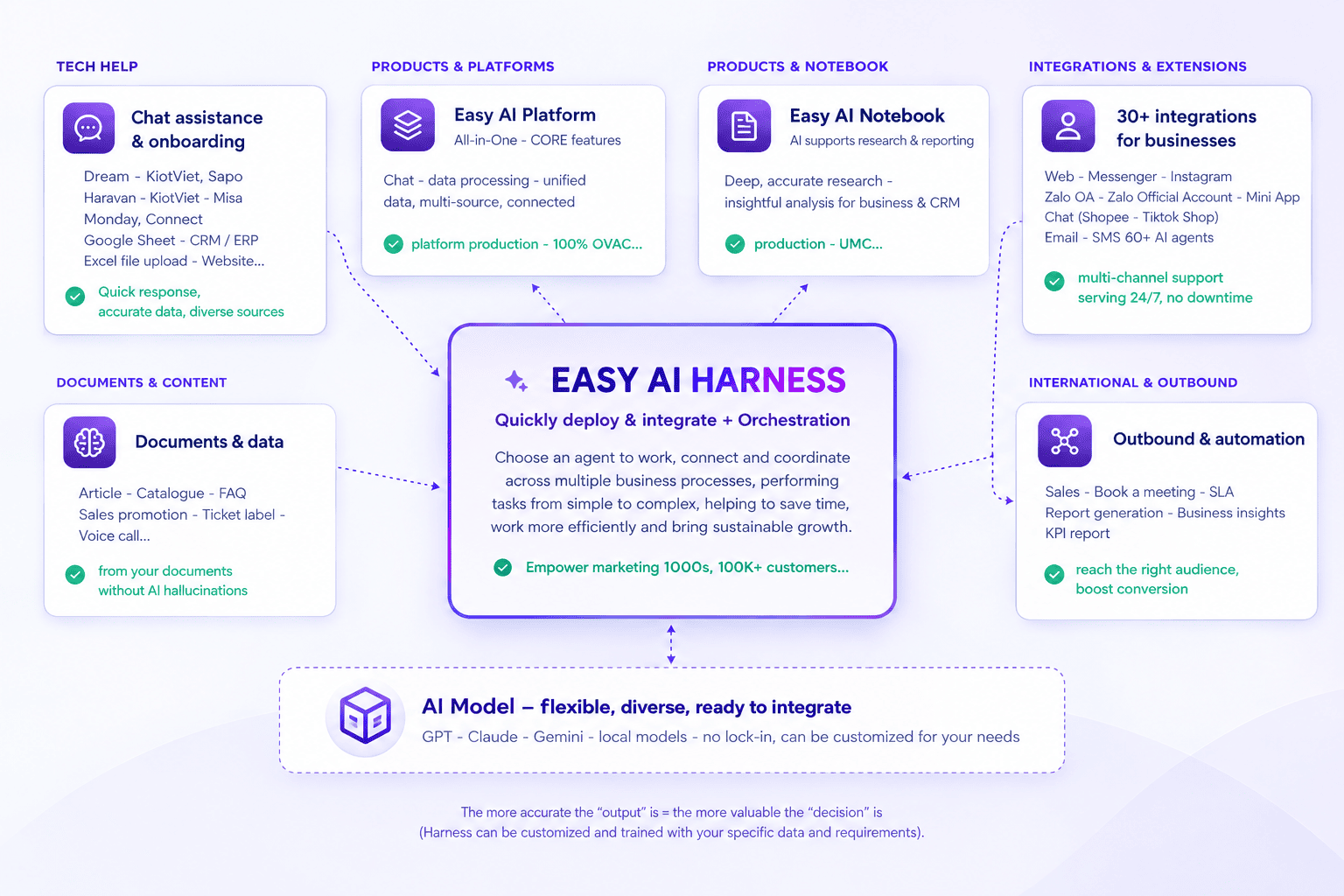
3.1 Easy AI Platform: Bringing AI to Revenue-Generating Customer Touchpoints
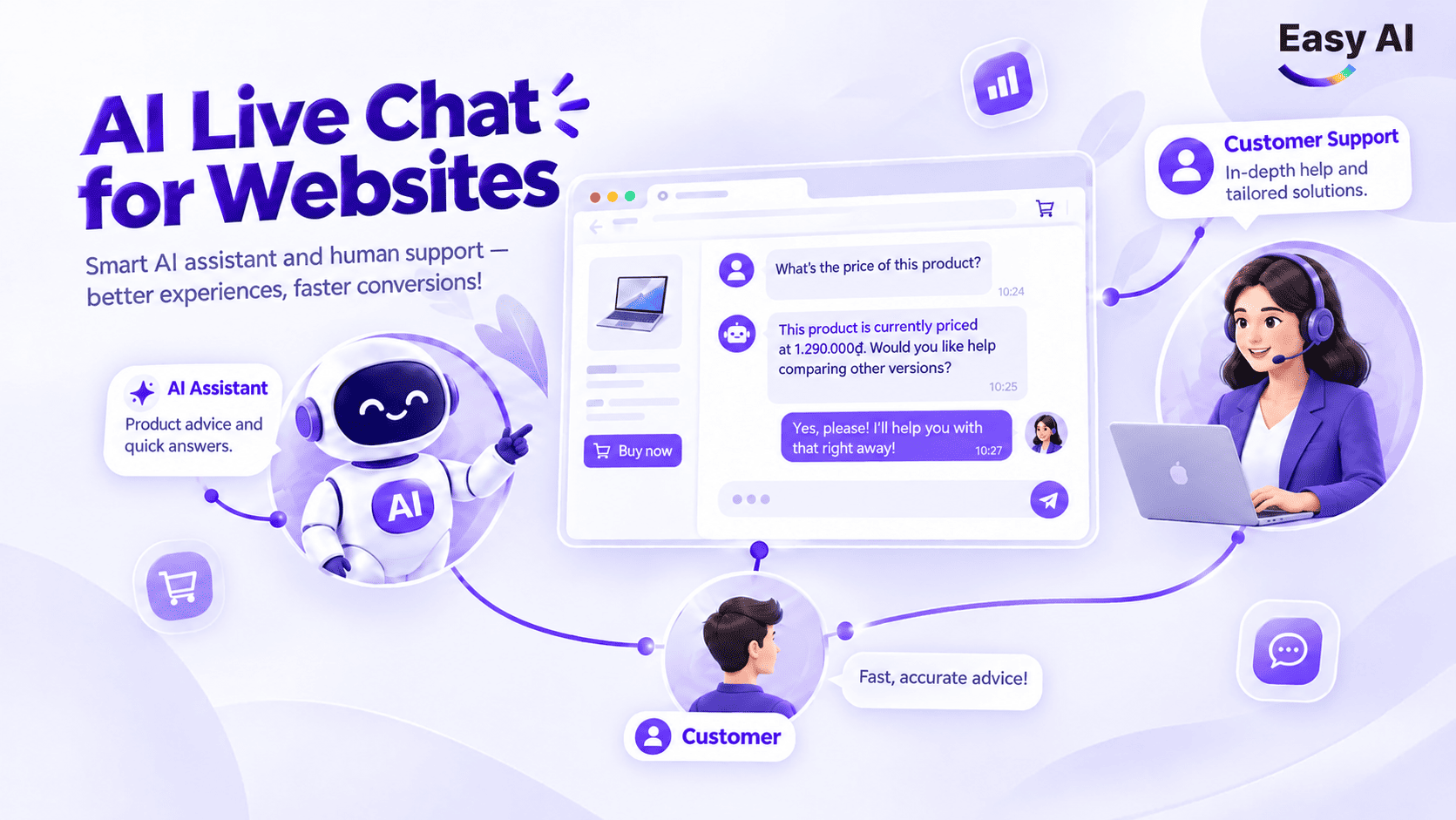
Easy AI Platform serves as the customer engagement layer of the Revenue AI OS, connecting AI across customer touchpoints including Web, Messenger, Instagram, Zalo OA, Zalo Mini App, Shopee, TikTok Shop, Email, and AI Call Center. Through integrations with enterprise systems, AI can directly support product recommendations, information retrieval, inventory checks, lead capture and qualification, appointment scheduling, order support, and customer service.
3.2 Easy AI Notebook: Bringing AI into Internal Operations
Easy AI Notebook extends AI capabilities into the enterprise knowledge and internal operations layer. The platform enables employees to access internal knowledge bases and retrieve policies, procedures, and business documents to support day-to-day work. AI can also assist with tasks involving Word documents, Excel spreadsheets, website content, translation, and infographics. This connects enterprise knowledge directly to employees' daily workflows, creating a shared AI capability across the organization.
3.3 Easy AI Harness: Turning Model Capabilities into Execution
While Platform and Notebook serve as application layers, Easy AI Harness operates as the underlying infrastructure that enables AI to execute tasks. Harness orchestrates the execution loop across request intake, data retrieval, tool calling, execution, validation, and response generation. This enables AI to handle multi-step tasks and interact with enterprise systems rather than stopping at generating a response.
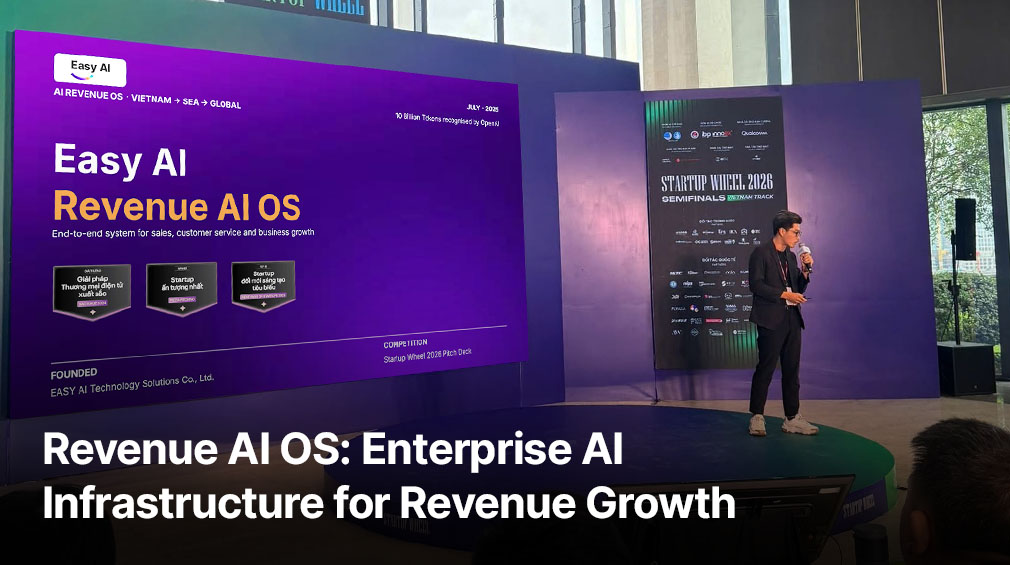
Easy AI currently processes billions of tokens each month. In December 2025, OpenAI recognized the company as the first partner in Vietnam to surpass 10 billion cumulative tokens. This scale creates clear requirements for information management, model orchestration, and execution control. These capabilities form part of the foundation required for AI to operate reliably in an enterprise environment. The technology has been validated across leading organizations, including University Medical Center Ho Chi Minh City, Dien may XANH, the gioi di dong and Viettel Store,…
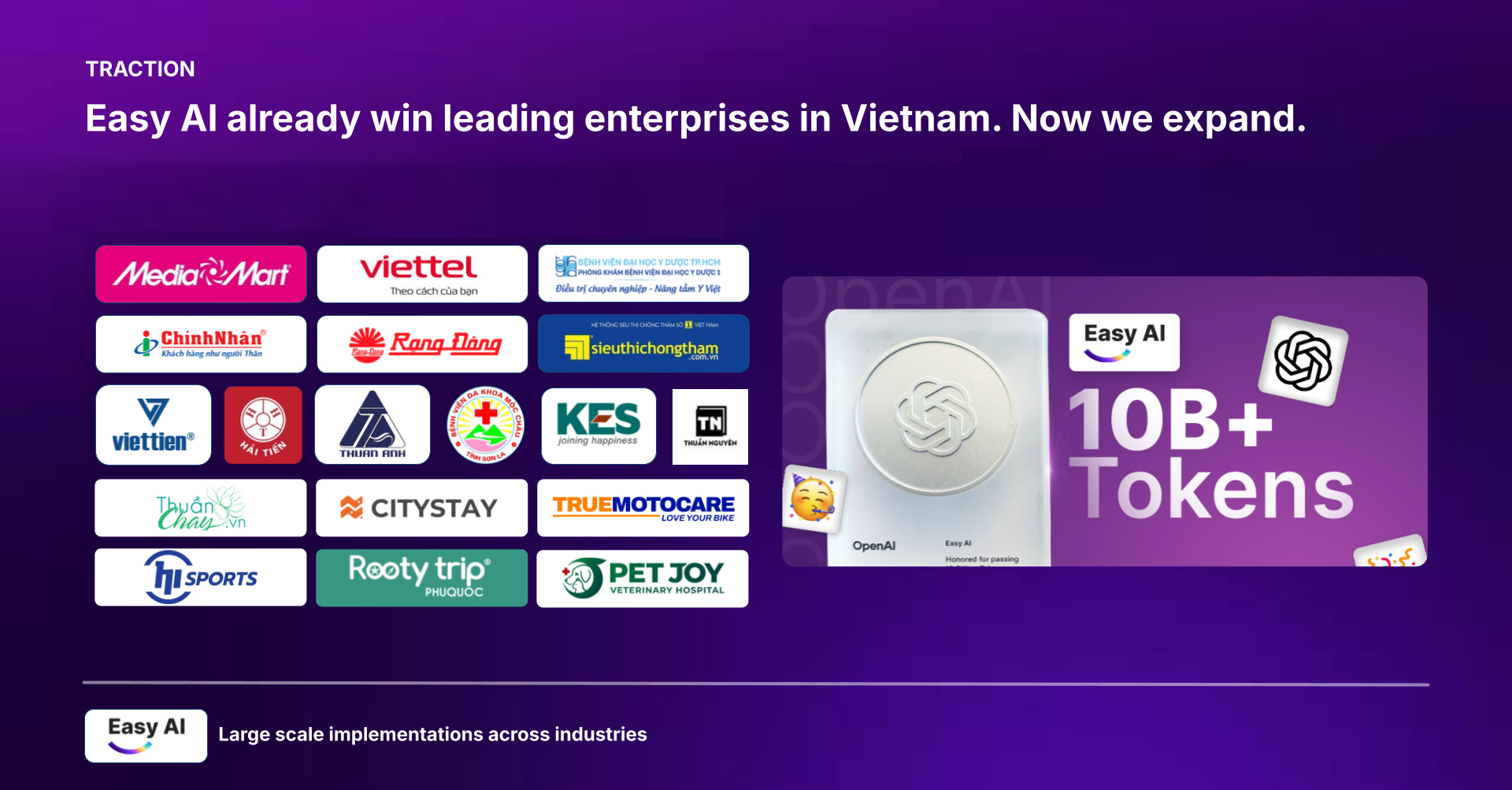
Starting in 2027, Easy AI plans to expand into Southeast Asian markets, bringing the AI infrastructure built and validated in Vietnam to a broader regional scale. This represents the next step in the strategy to establish Revenue AI OS as an infrastructure layer for enterprise revenue growth across multiple markets.
4. Conclusion
For Vietnamese enterprises, AI is becoming a system-level competitive capability. Leading enterprises have already begun integrating AI into sales, customer service, and real-world operations, creating a clear precedent for the shift from technology experimentation to enterprise-scale AI deployment.
The next competitive advantage will belong to businesses that embed AI deeply into their data, workflows, and revenue-generating customer touchpoints while developing the ability to continuously measure and optimize performance across the entire system. AI is therefore evolving from a support tool into an operational capability with a direct impact on growth. Revenue AI OS represents this next stage of development: an infrastructure layer that connects AI with data, enterprise systems, and business workflows, placing AI at the center of revenue growth and creating the foundation for long-term competitive advantage.
>>> Contact an AI expert for advice on applying AI to your business!
Topics
FAQ
Recommended for you