What Is AI LiveChat? How It Differs from Live Chat
1. What Is AI LiveChat?
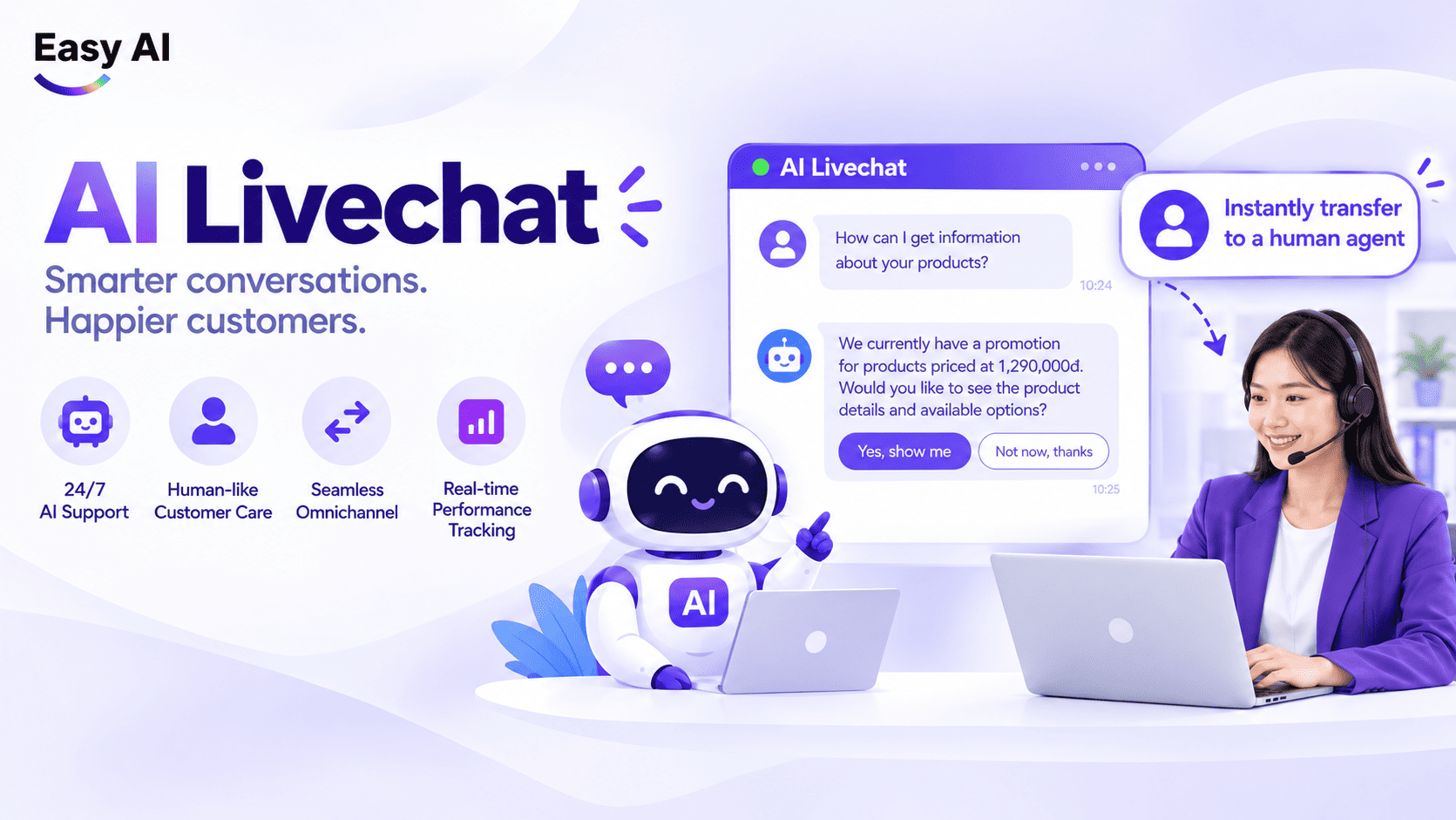
AI LiveChat is a conversation workflow that combines AI and human agents to receive, handle, and route customer requests. AI can help understand questions, retrieve provided information, respond to suitable requests, and route conversations when necessary. Unlike traditional Live Chat (online chat), which only allows customers to message an agent on a website or another channel, AI LiveChat can support parts of the conversation. However, AI does not fully replace agents: situations requiring expertise, information verification, or judgment still need human involvement.
AI LiveChat is not synonymous with Live Chat, chatbots, or omnichannel (a seamless experience across multiple channels). Live Chat is a communication method; a chatbot is software that automates conversations; and omnichannel describes how an experience is organized across multiple channels. A platform may combine one or more of these components, but the specific scope depends on its configuration and integrations.
2. How Does AI LiveChat Differ from Live Chat?
Traditional Live Chat usually routes conversations to an agent for handling. With AI LiveChat, AI can assist at certain steps before or during an agent’s involvement. The level of automation depends on the data, routing rules, and system connectivity.
| Criteria | Traditional Live Chat | AI LiveChat |
|---|---|---|
| How conversations are handled | The customer sends a message, and an agent receives it. | The customer sends a message; AI, an agent, or both may participate. |
| Recurring questions | Agents typically answer each case individually. | AI can answer if suitable data and configuration are available. |
| Contextual handling | Primarily depends on an agent reading the conversation and asking follow-up questions. | AI can help identify intent; accuracy should be checked against real-world data. |
| Handoff | An agent transfers the conversation to a department or colleague. | A handoff from AI to an agent can be configured according to rules or when intervention is needed. |
| Limitations | Depends on agent coverage and processes. | Depends on data, configuration, integrations, and the scope of tasks AI is permitted to handle. |
AI LiveChat does not automatically guarantee correct responses in every situation. When information is missing, the customer needs to verify something, or a situation requires judgment, the process should hand the conversation to an agent.
3. How Does AI LiveChat Differ from AI Chatbots and Rule-Based Chatbots?
These concepts can appear together on a platform, but they do not serve the same function. Rule-based chatbots typically follow predefined choice flows. AI Chatbots use AI to understand and respond to natural language within a configured scope. AI LiveChat covers a broader workflow that coordinates AI and human agents.
| Criteria | Rule-Based Chatbot | AI Chatbot | AI LiveChat |
|---|---|---|---|
| How responses are generated | Follows predefined question paths and choices. | Generates or selects responses based on content, data, and configuration. | Combines AI-assisted conversations with human agents and handoff processes. |
| Handling questions outside the flow | Usually returns the user to the closest available option or asks them to contact an agent. | Can understand more variations in phrasing, but may still respond incorrectly or lack the necessary data. | Can hand off to an agent when AI cannot handle a request appropriately or intervention is needed. |
| Agent’s role | Handles cases the bot cannot resolve. | Can be brought in when needed. | Is part of the conversation workflow and works alongside AI. |
| Scope | Automated conversations based on a flow. | Automated conversations within the limits of available data and configuration. | An interface or workflow that coordinates AI and agents; scope depends on the platform. |
AI should not replace verification for sensitive requests or those that could significantly affect a customer’s decisions. Businesses should clearly define when AI can respond, when it needs to ask follow-up questions, and when it must hand the conversation to an agent.
4. How Does AI LiveChat Work?
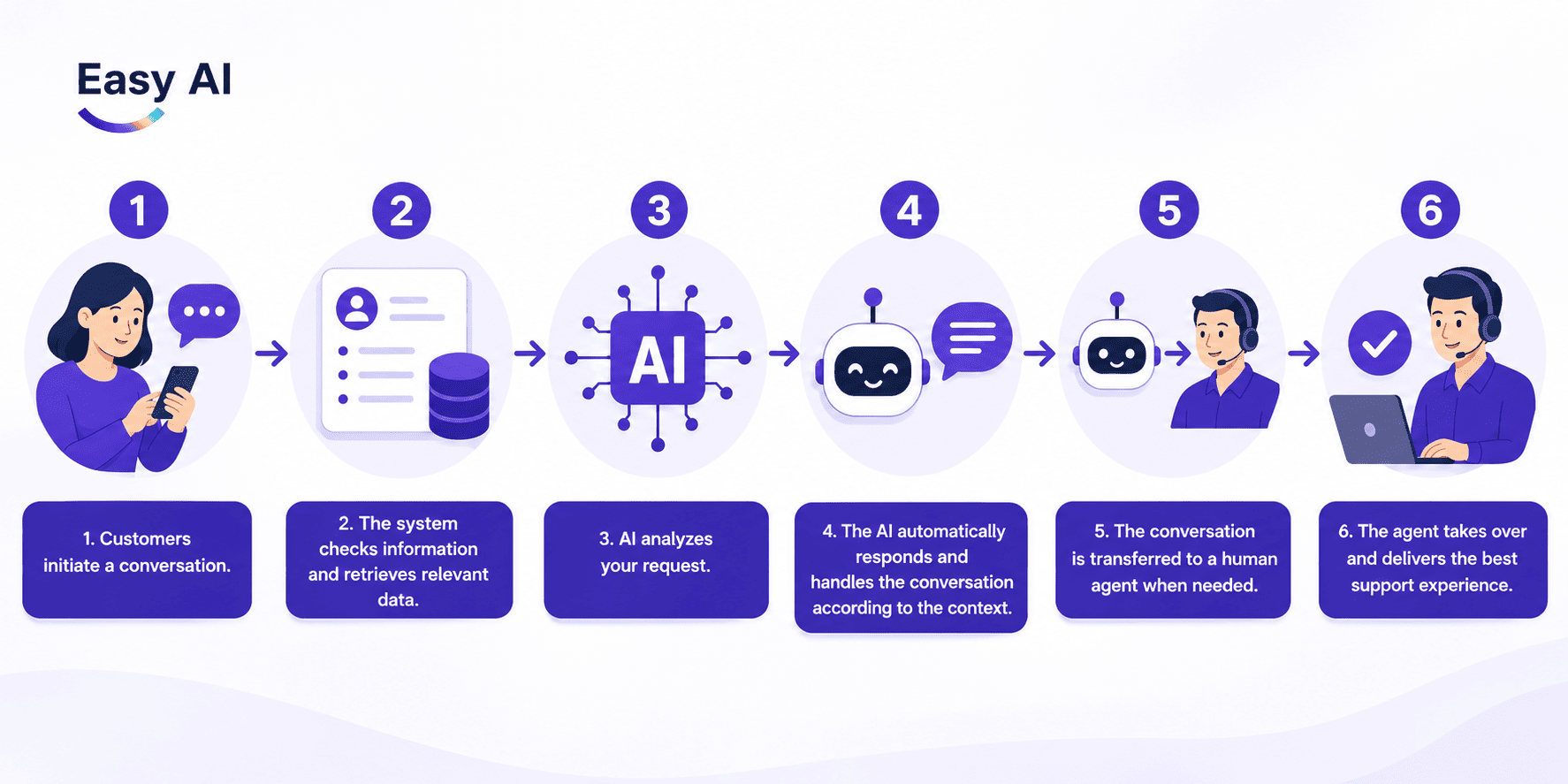
An AI LiveChat workflow may include six steps. The actual sequence varies depending on the platform and the business systems in use.
- The customer starts a conversation. Customers can send a message through a website or an integrated channel.
- The system records the message and available context. Data sources may include customer information, previous conversation content, or connected business data.
- AI analyzes the request. AI helps identify the topic, intent, or information the customer needs.
- AI responds or suggests the next step. This is appropriate only when the system has the necessary data and is configured for that type of request.
- The conversation is routed to an agent when needed. For example, when the customer needs to verify information, requests help outside the supported scope, or needs judgment from Sales, customer service, or a specialist team.
- The agent continues handling the request and records the outcome. If the platform supports measurement, the business can track conversation status, handling time, and outcomes.
5. Core AI LiveChat Features for Businesses to Evaluate
Rather than focusing only on the product name, businesses should assess AI LiveChat against real operational challenges and the specific value each feature provides:
- Automatically answer recurring questions: AI handles common questions about prices, specifications, warranty policies, and more, reducing manual work by 70–80% so agents can focus on in-depth consultations.
- Intelligent conversation routing: Automatically routes conversations to the right advisor or department in real time, eliminating delays caused by manual shift-based assignment.
- Seamless handoff (Human Handoff): When a complex situation arises, AI immediately hands the conversation to an agent with the full history and context, so the advisor does not have to start over.
- Identify purchase intent: Analyzes keywords and behavior to quickly detect conversations with a high likelihood of closing, helping Sales prioritize hot leads.
- Automatically tag and categorize: Labels each customer by issue type, product of interest, and handling status, making subsequent management and follow-up more accurate.
- Timely intervention alerts: Sends instant notifications to managers or advisors when a conversation exceeds AI’s handling capabilities or a customer expresses dissatisfaction.
- Performance reporting and analytics: Measures response speed, AI resolution rates, individual agent performance, and conversion into revenue.
Note: Features and workflows vary by platform. Before choosing a solution, businesses should verify each feature’s actual capabilities, deployment requirements, and limitations.
6. Using AI LiveChat in Marketing, Sales, and Customer Service
The value of AI LiveChat depends on the specific problem a business wants to address. Before deployment, define who is responsible at each step and which data will be used to evaluate performance.
| Department | Common challenge | How AI can help | Agent’s role | Metrics to track |
|---|---|---|---|---|
| Marketing | Customers submit questions, but their needs are unclear. | Helps record topics or intent based on the configuration. | Assess lead quality and adjust content and campaigns. | Number of leads recorded; response rate; conversion if tracking is available. |
| Sales | Agents struggle to prioritize conversations showing purchase intent. | Can help identify purchase intent and route conversations to Sales. | Verify needs, recommend products, and handle sales conditions. | First response time; number of leads; conversion if tracking is available. |
| Customer service | Many recurring questions, with conversations spread across channels. | Helps answer suitable questions and route requests. | Handle complaints, verify information, and manage cases requiring judgment. | Handling time; resolution rate; handoff rate. |
The metrics in the table are measures businesses can track, not guaranteed outcomes. Measurement definitions and data sources need to be agreed upon. For example, the “resolution rate” requires a clear definition of the time window in which a conversation counts as resolved and whether customer confirmation is required.
7. Should Businesses Choose Website-Based or Omnichannel AI LiveChat?
Whether a business should choose website-based AI LiveChat or omnichannel AI LiveChat depends on customers’ actual buying journeys, the resources available for operations, and the business’s data infrastructure readiness.
If most interactions happen on the website, a business can start with that scope. If customers reach out through multiple channels, the business should consider whether conversations can be consolidated and routed across the integrated channels. Omnichannel AI LiveChat does not automatically mean every channel is connected or shares complete data.
| Criteria | Website-Based AI LiveChat | Omnichannel AI LiveChat |
|---|---|---|
| Best suited when | The website is the primary point of contact. | Customers contact the business through multiple channels (website, Facebook, Zalo, TikTok, etc.). |
| Technical scope to evaluate | Widget display, product data on the website, and website routing rules. | API connectivity for each channel, unified inbox capabilities, and team permissions. |
| Customer data profile | Tracks real-time behavior on the website (pages being viewed, time on site, and referral source). | Combines chat history, advertising sources, and purchase behavior from all channels into a single profile. |
| Customer experience | Provides an immediate response while customers are considering a purchase on the website. | Maintains a seamless experience, even when customers switch from Facebook to Zalo. |
| Operational challenges | Requires after-hours coverage scenarios and forms to capture information when customers leave the page. | Depends on third-party API policies (Meta, Zalo) and requires accurate account-identification rules. |
| Implementation complexity | Quick and simple (only requires adding a script snippet to the website). | Medium to high (requires configuring multichannel API integrations and connecting CRM/CDP systems). |
| Scope to evaluate | Widget, website data, and agent handoff rules. | Supported channels, conversation consolidation, and permissions. |
| Considerations | Define coverage hours and how after-hours requests are handled. | Depends on integrations, configuration, and how conversations are identified. |
8. Easy AI LiveChat: Combining AI and Sales Teams to Improve Operational Performance
Easy AI LiveChat is designed to help businesses standardize interaction workflows and turn the chat window from a support channel into an automated, measurable revenue engine.
The solution addresses operational bottlenecks through close coordination between artificial intelligence (AI) and human advisors:
- Centralize multiple channels in one place: Bring conversations from the website, Facebook Messenger, Zalo OA, and other channels into a single management interface, allowing teams to monitor and handle them without missing messages.
- Intelligent automatic routing: Route conversations to the right advisor or team based on predefined rules, eliminating delays caused by manual assignment.
- AI proactively handles recurring questions: Respond to customers 24/7 and automatically answer common questions about prices, specifications, and policies, reducing the burden of staffed shifts.
- Identify purchase signals and hand off at the right time: AI analyzes conversation content to detect potential shopping needs, then immediately hands the conversation to a Sales agent for timely support and to help optimize the close rate.
- Tag and manage conversations with ease: Automatically categorize conversations and label each customer by status and issue type, supporting more accurate search, progress tracking, and follow-up.
- Timely intervention notifications: Automatically send alerts to the appropriate person as soon as a conversation becomes complex or requires human involvement.
- Measure performance and sales outcomes: Provide transparent reporting on response speed, individual agent handling performance, and actual revenue generated through the chat channel.
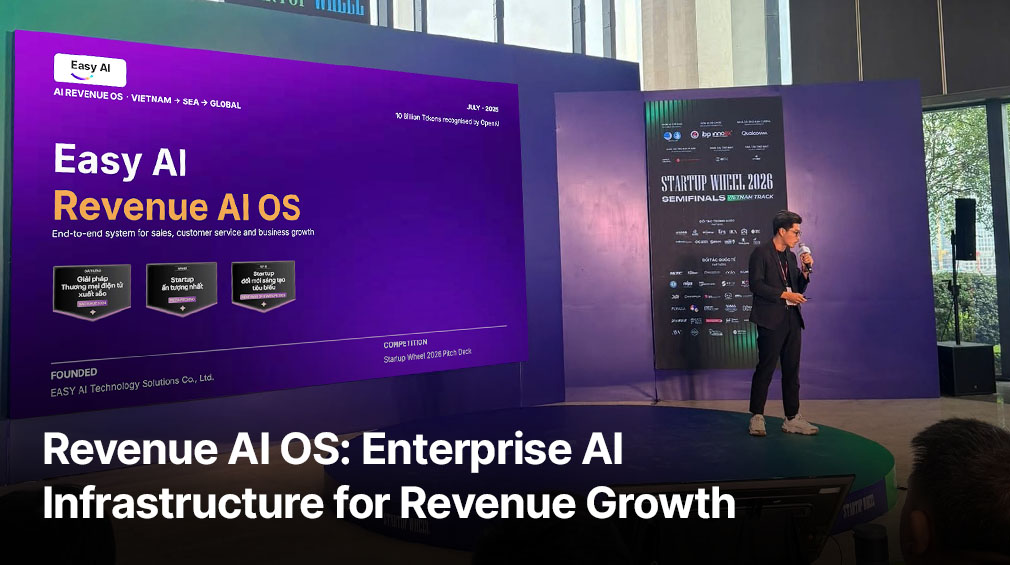
By combining AI and Sales in a closed-loop customer service and sales workflow, Easy AI helps businesses optimize operational resources, improve the customer experience, and achieve sustainable revenue growth. Easy AI is proud to be a trusted choice for leading Vietnamese businesses and a pioneer of the AI-native platform and Revenue AI OS, supporting businesses in the digital era.
>>> Watch the Easy AI LiveChat feature introduction video here:
9. Case Studies: Businesses Successfully Using AI LiveChat with Easy AI
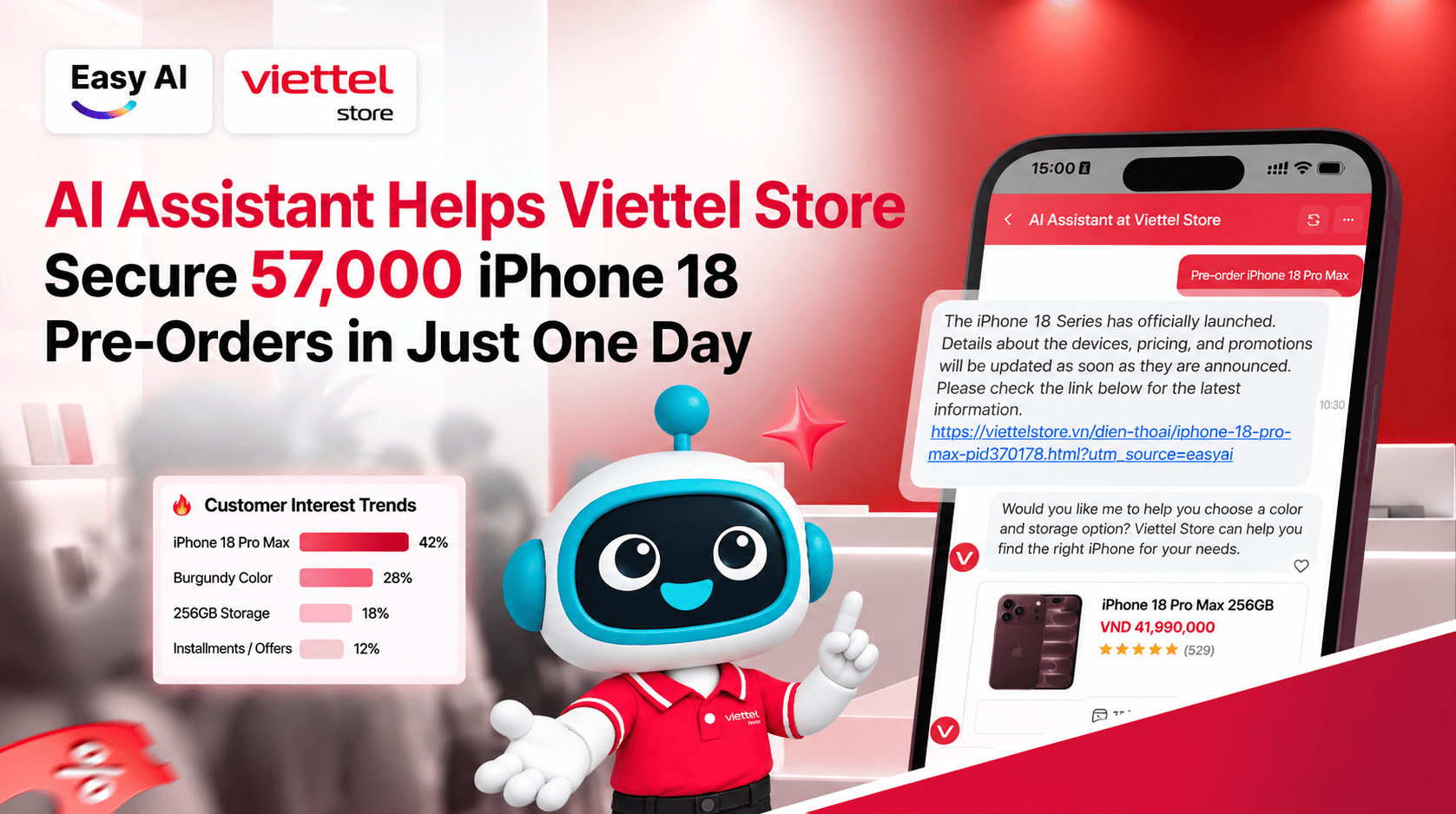
Viettel Store: Captures 57,000 iPhone 18 Pre-orders with an AI Sales Assistant
- Context: During the peak iPhone 18 launch period, Viettel Store faced a surge of tens of thousands of inquiries focused on pricing, promotions, and product specifications.
- Solution: Easy AI deployed a 24/7 AI sales assistant integrated with an accurate product knowledge base. AI Upsell & Cross-sell automatically suggested suitable accessories and mobile plans within the conversation. The system also seamlessly handed complex cases off to a human advisor (Human Handoff).
- Results: AI successfully handled more than 15,000 requests, helping Viettel Store maintain continuous advisory support, reduce pressure on the customer service team, and record 57,000 pre-orders in less than one day after launch.
Dien May Cho Lon: Improves Conversion and Provides 24/7 Customer Service
- Context: Despite high website traffic, Dien May Cho Lon faced a bottleneck because its telesales team worked only during business hours. This led to missed after-hours customers and a conversion rate that did not match its traffic levels.
- Solution: The company deployed an AI Chatbot directly on its website to automatically advise on products, compare specifications, look up warranty and order information, and direct customers to purchase through the hotline. The virtual assistant synchronized all data with the company’s CRM system and inventory.
- Results: The system recorded more than 10,000 interactions per day with instant response times, significantly increased online order conversion after hours, received positive ratings from 90% of customers, and substantially reduced pressure on the call center team.
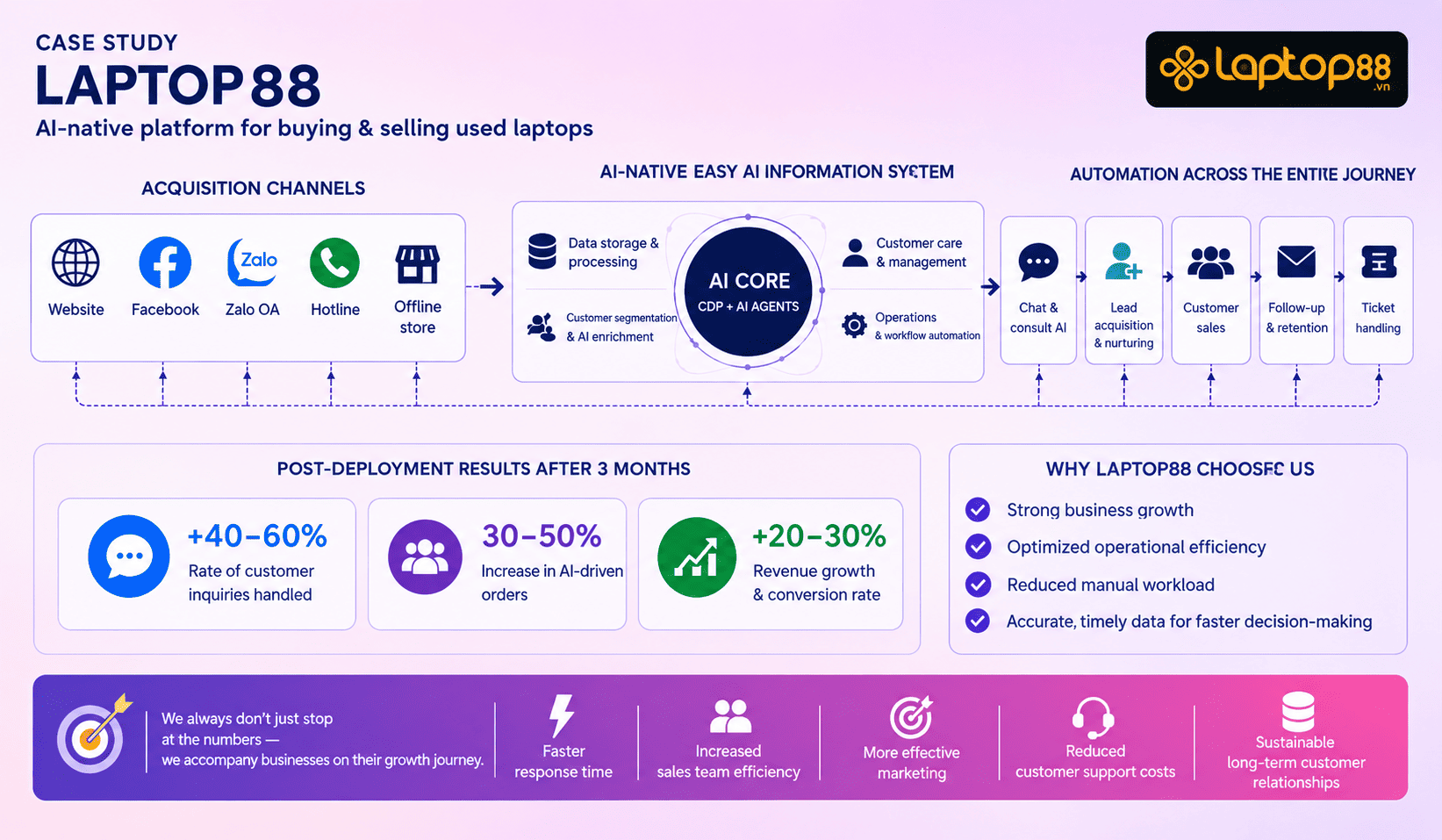
Laptop88: Increases Multichannel Customer Response Rate by 60% in Three Months
- Context: As a retail chain operating across multiple channels—the website, Facebook Messenger, Zalo OA, and CareSoft—Laptop88 faced challenges caused by fragmented data and significant delays from manual conversation routing.
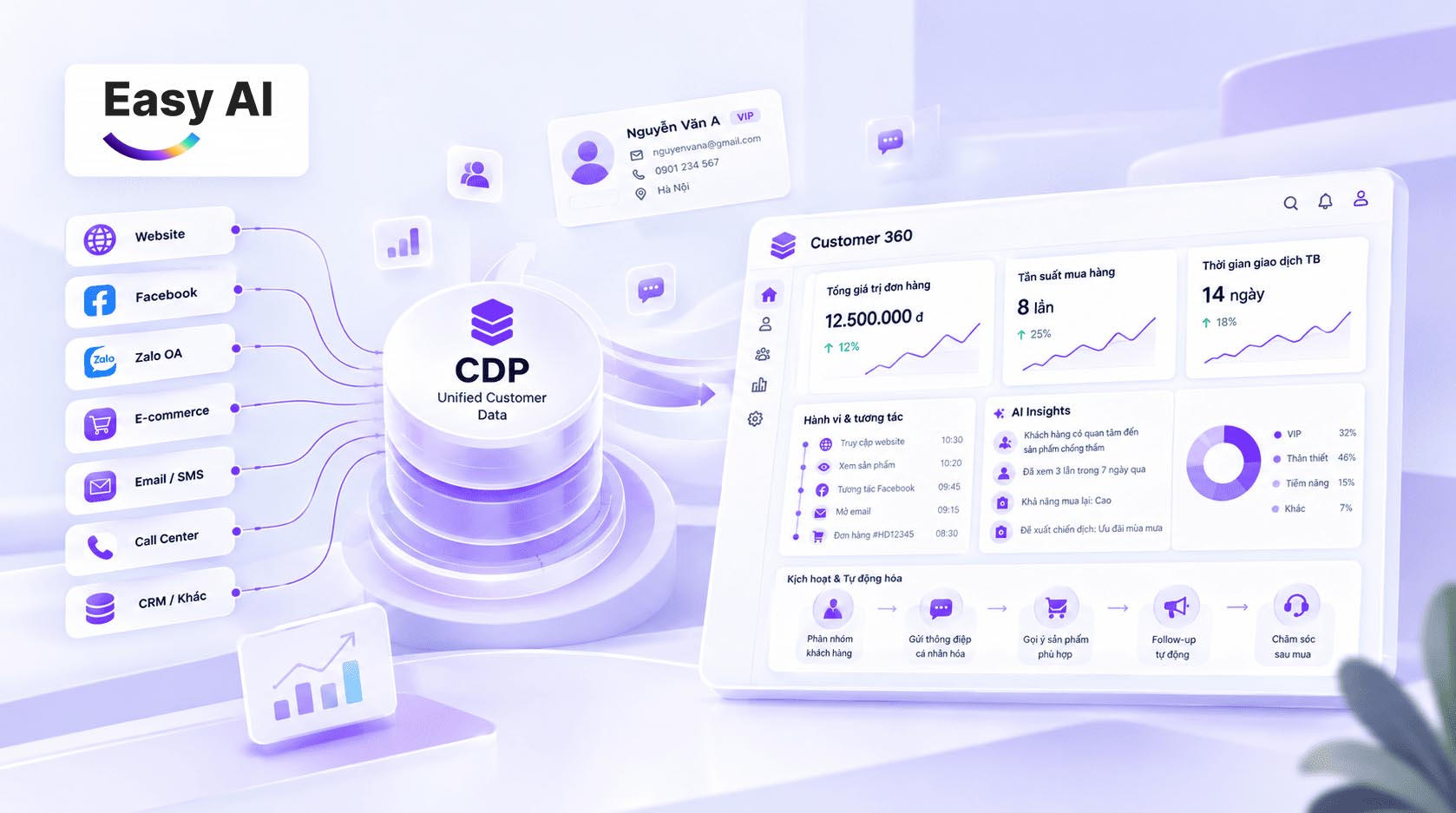
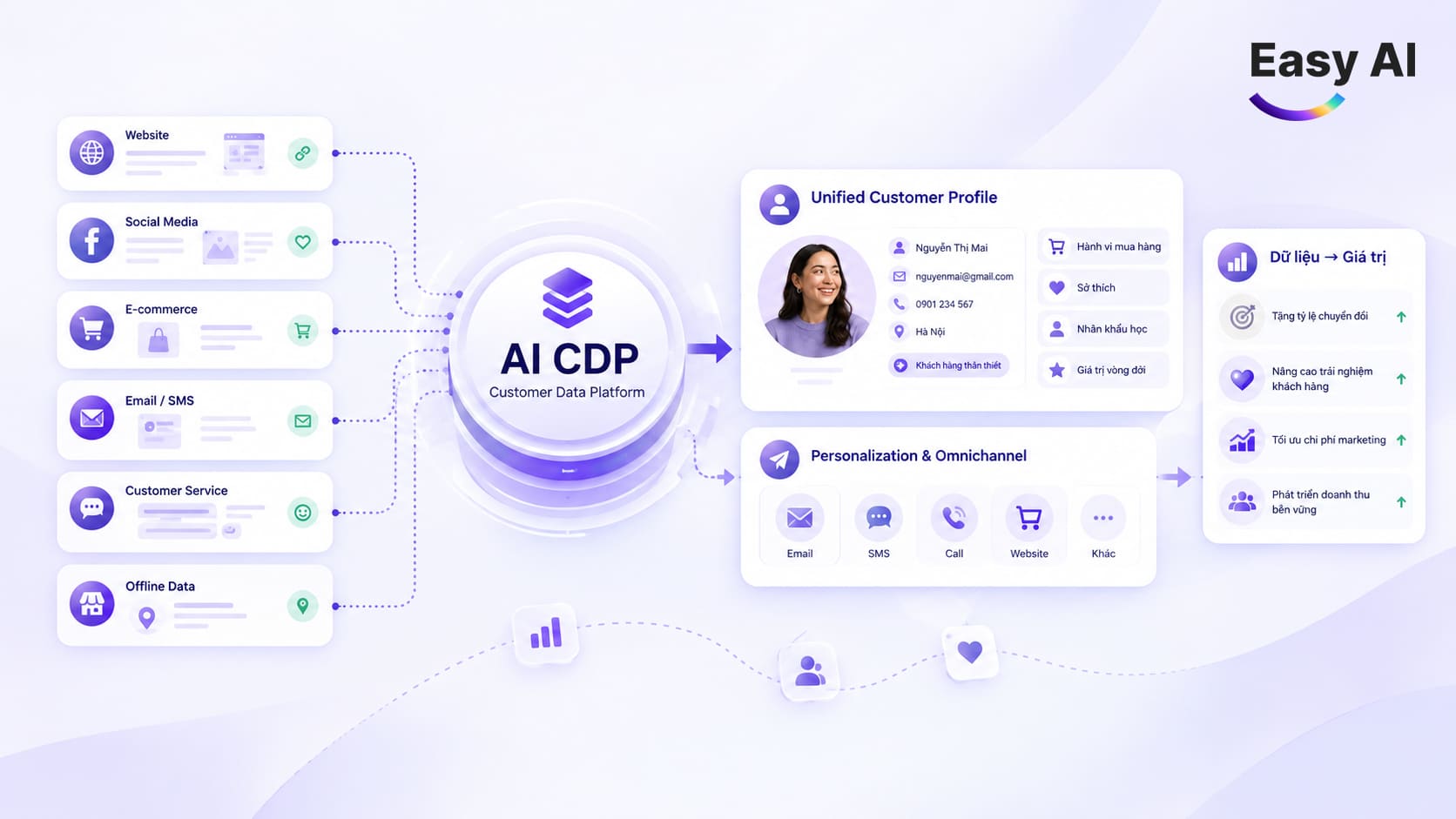
- Solution: Easy AI built an AI LiveChat system combined with CDP (customer data platform), consolidating all conversations into a centralized inbox. AI identified customers’ initial needs 24/7, intelligently routed conversations, and handed them off to Sales with the full historical context.
- Results: After three months of deployment, Laptop88 achieved a 40–60% increase in customer response rate, had AI assist with 30–50% of conversations automatically, and increased digital interactions by 20–30%, successfully transitioning to a data-driven business model.
10. Conclusion
AI LiveChat is not simply an automated chat window or a way to replace people entirely. It is a solution that closely combines artificial intelligence with Sales and customer service teams. The system’s effectiveness depends on the quality of its input data, its routing rules, and its ability to integrate flexibly with operational tools.
To deploy AI LiveChat effectively, businesses should start with a real operational challenge. Define the channels to connect, specify when AI should hand conversations to an agent (Human Handoff), and establish specific performance metrics, such as response speed, close rate, and CSAT.
Easy AI is proud to be a trusted choice for leading Vietnamese businesses, including Viettel Store, Dien May Cho Lon, and Laptop88. As a pioneer of the AI-native platform and Revenue AI OS, Easy AI helps businesses improve operations, elevate the customer experience, and achieve sustainable revenue growth.
Ready to turn your Live Chat channel into an automated revenue engine with Easy AI?
Don’t let potential customers leave because they have to wait a few minutes for a response. Explore the AI LiveChat solution within the Revenue AI OS ecosystem to improve your consultation workflow and increase your business’s conversion rate.
>>> Sign up for a consultation and try a demo of the Easy AI LiveChat solution here!
Topics
FAQ
Recommended for you