

Agentic AI
Agentic AI is a system design in which AI components can select and execute multiple steps toward a goal within explicit authority, observation, and stop controls.
Read moreExplaining in-depth AI, sales, customer data, and operations terminology to help businesses understand key concepts and apply AI effectively in practice.
Agentic AI is a system design in which AI components can select and execute multiple steps toward a goal within explicit authority, observation, and stop controls.
Read moreRetrieval-augmented generation (RAG) is a pattern that retrieves selected external material at request time and supplies it as context to a generative model.
Read moreAn AI Copilot is an interactive AI assistant embedded in a user's workflow. It helps people find information, draft content, analyze context, and complete routine tasks while the human remains responsible for decisions and approval.
Read moreAn AI Harness is the runtime layer around an AI model that enables it to use tools, manage context, execute multi-step tasks, control actions, and record execution results in production.
Read moreAn AI Agent is an AI system that can understand goals, analyze context, plan tasks, use authorized tools, and perform one or more actions to complete a specific task.
Read moreAI orchestration is the design and operating layer that connects AI agents, models, data, tools and workflows so a system can pursue a goal with explicit sequencing, permissions, controls and handoff rules.
Read moreAI Automation is the use of AI to automate repetitive tasks and processes, shifting part of the manual work traditionally handled by people to AI-powered systems.
Read moreAn AI Workflow is a business process designed to incorporate AI into one or more processing steps, enabling the system to analyze data, understand context, make decisions, or perform actions within a defined scope.
Read moreAI Adoption refers to the extent to which a business actually incorporates AI into its operations and uses it consistently across business processes, rather than simply experimenting with AI or using it as a standalone tool.
Read moreAI-native describes a product, service, business process, or operating model designed with AI as a core capability from the outset, rather than building the system first and adding AI later.
Read moreAI Transformation is the strategic process of integrating AI into business operations, workflows, products, services, and decision making to improve efficiency, drive innovation, and create measurable business value.
Read moreAI Runtime is the infrastructure and software layer responsible for executing, operating, and managing AI workloads in production environments.
Read moreAI Governance is a system of policies, processes, roles, and control mechanisms designed to ensure that AI is developed, deployed, and used safely, transparently, responsibly, and in alignment with an organization’s goals.
Read moreAI Memory is the ability of an AI system to remember, store, and retrieve information from previous interactions to maintain the context, history, and knowledge needed for subsequent interactions or tasks.
Read moreAI Context is the set of relevant data, information, and signals provided to an AI system at the time of processing to help it correctly understand the user, business, situation, and task objective.
Read moreAI Economics is the way businesses measure, manage, and optimize the costs incurred when using AI, particularly token consumption, model usage, and the cost of completing a task.
Read moreAI ROI (Artificial Intelligence Return on Investment) is a metric used to evaluate the economic value generated by an investment in AI relative to the cost of that investment.
Read moreAverage order value (AOV) is recognized order revenue divided by eligible orders under one stated window, currency and return or cancellation rule. It describes the mean order, not the typical customer, profit, basket quality or customer lifetime value.
Read moreCustomer acquisition cost (CAC) is the included cost of acquiring customers divided by the number of new customers acquired under the same scope and time rule.
Read moreCustomer retention is a business's ability to keep customers from a defined starting cohort active or current through a stated period. Retention rate is one way to measure that outcome; “retained” must match the business model.
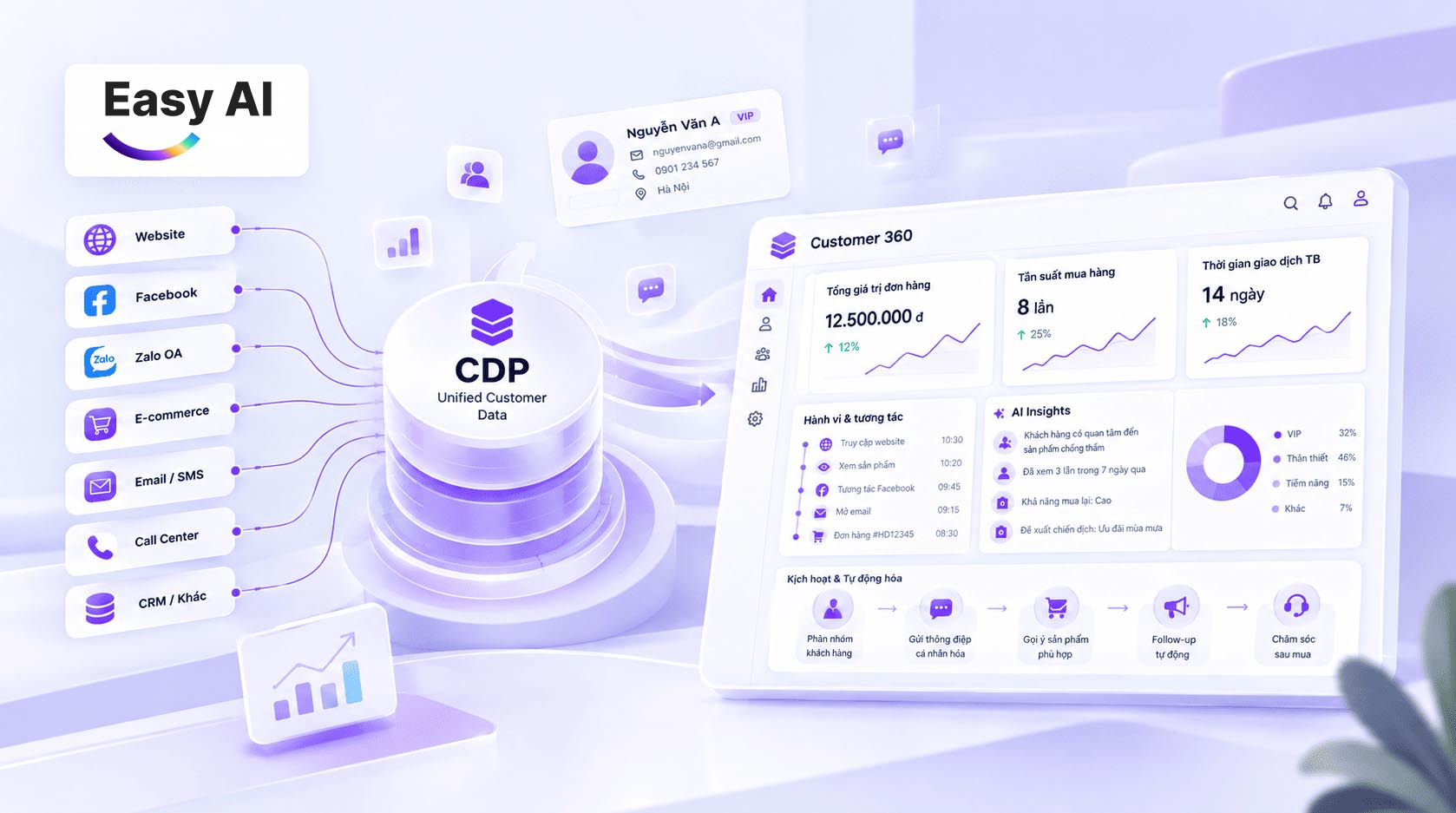
Read moreCustomer 360 is a governed view that connects selected customer records and interactions for a defined decision. It is not automatically one database, a complete picture of a person, or proof that every record belongs together.
Read moreAn automation sequence is an ordered set of timed actions and checks for one eligible entity, with explicit entry, exit, suppression, ownership and failure rules.
Read moreA workflow is a defined sequence of states, tasks, decisions, owners and handoffs that moves one unit of work from a trigger to an accepted end state. It can be manual, automated or mixed; drawing arrows does not make the underlying work reliable.
Read more