
What Is AI-Native? The Operating and Growth Stack
1. What Is AI-Native? A Standard Definition in Enterprise Architecture
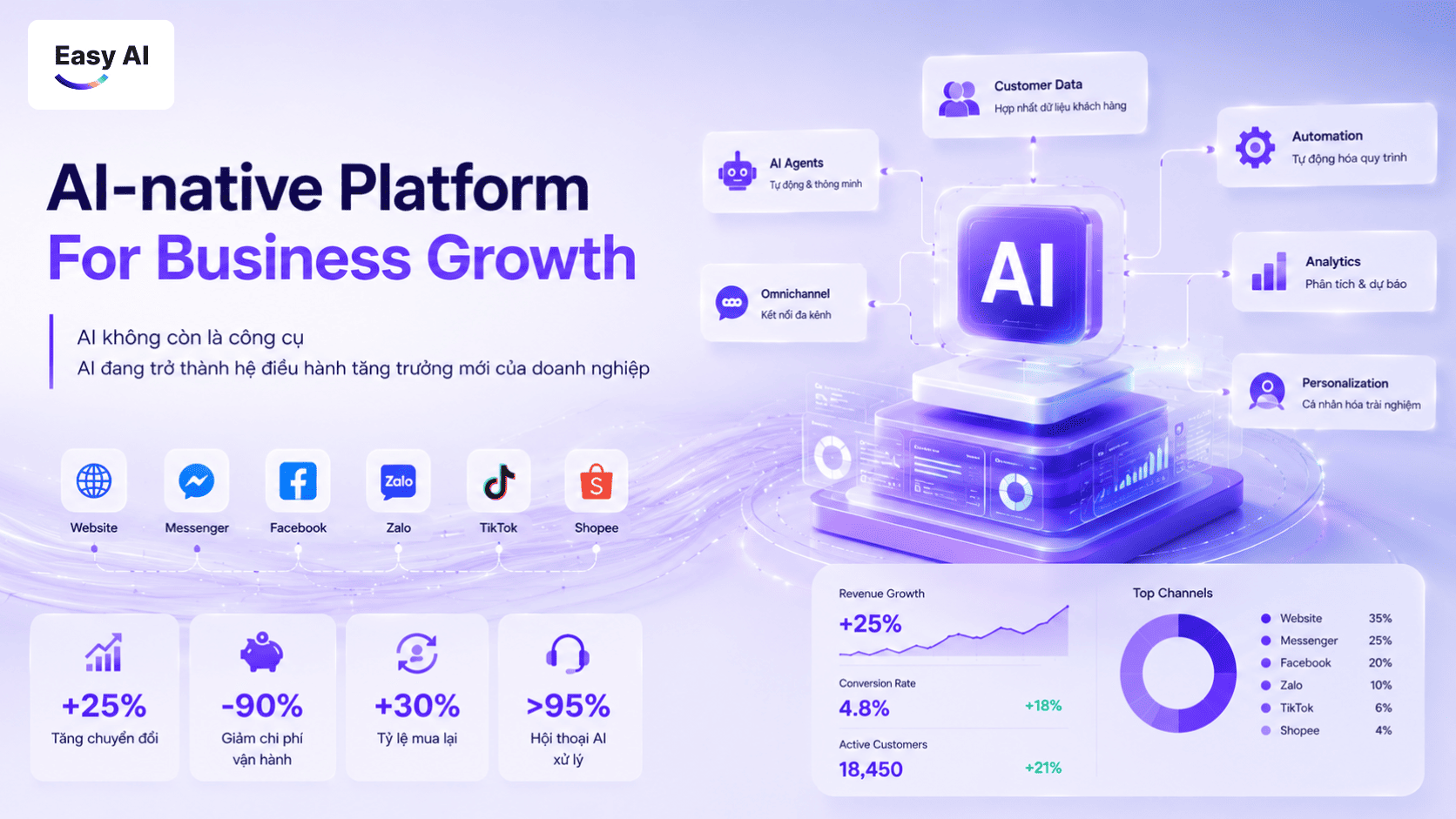
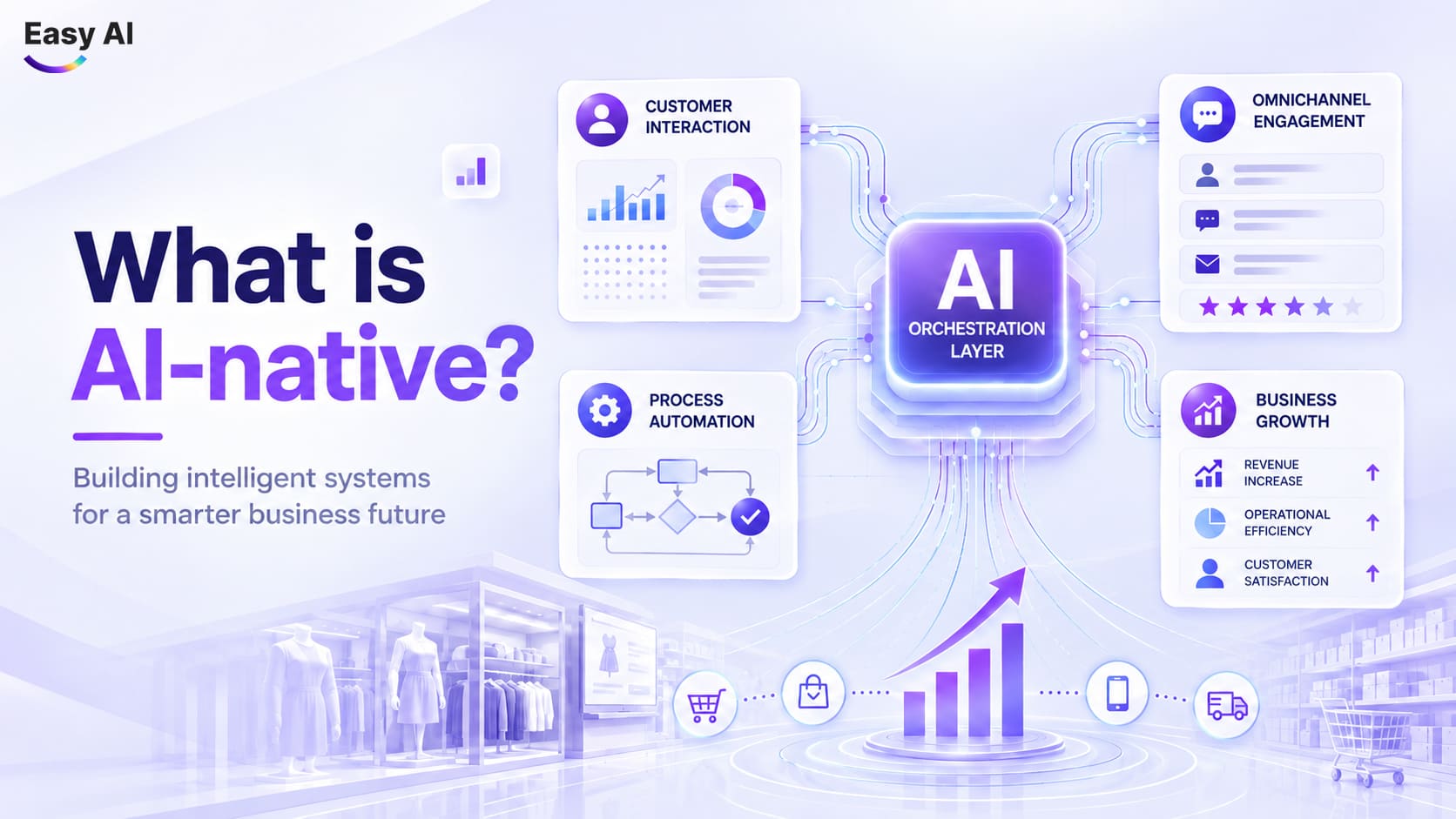
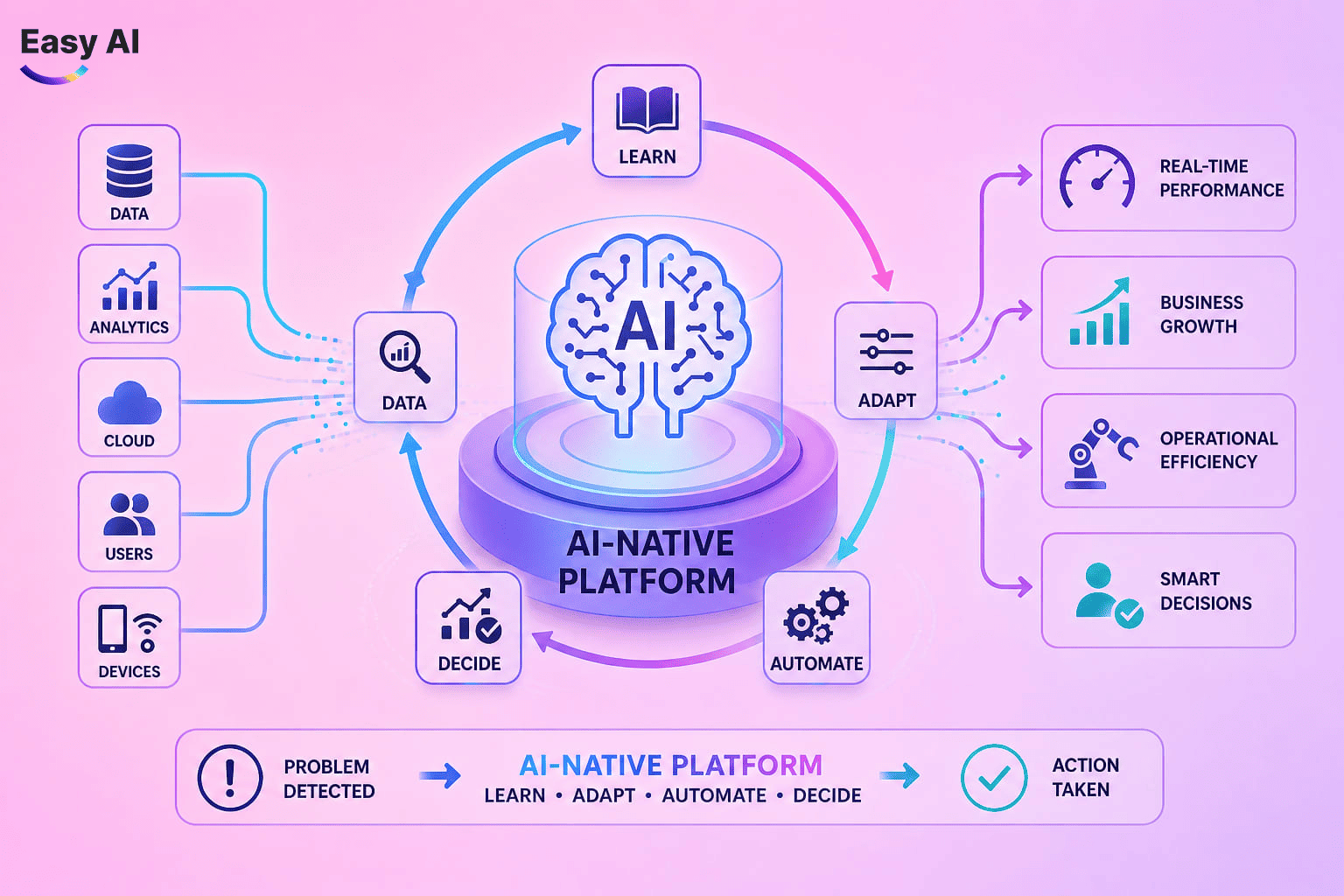
AI-native describes an approach to building enterprise systems in which AI is designed as a core part of the operating architecture, rather than added as a standalone feature. This model connects data, interactions, and workflows to support analysis, decision-making, and task execution—provided that the business maintains effective control over data, permissions, and human oversight.
When exploring what AI-native means, it is important to distinguish AI at the architectural level from an AI tool added to existing software. In an AI-native model, AI participates throughout how the system receives data, understands context, recommends decisions, and takes action within its authorized scope.
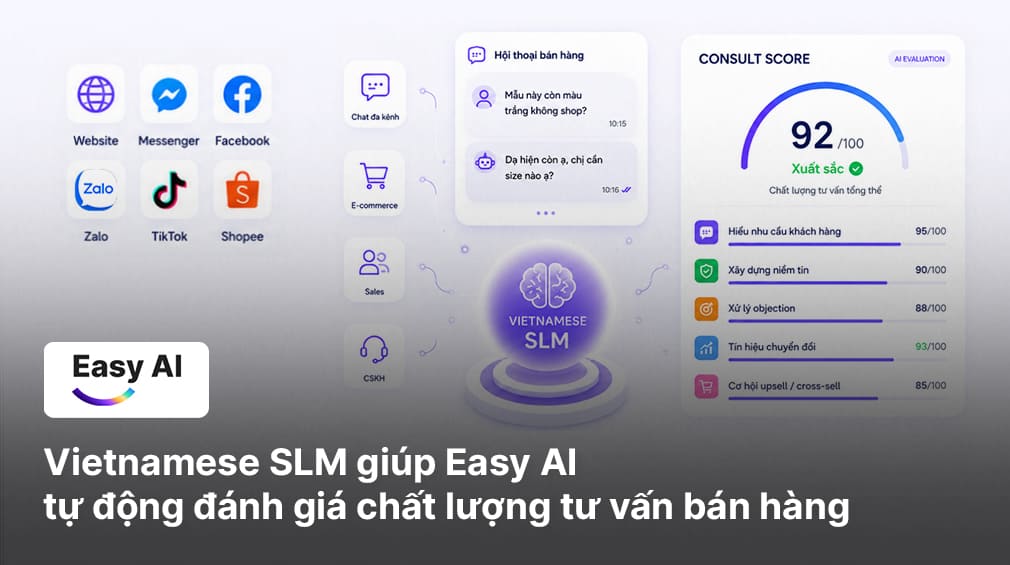
For example, a customer service workflow might combine interaction history, product information, and the current conversation to answer a question, update a ticket, or hand the conversation off to an employee. AI does more than generate a response; its operational value depends on whether the system can retrieve the right data and take the correct next step.
This architecture can help businesses make better use of data, adapt workflows to their needs, and support decisions using multiple sources of information. However, AI does not automatically turn inaccurate data into reliable decisions. Businesses need to define which data may be used, which actions AI is permitted to take, when a case must be handed off to a person, and who is responsible for oversight.
2. AI-Native Platforms vs. Traditional Software with AI Added
Traditional software can incorporate useful AI without requiring the entire system to be replaced. The difference often lies in AI’s role in the architecture, the level of data connectivity, and the ability to bring analytical results into operational processes.
| Dimension | Traditional software with AI added | AI-native platform |
|---|---|---|
| Architecture | Core processes are usually built first; AI is added to selected functions. | AI is considered in the design of data, workflows, and interactions. |
| Role of AI | Supports a task such as search, classification, or content generation. | Can support multiple steps, from understanding context to taking authorized actions. |
| Data processing | Depends on the integrations and data structures of each system. | Designed to connect relevant data in a unified processing flow. |
| Flexibility and learning | Changes in requirements often require custom configuration or development. | Workflows and knowledge can be adapted according to the business’s governance rules. |
| Decision speed | Data may need to move through multiple tools or manual steps. | Can support near-real-time decisions when data and integrations are in place. |
| Long-term scalability | Depends on the original design, APIs, and integration costs. | Can scale across workflows, data, and AI capabilities, but still requires architectural governance. |
This is a general comparison, not a conclusion that older systems are always less flexible. A legacy system with an open architecture, well-managed data, and suitable integrations can still work effectively with AI. Conversely, an AI-native platform does not create value on its own if it has only an AI model and lacks reliable data, clear processes, and control mechanisms.
3. The Key Benefits of the AI-Native Model for Businesses
AI-native benefits should be assessed through operational mechanisms and real-world outcomes, not promises of growth rates. Four areas are generally worth considering: productivity, customer experience, long-term costs, and the ability to build operational capabilities over time.
- Productivity: AI can handle repetitive steps such as retrieving information, classifying requests, drafting responses, or updating workflows. Employees then have more time for situations that require judgment, negotiation, or coordination across departments. The impact depends on how much of the process can be standardized and how much rework is needed when AI responds incorrectly.
- Customer experience: When AI retrieves the right information and understands interaction history, a business can maintain more consistent conversations across channels. But the experience improves only when the system knows when to respond, when to ask follow-up questions, and when to hand off to an employee.
- Long-term costs: Automation can reduce some manual steps and the cost of repetitive processing. At the same time, businesses still need to account for integration, data management, testing, monitoring, and model maintenance costs. Compare total cost of ownership with current costs for each specific process.
- Cumulative advantage: Interaction data and workflow outcomes can help a business better understand frequently asked questions, bottlenecks in the customer journey, and operational needs. This value accumulates only when data is managed properly, feedback informs improvements, and people remain accountable for decisions.
4. Core Characteristics of a True AI-Native Platform
An AI-native platform is not defined simply by the presence of a chatbot or language model. Businesses should assess how the platform processes data, governs knowledge, and brings AI into real-world actions.
- AI across the journey from data to interaction: The system needs to connect relevant data with interactions and workflows. This does not mean all data must be consolidated in one place; businesses need to identify data sources, identity resolution methods, access permissions, and purposes of use.
- Continuous learning with governance: A system can be improved as a business updates its knowledge, rules, and operational feedback. “Learning” requires review, versioning, and evaluation processes; businesses should not assume that AI learning automatically from every conversation is safe or appropriate.
- Automation with limits: AI can perform tasks such as advising, scheduling, tracking requests, or initiating workflow handoffs when it has been granted permission. For sensitive actions or cases with insufficient data, it should stop for confirmation or hand the case off to the person responsible.
- Near-real-time decisions: When data and integrations are ready, a system can help employees respond to or process events faster. Businesses need to monitor latency, accuracy, integration errors, and output quality. Human handoff and oversight mechanisms help address cases where AI is uncertain or operating outside its permitted scope.
5. Practical Applications of AI-Native in Business
AI in business should be considered through specific operational challenges: interaction volumes, response times, available data, and processes for handing work off to employees. Compared with models that rely heavily on delayed reporting and manual tasks, an AI-native approach connects data with workflows to support near-real-time processing. Outcomes still need to be assessed using clearly defined metrics.
ERADO: Handling High Volumes in Customer Service
ERADO implemented an AI customer service solution for the furniture industry and handled more than 10,000 conversations per month. This figure reflects the conversation volume reported in the case study; on its own, it does not indicate the rate of conversations resolved by AI, cost savings, or revenue impact.
For a business with high interaction volumes, the ERADO case suggests practical questions: What types of conversations does AI handle? Where does it retrieve data from? Which situations require an employee to take over? These answers should be assessed against confirmed KPIs and the scope of implementation, rather than inferred from a single metric.

Laptop88: Measuring Response Outcomes After Deployment
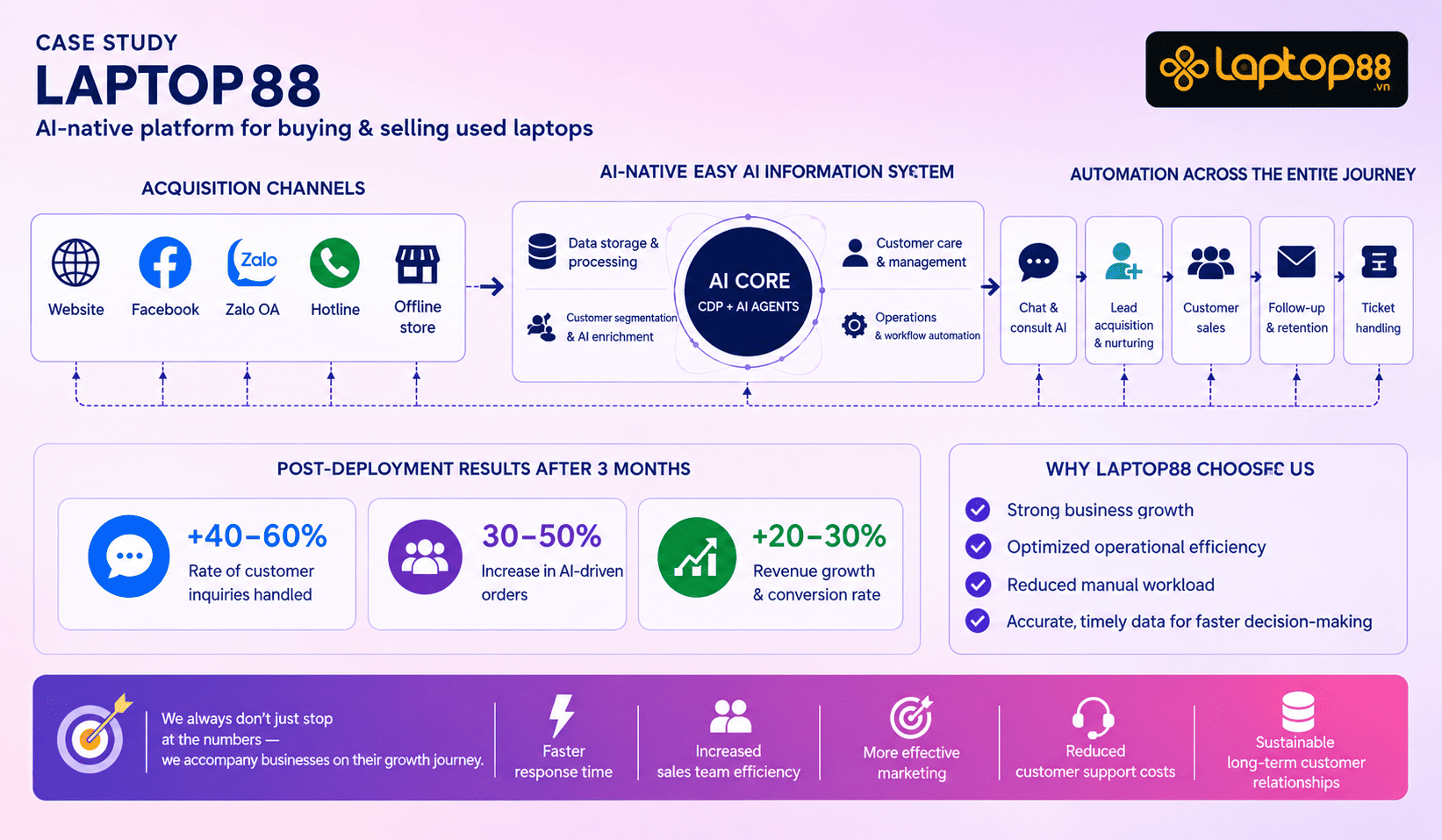
According to Easy AI’s case study, Laptop88 increased its response rate to messages by 60% after three months of deployment. This is a specific result reported in the material; it should not be attributed to a particular feature or cause unless the published information confirms that connection.
To interpret this result in the context of another business, clarify the baseline metric, the definition of “message responded to,” and the comparison period. This approach helps managers distinguish a case study result from a goal that needs to be validated in their own process.
6. The Technical Architecture Layers Inside an AI-Native Platform
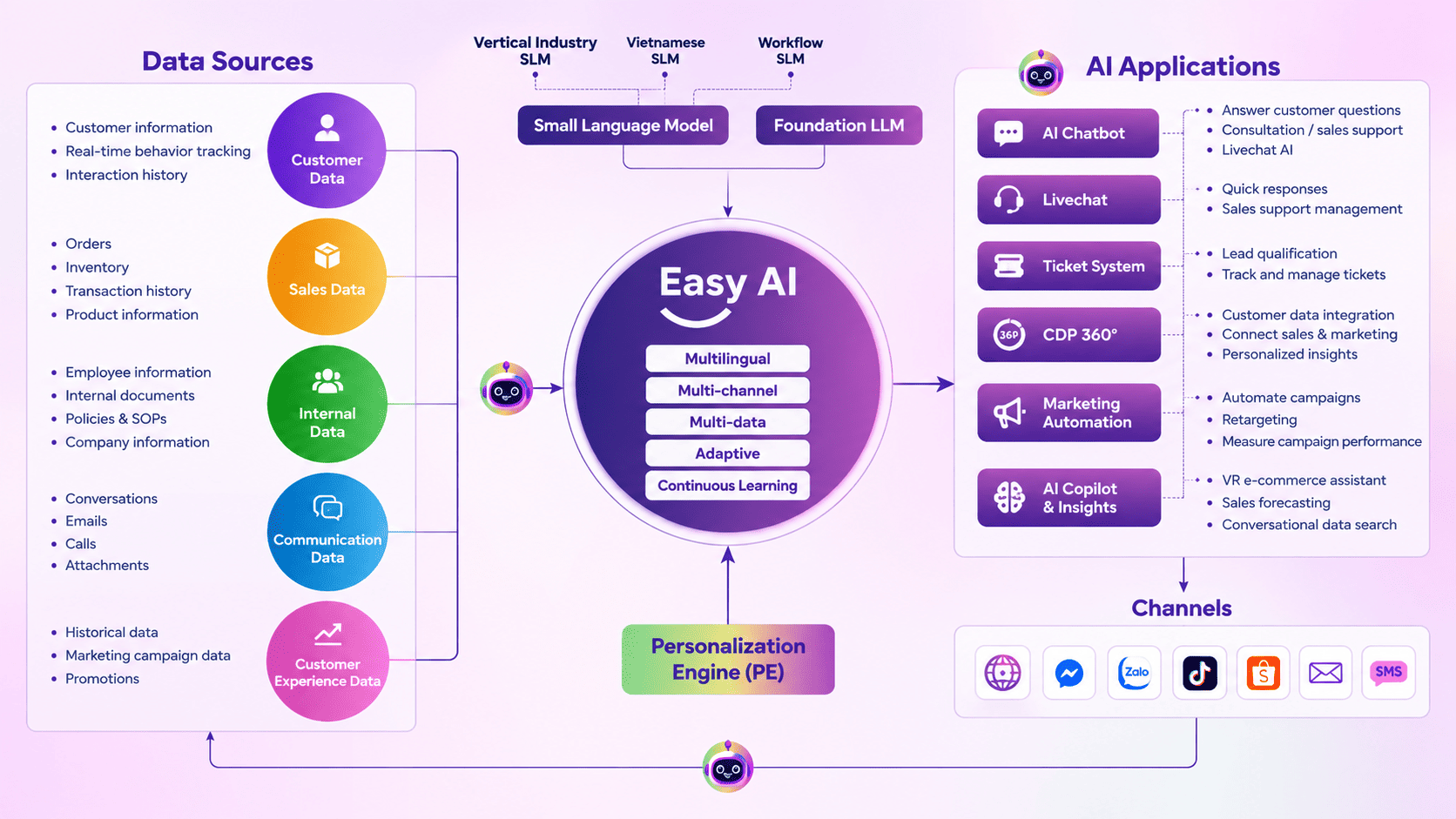
There is no single architecture diagram that fits every business. However, when evaluating an AI-native platform, you can consider the following four conceptual layers.
- Data layer: Connects relevant sources such as a CRM, sales systems, customer service platforms, or document repositories. Clarify how data is synchronized, identities are resolved, permissions are assigned, and missing or duplicate data is handled.
- Multi-agent and workflow: Some systems coordinate multiple AI agents or processing components to complete different steps. Designs can vary; what matters is that workflows are auditable, have clear states, and limit execution permissions.
- Knowledge layer: Provides business information for AI to retrieve when handling requests. It needs content owners, update processes, and mechanisms for handling conflicting or outdated documents.
- Governance & trust: Defines who can access data, what AI is permitted to do, which activities require approval, and how errors are recorded. This includes oversight, human handoff, and review processes when the system produces an unsuitable result.
These components are a reference framework, not a mandatory checklist for a single design. Businesses should choose an architecture based on data sensitivity, integration requirements, and the risks of each workflow.
7. Common Mistakes Businesses Make When Implementing AI
- Starting with technology instead of the business problem. Choosing a model or chatbot before identifying bottlenecks can lead to an implementation that is disconnected from business outcomes. Choose a specific workflow, establish baseline KPIs, and assign an owner.
- Expecting AI to handle every case on its own. Vague requests, missing data, and exceptional cases still require people. Define handoff thresholds, the types of cases AI may handle, and who receives the handoff.
- Ignoring data and knowledge quality. Outdated documents or inconsistent product information can reduce the reliability of responses. Assign data owners, set update schedules, and establish testing processes before expanding.
- Integrating too broadly at the outset. Connecting multiple systems before defining data flows increases complexity and risk. Start with the data sources and actions needed for one workflow, then assess before expanding.
- Measuring AI activity instead of operational impact. The number of queries or tokens does not show whether a business is serving customers better. Track relevant metrics such as first response time, first-contact resolution rate, bookings, conversion, or cost per interaction; distinguish measured results from forecasts.
8. Is Your Business Ready for the AI-Native Era?
A business does not need to move its entire system to AI-native in one go. A practical roadmap usually starts with one process that has usable data, a clear workload, and a measurable KPI established before deployment. Before expanding, check three things: Is the data reliable enough? Are AI’s permissions clearly limited? Can employees monitor or take over when needed? If these questions do not yet have answers, the priority is to standardize operations, not add another AI model.
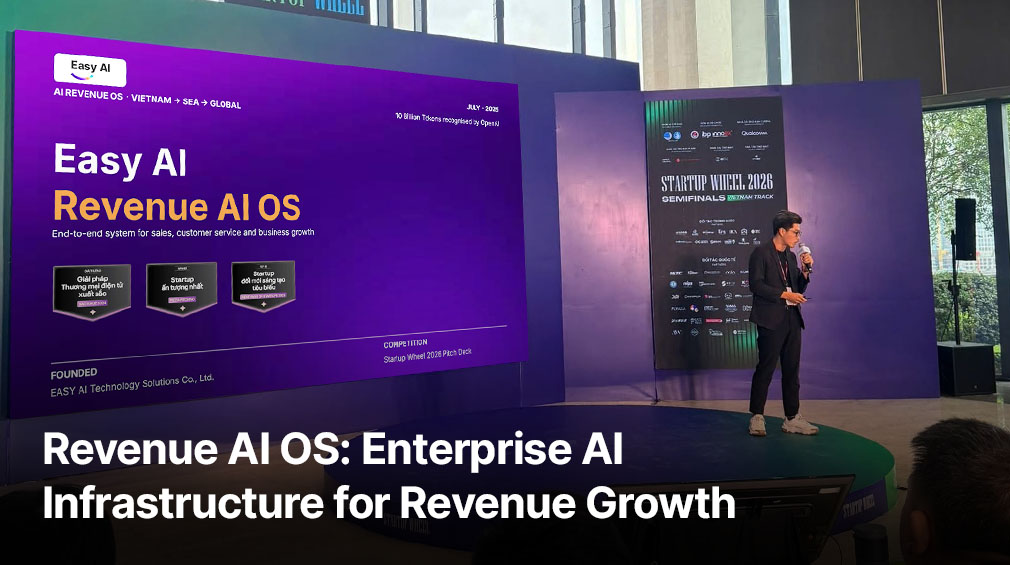
Easy AI approaches AI as an execution layer connected to data and workflows, aligned with the Revenue AI OS vision. If you are evaluating an AI-native roadmap for sales, customer service, or operations, we can work with you to define the business problem, KPIs, and an appropriate implementation scope.
Ready to transform operations and accelerate revenue growth with Easy AI?
Don’t let your business fall behind in the technology race. Let Easy AI’s technology experts work with you to assess your current data landscape, design an AI-native platform transformation roadmap, and improve the performance of sales and customer service with the Revenue AI OS operating system.
>>> Contact Easy AI today to receive in-depth advice on a solution for your business!
Topics
FAQ
Recommended for you