



CRM vs CDP: Which Customer System Do You Need?
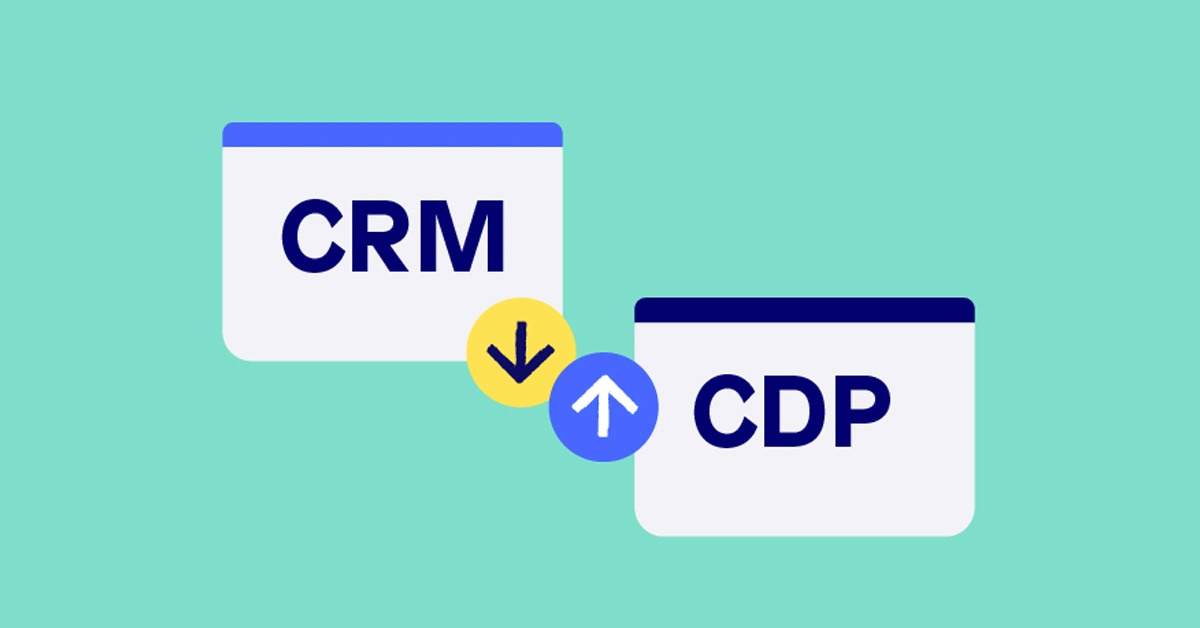
Choose a CRM when the primary job is to manage known customer or prospect relationships, ownership, activities, pipeline, and service work. Consider a CDP when a defined decision requires unifying governed data across multiple sources and activating a trusted profile at scale. Use both only when the contracts between them are clear. Many teams should fix CRM and source governance before buying another customer-data layer.
Compare the operating jobs
| Question | CRM | CDP |
|---|---|---|
| Primary job | Manage relationship work and accountable next steps | Collect, resolve, govern, segment, and activate cross-source customer data |
| Typical records | Contacts, companies, opportunities, activities, cases | Profiles, identities, events, attributes, audiences, activation state |
| Main users | Sales, service, revenue operations | Data, marketing, analytics, customer experience |
| Write pattern | Human and workflow updates around work | Ingestion/transformation from multiple systems plus governed activation |
| Critical control | Ownership, lifecycle, permission, task/case state | Identity resolution, provenance, consent/purpose, freshness, destination policy |
| Failure mode | Dirty records and orphaned work | False unification and activation at scale |
Salesforce defines CRM around managing company interactions with current and potential customers, and describes a CDP as software that brings customer data together for use. These are vendor definitions, not proof that a specific product or architecture fits your business.
Choose among four architecture outcomes
- Is the problem that no person owns the lead, account, opportunity, or case? Fix CRM/process ownership first.
- Is the problem inconsistent fields, duplicates, missing consent, or stale lifecycle state inside one CRM? Clean and govern it first.
- Does one approved decision need current data from commerce, product, web/app, service, and CRM? Define the decision and source contract.
- Can identity be resolved safely and can every activated field retain provenance, freshness, purpose, and correction? If not, do not unify yet.
- Are destinations, audiences, suppression, monitoring, and rollback operationally owned? If yes, a CDP or lighter data layer may be justified.
| Choice | When it fits | Evidence required |
|---|---|---|
| CRM only | Relationship workflow is the job and required context belongs in controlled CRM fields | Field contracts, owner acceptance, automation tests |
| CDP plus operational destinations | Cross-source identity/events drive governed segmentation or decisions | Identity accuracy review, provenance, purpose, activation controls |
| CRM + CDP | CRM owns work; CDP supplies governed profile/segments and receives relevant outcomes | Bidirectional contract, precedence, latency, correction and deletion propagation |
| Neither/new tooling later | Problem is unclear process, weak source data, or no owner | Process repair and measurable use case first |
Define and test the system-of-record contract
For each field or event, record:
business meaning
authoritative source
allowed writers
identity key and confidence
freshness/expiry
purpose and permission
precedence on conflict
destinations and prohibited uses
correction/deletion propagation
monitoring and rollback owner
“Customer 360” should mean a purpose-limited trusted view, not a promise that every record is merged or every field is true.
Fictional completed decision.
A fictional B2B parts distributor wants better renewal follow-up. Its audit shows the necessary contract date, owner, product family, service issue, and contact permission already exist in CRM, but ownership and lifecycle values are inconsistent. Web browsing data is not necessary for the first decision. The team chooses CRM cleanup plus a governed renewal workflow, not a CDP. It defines one authoritative owner field, separates service suppression from sales stage, replays the workflow, and postpones cross-source profiles until a real decision needs them. No retention or cost result is claimed.
Evaluate before buying
- Run three real use cases and map every source, write, owner, correction, and destination.
- Test shared identities, households, company emails, duplicates, deleted records, opt-outs, late events, and source conflicts.
- Price implementation, data movement, profiles, events, queries, activation, destinations, identity operations, support, and exit—not only software seats.
- Require export and rollback for identity links, segments, activation decisions, and corrections.
Salesforce also publishes a CRM-versus-CDP comparison. Use it as terminology context and confirm claims against your shortlisted vendor documentation and tests.
Frequently asked questions
Is a CDP a replacement for CRM?
Usually they own different jobs. Replacing one depends on the actual workflow, product capabilities, integrations, and governance—not the labels.
Can a data warehouse replace a CDP?
It may support the same use case when identity, transformation, activation, latency, permissions, monitoring, and ownership are implemented. Compare operating outcomes, not categories.
Does AI require a CDP?
No. AI requires purpose-fit, permitted, current, traceable context for a defined job. That context may come from one governed source.
When should a small business reconsider a CDP?
When several valuable decisions repeatedly need cross-source identity and activation that cannot be governed reliably with the current stack—and an owner can operate the new layer.
Evidence, limitations and what to do next
Use the customer-data guide for the identity contract, the CRM cleanup playbook for current-system repair, and the zero-party versus first-party guide for personalization inputs.
This is a category decision guide, not a product comparison or architecture guarantee. It claims no vendor capability, integration, identity accuracy, cost, ROI, legal permission, or Easy AI role as a CRM/CDP.
Recommended for you