What is an AI Assistant? What Businesses Need to Know
1. What is an AI Virtual Assistant?
An AI Virtual Assistant (AI Assistant) is an artificial intelligence system that supports humans in performing tasks such as answering questions, searching for information, creating content, analyzing data, or automating work.
In an enterprise environment, an AI virtual assistant can also participate directly in operations, customer service, sales, and data management.
In recent years, the concept of AI virtual assistants has become more popular than ever, driven by the rapid growth of generative AI. ChatGPT is one of the platforms that helped bring AI closer to general users.
According to OpenAI, ChatGPT supports various needs including learning, working, content creation, and handling daily tasks. This shows that AI is gradually becoming a familiar support tool in both work and daily life.
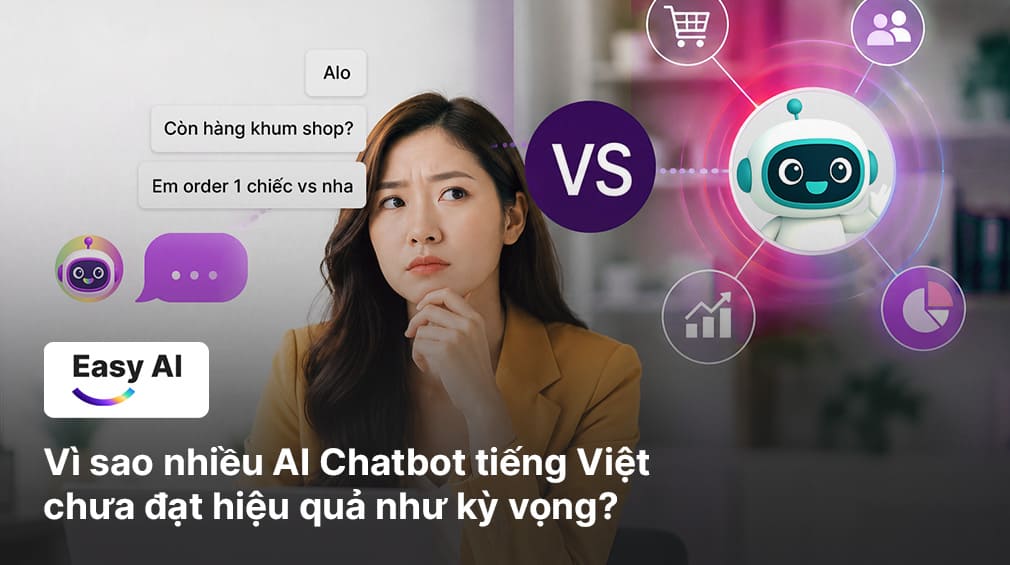
However, precisely because of this popularity, many businesses misunderstand the concept of an "AI virtual assistant." Most of the market currently views virtual assistants through the lens of personal productivity tools, whereas enterprise AI virtual assistants represent an entirely different challenge.
2. Most People View AI Virtual Assistants from a Personal Perspective
Currently, most users become familiar with AI through everyday needs such as content writing, Q&A, translation, learning, brainstorming, or task planning. This group of AI tools focuses on boosting individual productivity.
The most popular platforms today include ChatGPT, Gemini, Claude, Copilot, and NotebookLM for research and study.
These tools share several common characteristics:
Used by a single individual
Boosts personal productivity
Requires no enterprise system integration
Data is primarily kept within individual chat sessions
Has minimal connection to operational workflows
This is why many businesses today believe that "deploying AI" simply means letting employees use ChatGPT or similar tools. In reality, enterprise AI virtual assistants represent a completely different challenge.
3. How Does Enterprise AI Differ from Personal AI?
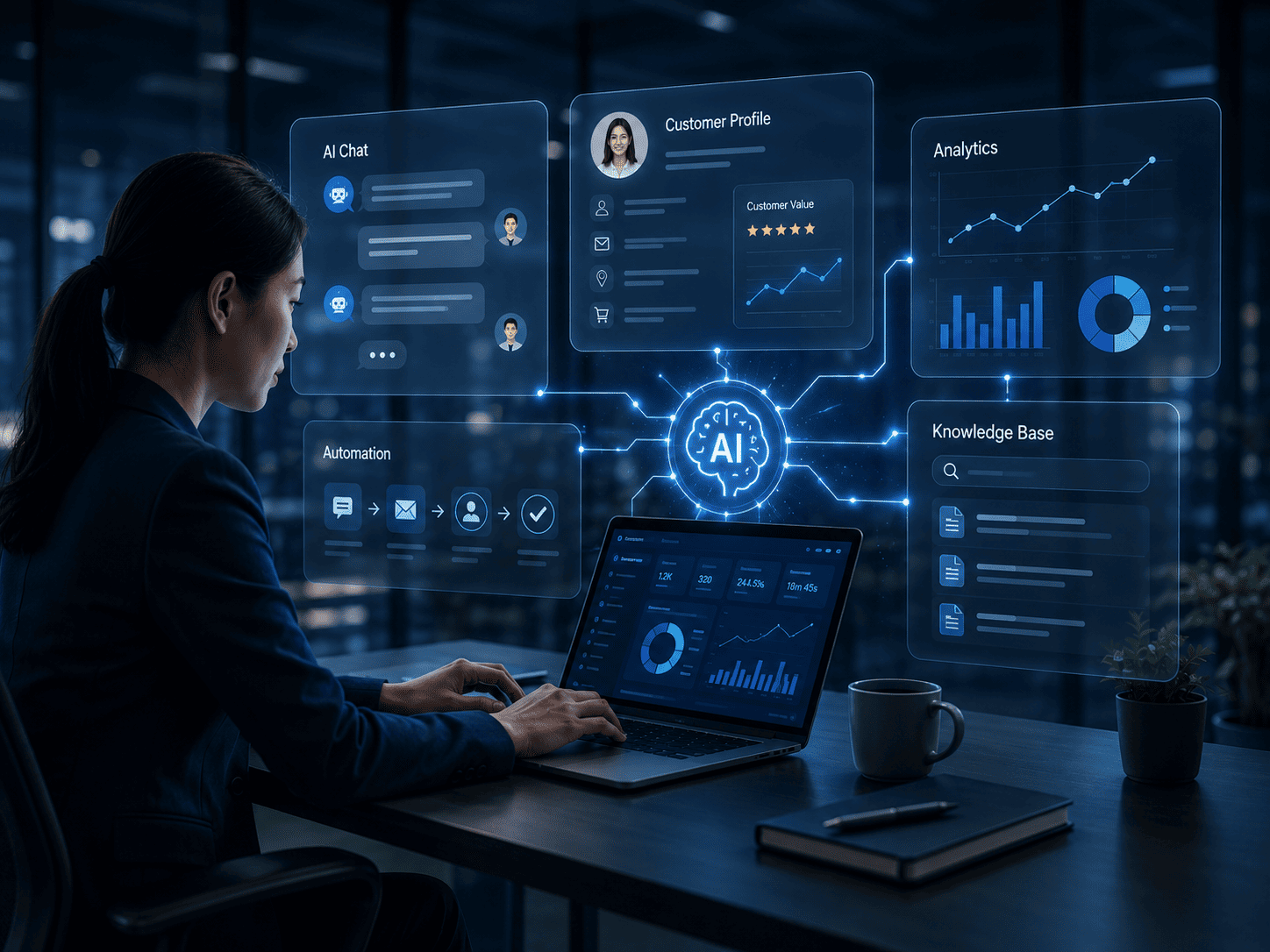
When AI enters an enterprise environment, operational requirements change entirely. At this stage, AI is no longer just a simple Q&A tool, but begins to serve as a new operational layer inside the organization. Businesses require AI capable of understanding internal data, connecting to CRMs, supporting customer service, assisting sales, synchronizing operational processes, and automating repetitive tasks.
An enterprise AI virtual assistant must be capable of:
Understanding company products and data
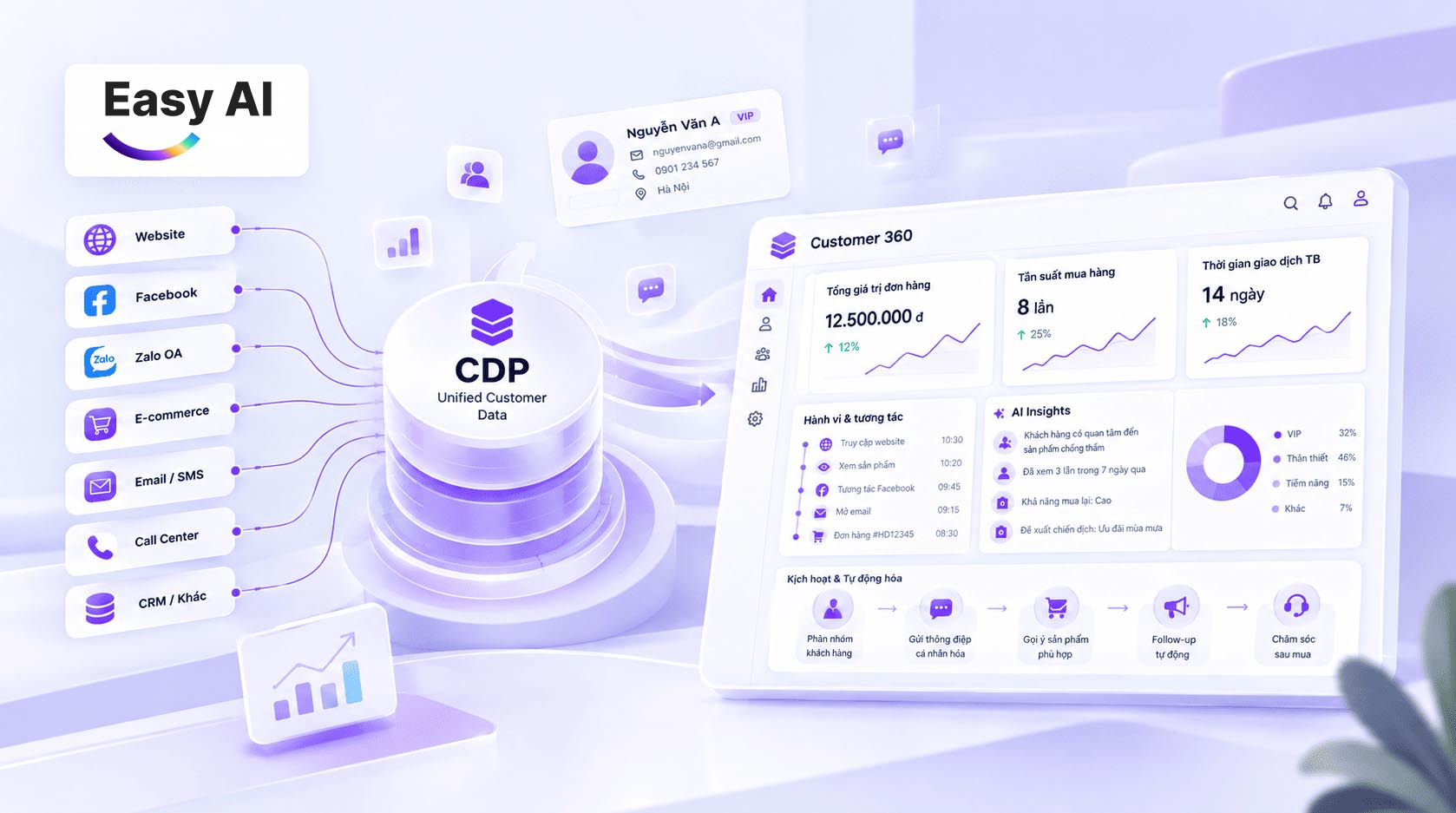
Remembering customer history
Operating omnichannel from websites to social networks
Integrating with CRMs and internal systems
Supporting multiple departments within a unified system
Automating operational workflows
The biggest difference lies in the scope of impact. Personal AI helps an individual work faster; enterprise AI helps the entire system operate more efficiently.
A clear example is that ChatGPT can help one employee respond to a customer faster. However, an enterprise AI virtual assistant helps the entire customer care team respond consistently, follow correct procedures, and operate continuously 24/7.
4. Comparing Personal AI and Enterprise AI
Criteria | Personal AI Assistant | Enterprise AI Assistant |
|---|---|---|
Goal | Supports a single user | Supports the entire organization |
Data | Short-term session data | Enterprise data |
Memory | Per chat session | Possesses memory and context |
System Integration | Almost none | CRM, customer service, internal data |
Processes | Isolated tasks | Aligned with enterprise workflows |
Role | Personal productivity | Customer service, sales, operations |
Performance Measurement | Difficult to measure ROI | Clear KPIs and measurable performance |
This comparison table shows that enterprise AI is not just an automated reply chatbot, but is gradually becoming internal operational infrastructure.
5. Why Do Many Enterprise AI Deployments Fail to Deliver Results?
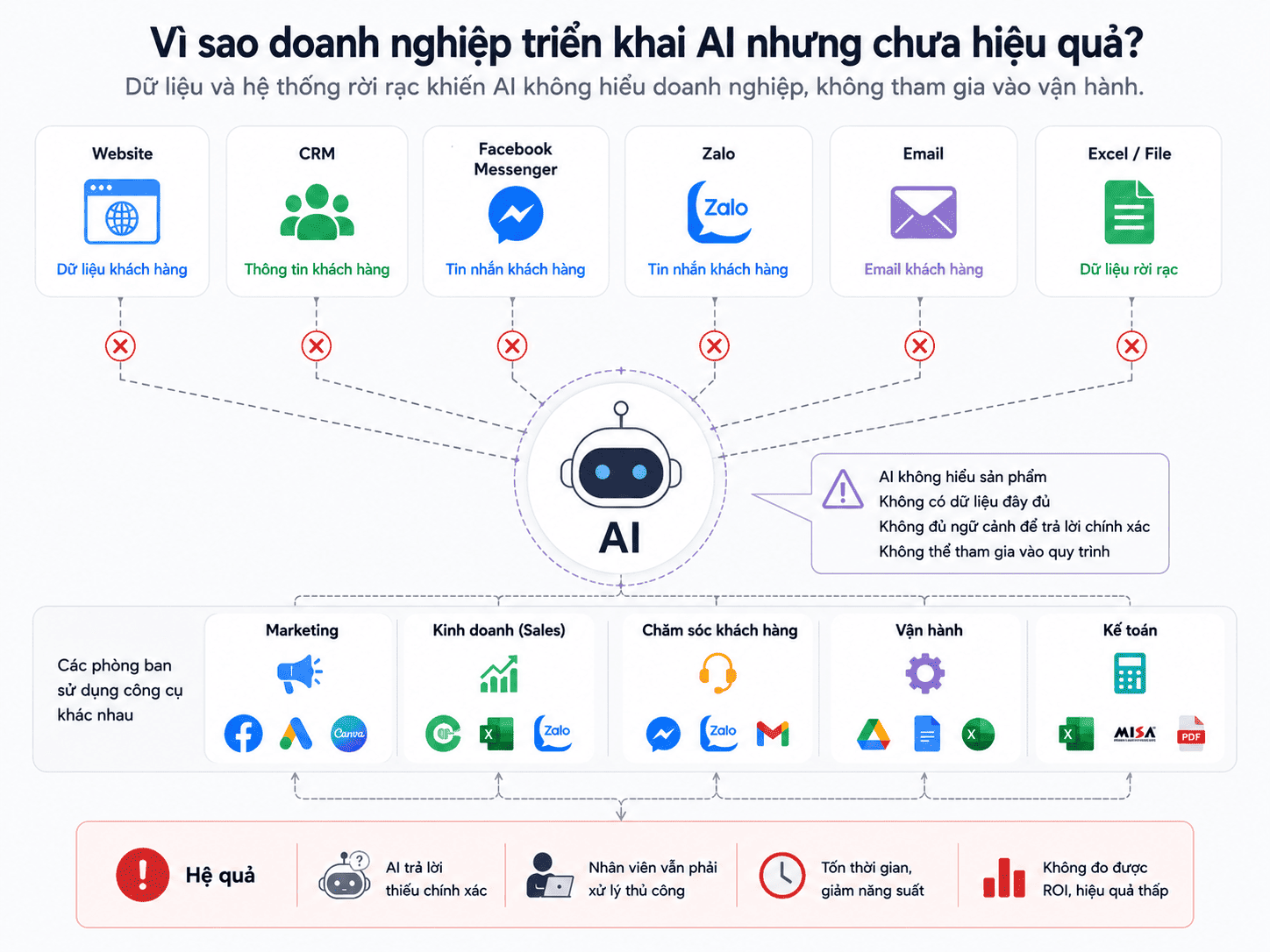
Despite increasing investment in AI, many businesses have yet to see clear results. Many think using ChatGPT is enough. However, without connecting to internal data, AI has virtually no understanding of how the business actually operates.
Many current AI systems face issues such as:
AI does not understand products
No CRM integration
Lack of clear workflows
Different departments using different tools
Data scattered across multiple locations
In these cases, businesses often deal with inaccurate AI responses, manual workarounds by staff, and virtually no measurable return on investment.
The root cause is that most businesses interact with AI through personal user tools like ChatGPT, Gemini, or Claude. This creates the impression that AI is merely a Q&A or content generation tool. Meanwhile, the greatest value of AI in an enterprise lies in its ability to connect data, automate processes, and support operations at scale.
6. Emerging Trend: AI Assistants Shifting from Chatbots to Operational AI
The AI market is entering a new phase. Instead of just answering questions, AI is participating deeper in activities like customer service, internal staff support, data analytics, and process automation.
Many AI virtual assistants today are capable of:
Automated customer care
Lead qualification
Internal staff support
Conversation analytics
Automated customer follow-ups
Data management support
Data-driven action recommendations
More importantly, AI is beginning to coordinate through multi-AI Agent models working together rather than relying on a single chatbot. This shifts AI from a "response tool" to an "operational support system."
7. Easy AI and the Comprehensive Enterprise AI Assistant Model
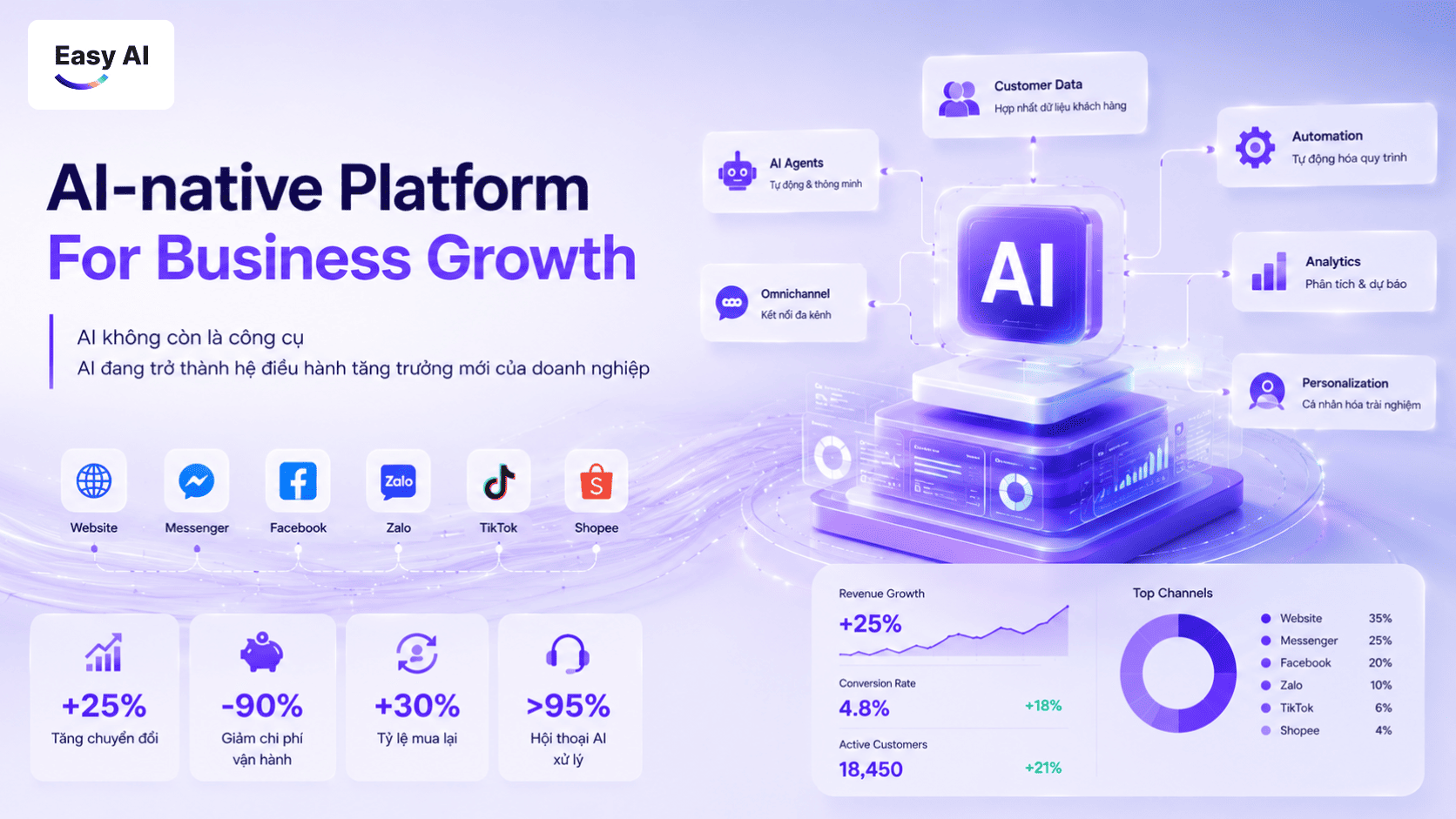
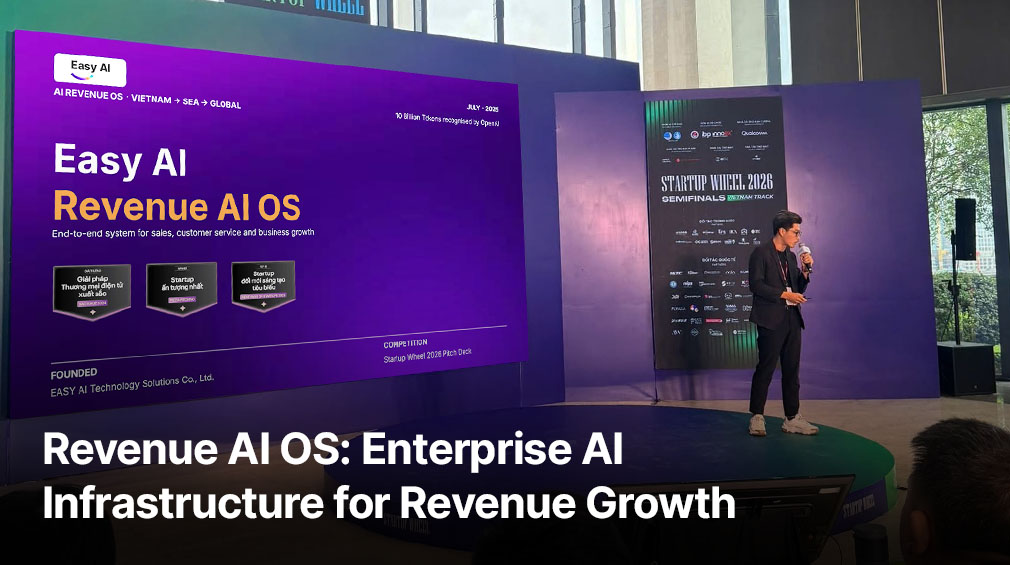
While many platforms remain focused on standalone chatbots, Easy AI pursues an AI-native model, helping businesses build end-to-end operational AI systems across customer service, sales, data analytics, and operational optimization.
In particular, AI Copilot is developed as an enterprise AI assistant, supporting everything from data retrieval to operations and customer care.
For leaders and managers, AI Copilot supports:
Rapid querying of operational data
Monitoring team performance
Analyzing customer behavior
Suggesting real-time insights
For customer care and sales teams, AI Copilot helps:
Quickly looking up information
Supporting consistent customer responses
Suggesting handling for various scenarios
Significantly reducing manual operations
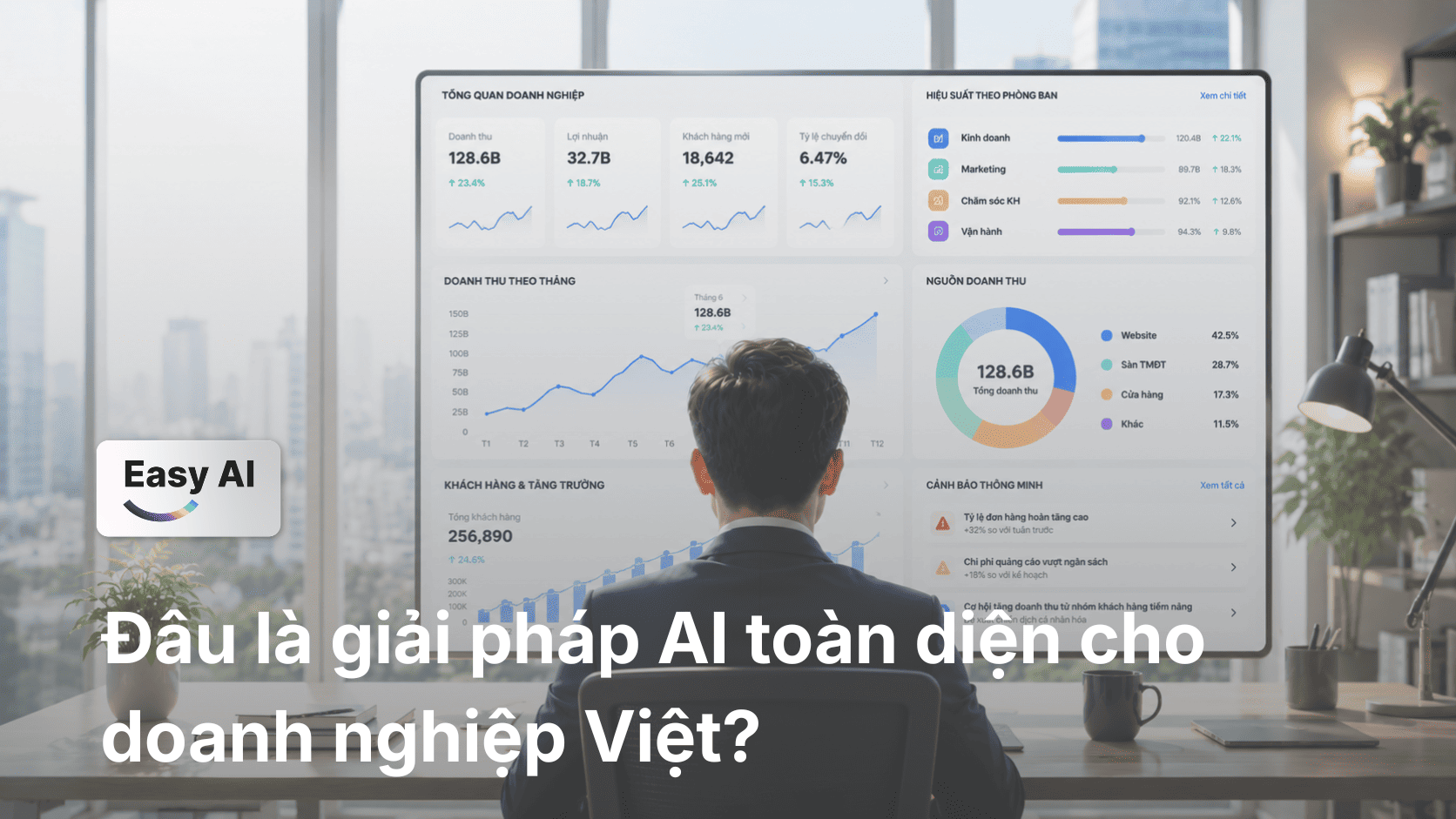
Meanwhile, management can use AI to monitor operational quality, evaluate team performance, and detect issues that need optimization earlier instead of waiting for manual reports.
The key point is that AI no longer stands alone as a isolated chatbot, but becomes a continuous operational support layer inside the enterprise.
8. Where Should Businesses Start When Deploying AI Virtual Assistants?
For businesses deploying AI for the first time, the most effective approach is starting with use cases that yield clearly measurable operational results.
Customer service and sales are typically the two most suitable areas to deploy first. These represent customer care AI use cases where performance can be measured clearly through response speeds and consultation quality.
When selecting an enterprise AI solution, organizations should prioritize platforms with capabilities to:
Understand Vietnamese well
Connect with internal data
Integrate with CRMs and existing systems
Support scaling based on operational needs
Measure effectiveness with clear KPIs
Most importantly, AI needs to be treated as part of the operational system rather than a standalone trial tool.
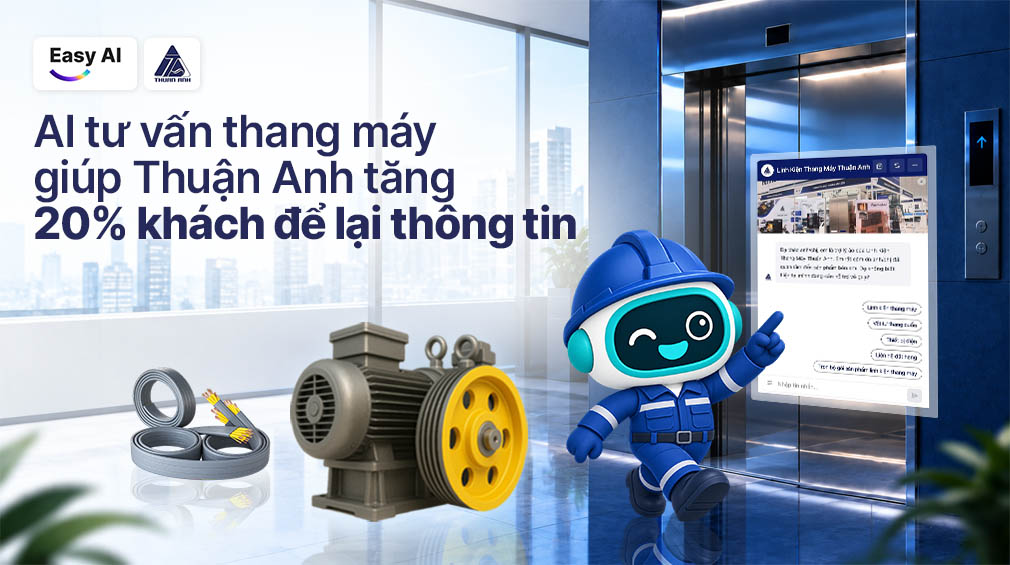
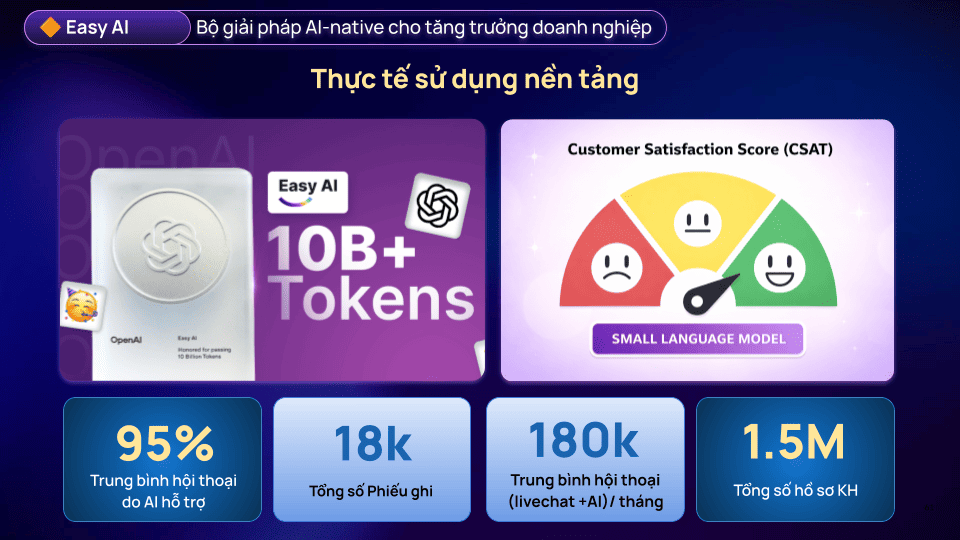
In fact, many retail and e-commerce enterprises today use AI to automatically handle most customer conversations while connecting customer and operational data on a single platform. Easy AI currently supports processing over 180,000 conversations per month and manages over 1.5 million customer profiles, demonstrating the growing role of AI in enterprise operations.
9. Conclusion
The explosion of AI has made the concept of AI virtual assistants more familiar than ever. However, personal AI and enterprise AI represent two completely different challenges. Personal AI virtual assistants help individuals work faster.
Enterprise AI virtual assistants help the entire organization operate smarter, more synchronously, and with better scalability in the digital era.
If a business views AI merely as a chat tool, the value created will be limited. But if AI is deployed as a new operational layer, it becomes the foundation for long-term future growth.
Easy AI currently supports enterprises in applying AI across customer care, sales, and operations on a single AI-native platform.
Topics