Comprehensive AI Solution for Vietnamese Enterprises
1. How Is the AI Solution Market for Vietnamese Enterprises Changing?
The AI solution market for Vietnamese enterprises is evolving rapidly. In just a few years, businesses have transitioned from the "AI experimentation" phase to incorporating AI into actual operations across sales, customer service, and data management.
In Vietnam, AI is no longer limited to basic chatbots or content generation. Enterprises are applying AI directly into CRM, omnichannel customer care, data analytics, workflow automation, and AI Agents to optimize operations and revenue growth. According to compiled industry data, 52% of customer support transactions on Vietnamese e-commerce platforms are now processed with AI participation, while 72% of large enterprises record productivity gains after implementing AI.
This trend is reshaping how businesses evaluate an "AI solution." The market no longer focuses on whether a company "has AI or not," but rather on AI's ability to participate directly in business workflows, drive revenue growth, optimize operations, and improve actual ROI.
Many businesses previously deployed AI Chatbots without clear results because systems operated in silos, lacked data connectivity, and failed to engage across the entire customer journey. This explains the market shift from standalone AI tools toward AI-native platforms capable of unifying data, workflows, and AI within a single system.
1.1 The Strong Rise of AI-Native Platforms in Vietnam
Rather than using fragmented AI tools, businesses are adopting AI-native platform models.
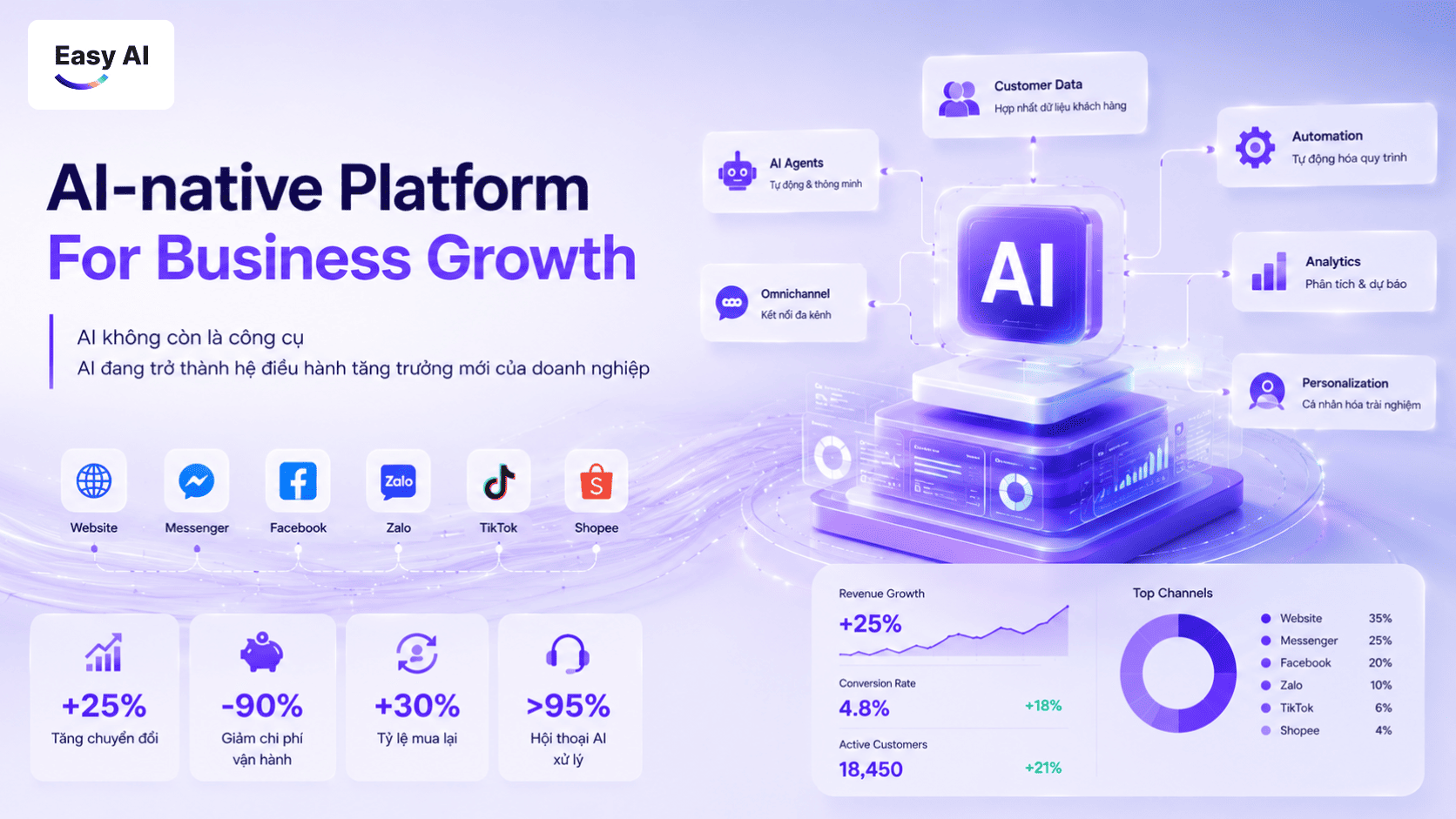
In this model, AI is no longer a support layer "attached" to legacy systems. Instead, AI serves as the central operational layer capable of:
Connecting data across multiple systems
Orchestrating workflows in real time
Personalizing customer experiences
Supporting sales and customer care throughout the buyer journey
This reflects the direction pursued by major global tech companies.
According to Gartner, over 40% of Agentic AI projects will be canceled before 2027 due to high costs, unclear business value, and lack of operational control. Gartner also highlights that the market is shifting from standalone AI add-ons to AI-native platforms capable of integrating data, workflows, and AI agents at the system level.
1.2 Enterprise Operational AI Becomes the New Trend
Modern enterprises require more than AI that simply answers customer inquiries. They need AI to directly participate in:
Optimizing sales funnels
Automating customer follow-ups
Analyzing behavior and CSAT
Managing internal workflows
Increasing conversion rates and optimizing revenue
This explains why the concept of "operational AI for enterprise" is appearing more frequently in digital transformation strategies across companies in Vietnam.
According to McKinsey's "The State of AI in Early 2024" report, enterprises are moving swiftly from GenAI experimentation to integrating AI into core activities such as marketing, customer service, sales, and operations to deliver direct impacts on revenue and operational performance. McKinsey also notes that customer service and marketing/sales currently represent the two AI application areas generating the most distinct business value for enterprises.
2. Current AI Solution Market: AI Everywhere, Few Real Implementations
AI is gradually becoming a new operational infrastructure layer for enterprises. Many companies have begun applying AI to omnichannel customer service, sales funnel optimization, lead classification, CRM support, and internal workflow automation to boost operational efficiency.
Mr. Duong Van Trung – Head of E-commerce at Rang Dong Light Bulb and Vacuum Flask Joint Stock Company shared: "We deployed AI on our e-commerce website to support product consultations and automated 24/7 customer care. AI helps customers find the right products faster, accelerates response speeds, and assists operational teams in handling large volumes of conversations efficiently."
However, a significant gap remains between "talking about AI" and "real AI implementation." Many vendors claim to provide AI solutions for Vietnamese enterprises but only use off-the-shelf APIs to build basic chatbots or simple AI demos. Post-implementation, many businesses find that AI fails to understand internal data, lacks CRM integration, operates within fragmented workflows, or fails to scale as customer volume grows. This causes AI to function as an isolated tool rather than an integrated part of the business operation.
What enterprises require today is not merely an AI Chatbot, but a partner capable of embedding AI into full business operations, data, and customer journeys.

3. Why Do Many Enterprise AI Deployments Fail to Deliver Results?
Most issues stem not from AI technology itself, but from how businesses implement it and select their implementation partner. Below are 3 common reasons why AI projects fall short of expectations.
3.1 Deploying AI Without Alignment to Operational Problems
Many businesses deploy chatbots or AI automation following market trends without tying them to revenue KPIs, customer care, or operations. AI operates as an isolated feature rather than participating directly in business workflows.
3.2 AI Lacks Integration with Data and Internal Systems
A common issue is AI operating without connections to CRM, customer data, or existing operational systems. This leads to inaccurate responses, lack of business context, and difficulty delivering practical outcomes at scale.
3.3 Fragmented AI Deployment Across Departments
Marketing uses one AI tool, sales uses another system, and customer service adopts a separate chatbot. The result is a collection of AI tools without a unified AI-native operational model. This represents the gap between a demo AI and AI that generates actual business outcomes.
To avoid these pitfalls, many enterprises choose to collaborate with AI implementation partners instead of building internal teams from scratch. However, the key differentiator lies not in "having AI," but in whether that partner possesses the execution capability to run AI in real enterprise operations. Identifying the right team with successful deployment capabilities is essential.
4. What Should an Enterprise AI Implementation Partner Possess?
4.1 Understanding Business Problems Before Discussing AI
A genuine AI implementation partner must understand how a business operates before addressing technology. AI cannot produce business outcomes if the partner does not comprehend sales funnels, customer journeys, CRM, internal data, or cross-departmental workflows. In practice, the enterprise challenge is not "whether to have AI," but whether AI resolves operational bottlenecks.
4.2 Real Execution Capability Over AI Demos
Many AI systems perform well during demos but encounter issues when encountering real operations with higher data and conversation volumes. Enterprises should evaluate whether the system is running in live environments, scaling for clients, handling high conversation volumes, and generating measurable business outcomes. Practical execution capability is far more critical than a polished AI demo.
4.3 Mastery over AI Models and Operational Data
A capable AI vendor goes beyond making API calls to major AI platforms. The true differentiator lies in orchestration capabilities, AI workflows, industry-custom AI, internal data integration, and optimizing AI according to specific business logic. This determines long-term scalability. When AI is properly connected to operational data, enterprises can establish competitive advantages through data and automation.
4.4 Multi-System Integration Capabilities
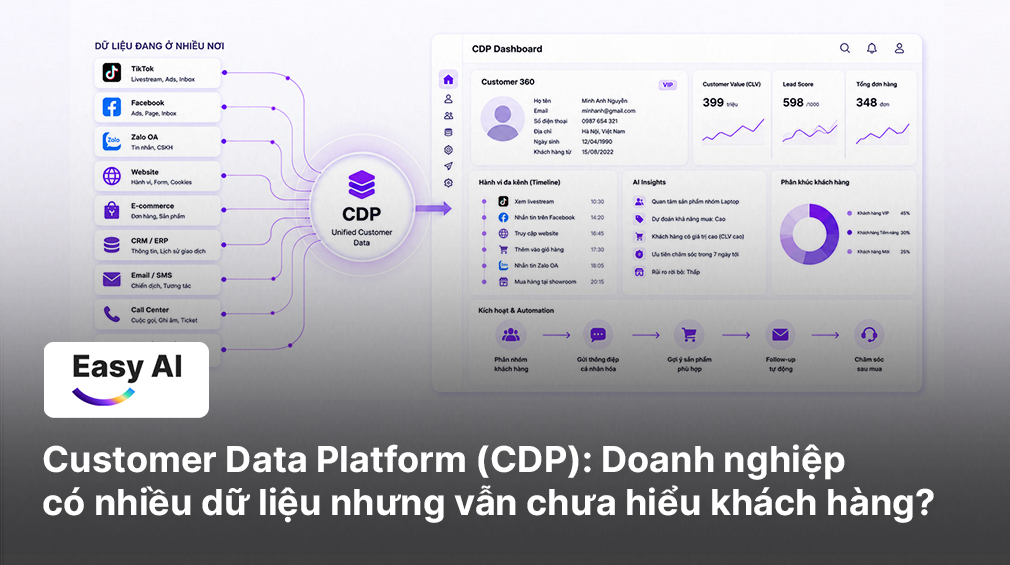
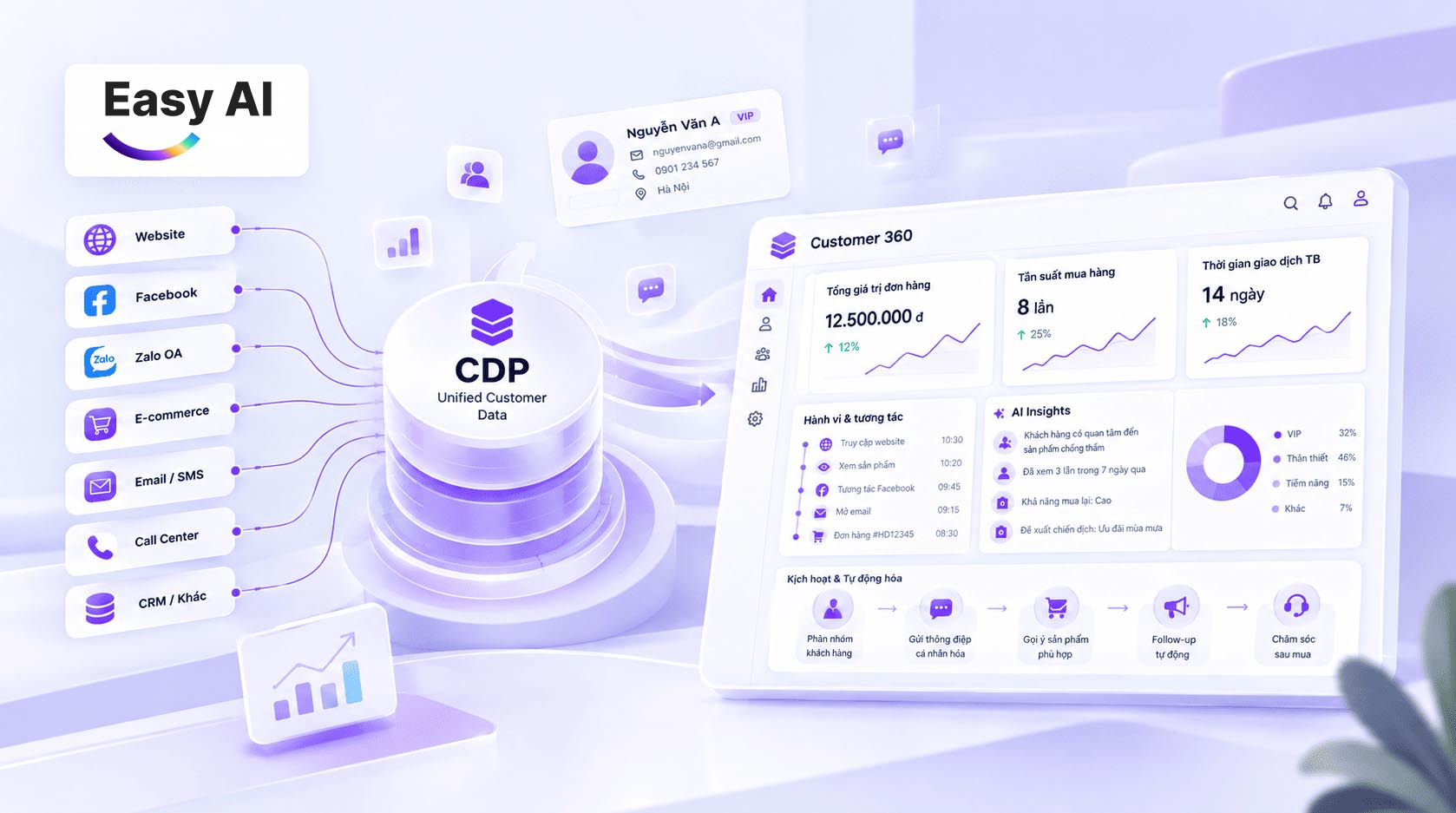
Modern enterprise AI cannot function in isolation. A true AI system requires seamless connectivity across websites, Facebook, Zalo OA, CRM, ERP, call centers, and internal data platforms. Without data and workflow connectivity, businesses end up with another fragmented tool instead of a new operational layer.

5. Categories of AI Companies in the Market Today
Group 1: AI Wrapper / AI Tool Layer
This represents the most common group in the market, particularly following the explosion of ChatGPT. Most companies in this category leverage APIs from major platforms like OpenAI, Anthropic, or Google to build chatbots, AI content generators, or personal productivity tools. General users easily recognize this group through applications like ChatGPT, Claude, Gemini, or various content writing and image generation tools.
At the enterprise level, this model is typically deployed as basic chatbots or AI assistants for marketing and customer service. Advantages include fast deployment, low cost, and ease of access. However, most systems remain disconnected from enterprise data and workflows, making it difficult to process complex tasks or scale long-term.
Group 2: System Integration & Automation
The second group focuses on integrating AI into enterprise operational systems like CRM, omnichannel customer care, marketing automation, or internal workflows. This path is pursued by many SaaS, CRM, and automation platforms. Globally, this approach is evident in Salesforce, HubSpot, or Zoho as CRM platforms integrate AI into sales and customer care processes.
In Vietnam, many businesses deploy AI by incorporating it into existing software modules without heavy investment in core AI technology. These vendors help enterprises access AI quickly through established software suites. However, AI in this model primarily serves an automation support role rather than functioning as the central operational layer.
Group 3: AI-Native Platform
This category represents the emerging trend in the enterprise AI market both in Vietnam and globally. In this model, AI moves from a standalone support tool to become the central operational layer of the enterprise. Tech giants like Microsoft, OpenAI, and Amazon are shifting toward building AI-native ecosystems where AI participates directly in operations and decision-making.
The key differentiator of this model is that AI participates throughout the entire operational process rather than supporting a single task. AI can appear across customer consultation, demand classification, sales support, customer care, data management, and internal workflow automation. Instead of each department using isolated AI tools, the entire system connects so AI understands customer journeys and coordinates operations in real time. Additionally, AI-native platforms focus on mastering AI application capabilities rather than relying solely on pre-existing APIs. This includes enterprise data processing, AI workflow construction, multi-system orchestration, industry-specific AI optimization, and long-term operational scaling. This creates the gap between a standalone AI chatbot and an AI system that serves as practical enterprise infrastructure.
In Vietnam, Easy AI is pursuing this approach with an AI system capable of participating across the customer journey, sales, and internal operations on a multi-platform scale.
6. Easy AI – The AI-Native Platform for Vietnamese Enterprises
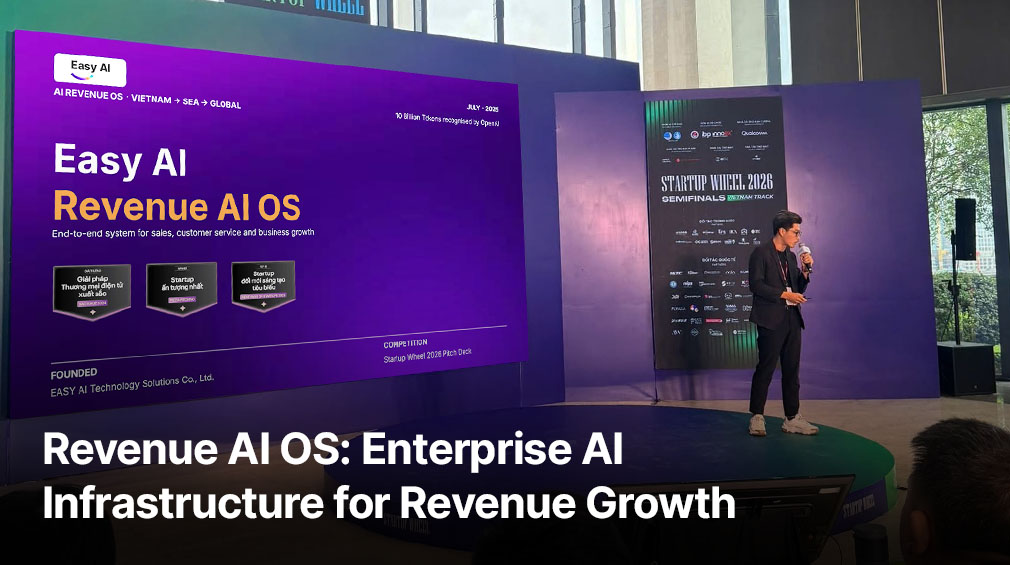
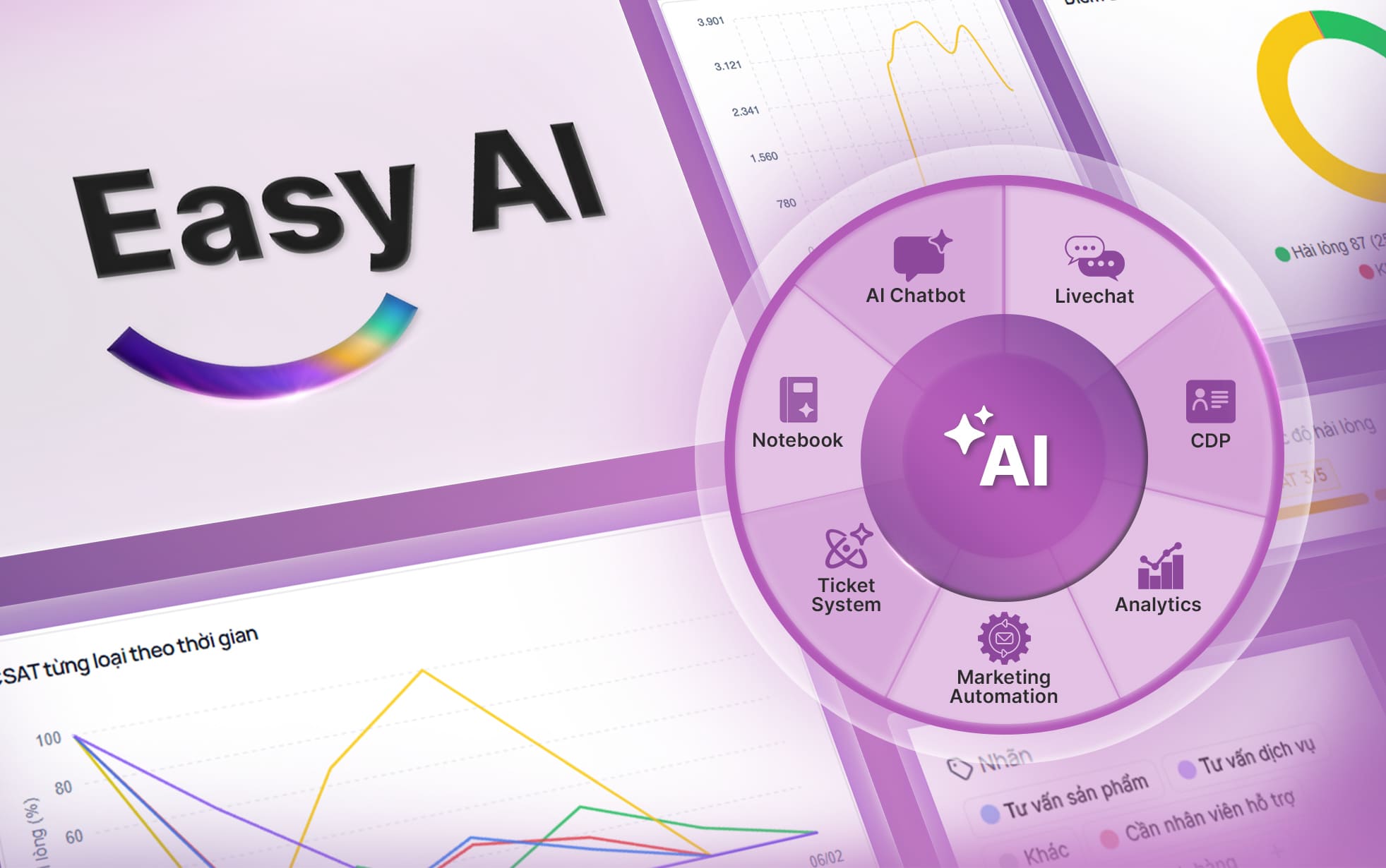
Easy AI is a pioneer in Vietnam deploying the AI-native enterprise model, focusing on practical operational efficiency over AI demos. As the first company in Vietnam recognized by OpenAI for surpassing 10 Billion processed Tokens, this reflects operational scale with millions of monthly consultation sessions and AI tasks. This milestone indicates that AI is becoming a new operational infrastructure layer in enterprises. Easy AI's system is built for end-to-end AI participation across customer care, sales, and internal operations via AI Chatbots, AI CRM, AI Agents, and omnichannel automation.
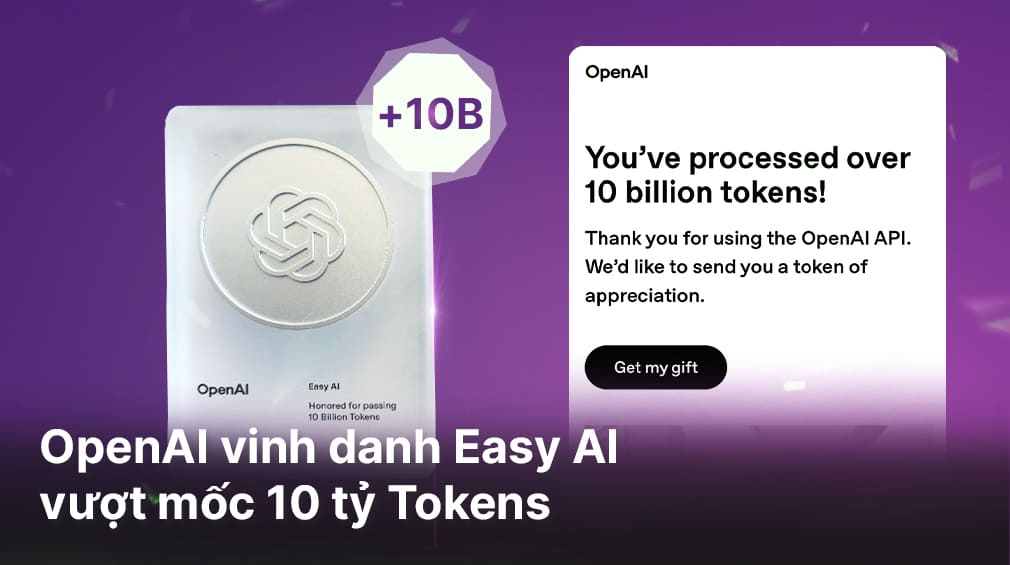
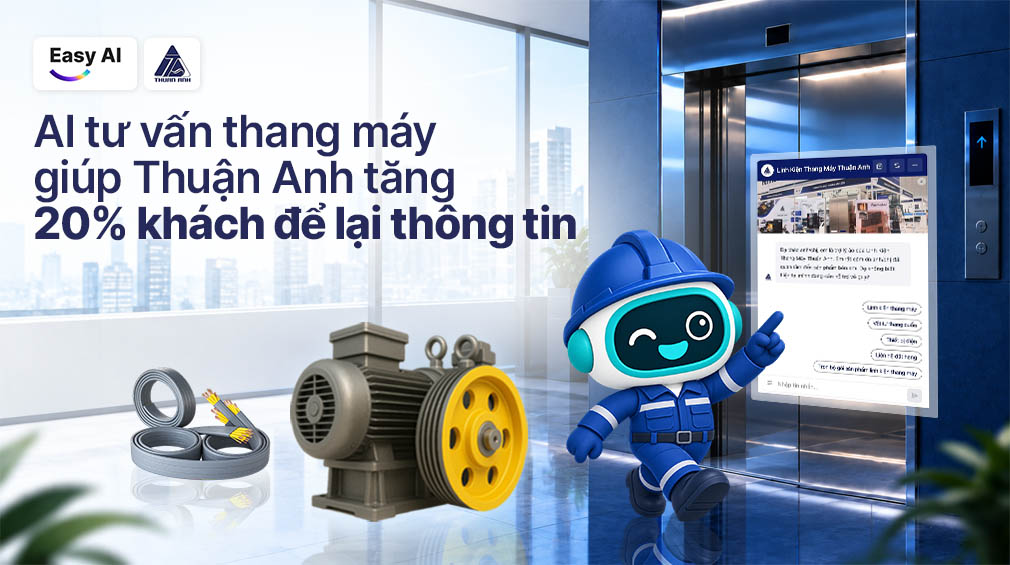
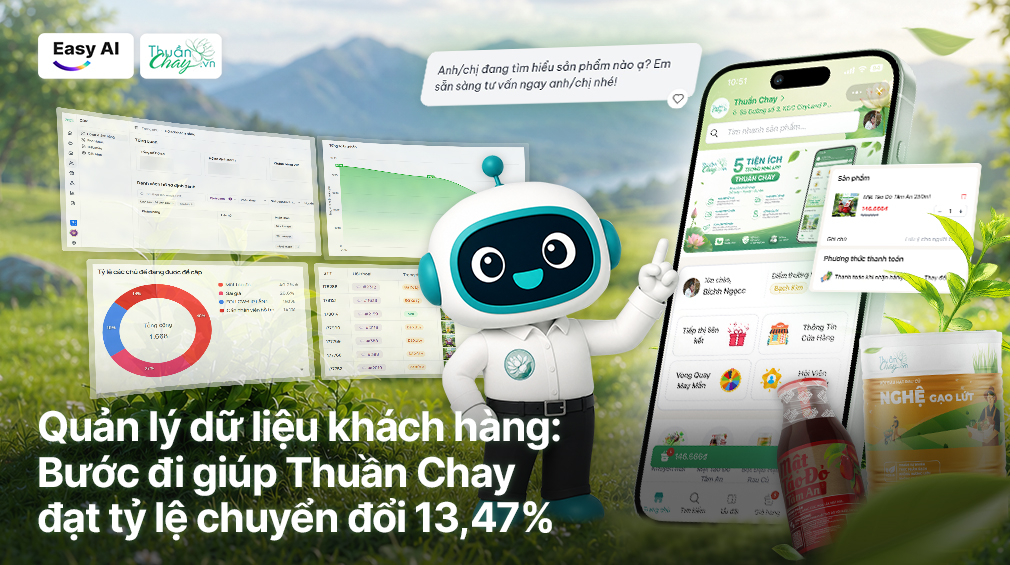
Easy AI deploys solutions directly across sectors such as retail, e-commerce, education, healthcare, and customer service. In retail, AI Chatbots deployed by Easy AI on Mobile World (The Gioi Di Dong) and Dien May XANH participate in product consultation, customer care, and automated sales support at scale.
7. Selecting the Right AI Solution Creates Long-Term Differentiators
AI is no longer an experimental trend, but a new operational infrastructure layer for enterprises. The gap between "talking about AI" and "real AI implementation" in today's market is a key challenge for business owners and management teams to resolve.
The choice is no longer about adopting new AI technology, but about selecting a partner capable of supporting direct AI participation in customer care, sales, data management, and operational automation for the long term. An effective AI system must connect data, synchronize processes, and generate practical business results beyond basic chatbots or technology demonstrations.
If your enterprise is seeking an AI solution tailored to real operational models, Easy AI offers partnership spanning strategic consultation, system deployment, and industry-specific AI optimization at scale.
Topics