



.jpg)
EBOOK
Conversational Commerce: Turn a Product Question into a Next Step
Use a six-part note to turn a shopper's question into a supported product choice, a clear next step, or a safe transfer to a person.
View details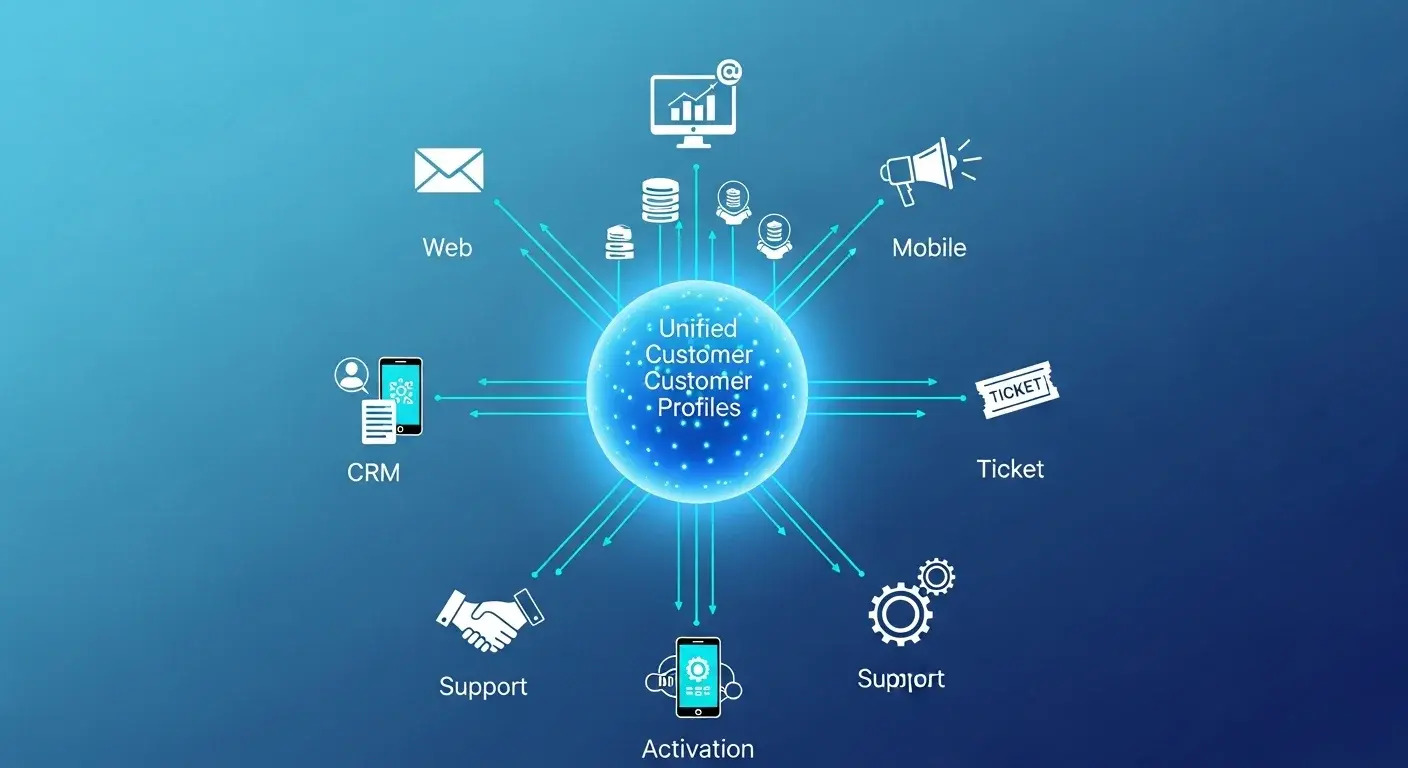
Use zero-party data when the customer's declared preference is the decision itself. Use first-party data when an observed event is relevant and the inference is explicit, current, permitted, and easy to correct. For consequential or conflicting decisions, combine them carefully or do nothing. Neither label proves accuracy, permission, identity, or fitness for personalization.
| Data type | What it is | Examples | Main failure |
|---|---|---|---|
| Zero-party | Information a person intentionally provides for a stated interaction | Preferred category, stated goal, requested channel, survey answer | Preference becomes stale, coerced, over-broad, or reused for another purpose |
| First-party | Data a business collects directly from its own interactions | Purchases, page events, support history, message delivery, account state | Behavior is misread, identity is wrong, or observation becomes an assumed preference |
Salesforce describes zero-party data as information a customer proactively and intentionally shares, and first-party data as information a company collects directly through its own audience interactions. These are vendor explanations; your actual field still needs provenance and a defined purpose.
| Decision | Prefer | Why | Guardrail |
|---|---|---|---|
| Respect a requested channel/topic | Current zero-party preference | The person chose it | Keep scope, time, and opt-out |
| Show recent order status | Current first-party order event | The event is the state | Verify identity and source freshness |
| Recommend a product category | Declared interest plus compatible observed behavior | One states intent; one adds context | Never override a current explicit exclusion |
| Suppress commercial messaging during a complaint | First-party service state | Active issue should take precedence | Reconcile closure before resuming |
| Make a high-consequence eligibility decision | Neither by default | Preference/behavior may be insufficient or inappropriate | Require approved evidence and human authority |
A usable record should answer:
value
source and collection event
person/account identity evidence
purpose and channel
permission or other reviewed basis
captured/observed time
expiry or freshness rule
confidence if inferred
who may use it
how the person can correct or withdraw it
Keep “declared vegetarian preference” separate from “viewed vegetarian products.” If a model infers a preference, store it as an inference rather than overwriting the customer's statement.
A fictional skincare retailer has a customer who selected “fragrance-free only” in a preference center three months ago. Recent first-party browsing includes two scented products, possibly from a shared device. The recommendation workflow preserves both signals, treats the explicit exclusion as authoritative for product filtering, and uses browsing only to rank fragrance-free categories. It asks no sensitive question and provides a preference-update link. When identity confidence falls below the team's approved threshold, it shows non-personalized navigation instead. No conversion result is claimed.
| Check | Pass condition | Failure action |
|---|---|---|
| Purpose | Decision matches the collection/use purpose | Suppress and review |
| Identity | Record belongs to the correct person/account | Do not link or personalize |
| Freshness | Source is within its rule and state is current | Refresh or ask |
| Precedence | Opt-out, complaint, exclusion, and transaction state are applied | Cancel queued action |
| Explanation | Team can state why this input affected the result | Use a simpler rule or human review |
| Correction | Person and owner can correct the source | Route correction and re-evaluate |
Measure valid-decision rate, conflict rate, correction rate, opt-out/complaint rate, and outcome by decision cell. Do not interpret raw clicks or purchases as causal lift without a valid design.
Use the customer-data guide to define identity and provenance, the CRM cleanup playbook to repair fields, and the personalization use case to test one bounded decision.
Definitions do not establish legal permission, data truth, model accuracy, personalization uplift, platform integration, or Easy AI capability. Human privacy/legal and domain review remains required.
Use a six-part note to turn a shopper's question into a supported product choice, a clear next step, or a safe transfer to a person.
View details
Use seven filters and an industry-state matrix to select one bounded AI job with current evidence, an owner, a safe fallback, and a measurable end.
View details
Design a Zalo OA conversation workflow from verified account identity, message rules, approved knowledge, bounded automation, accepted human handoff, QA, and rollback.
View details
Decide what to automate by checking the source, observable change, allowed action, accepted handoff, and recovery path for one sales job.
View details
Decide when customer context is safe and useful, when a generic answer is better, and when a person must take over.
View details
Choose search, recommendations, conversational assistance, or a controlled combination from the shopper's job, product truth, consequence, and measurable failure.
View details