What is LLM? Why LLM Becoming Enterprise AI Foundation
In recent years, the term "LLM" has appeared increasingly often in discussions about AI, digital transformation, and enterprise technology. From ChatGPT, Claude, and Gemini to customer care AI Chatbots, most are built on LLMs. The rapid rise of Generative AI has led many enterprises to ask: what is an LLM, how does it work, and why is this technology transforming business operations?
According to McKinsey's State of AI report, 78% of organizations have deployed AI in at least one business activity. Simultaneously, many enterprises are accelerating Generative AI investments to boost productivity, optimize operations, and enhance customer experience.
Particularly during 2026–2027, as AI moves beyond simple "chat replies," LLMs are becoming the new infrastructure layer for software, data, and enterprise AI systems. From enterprise AI chatbots and customer care AI to automated sales AI and AI automation, most modern AI applications are built on LLM foundations.
1. What is an LLM?
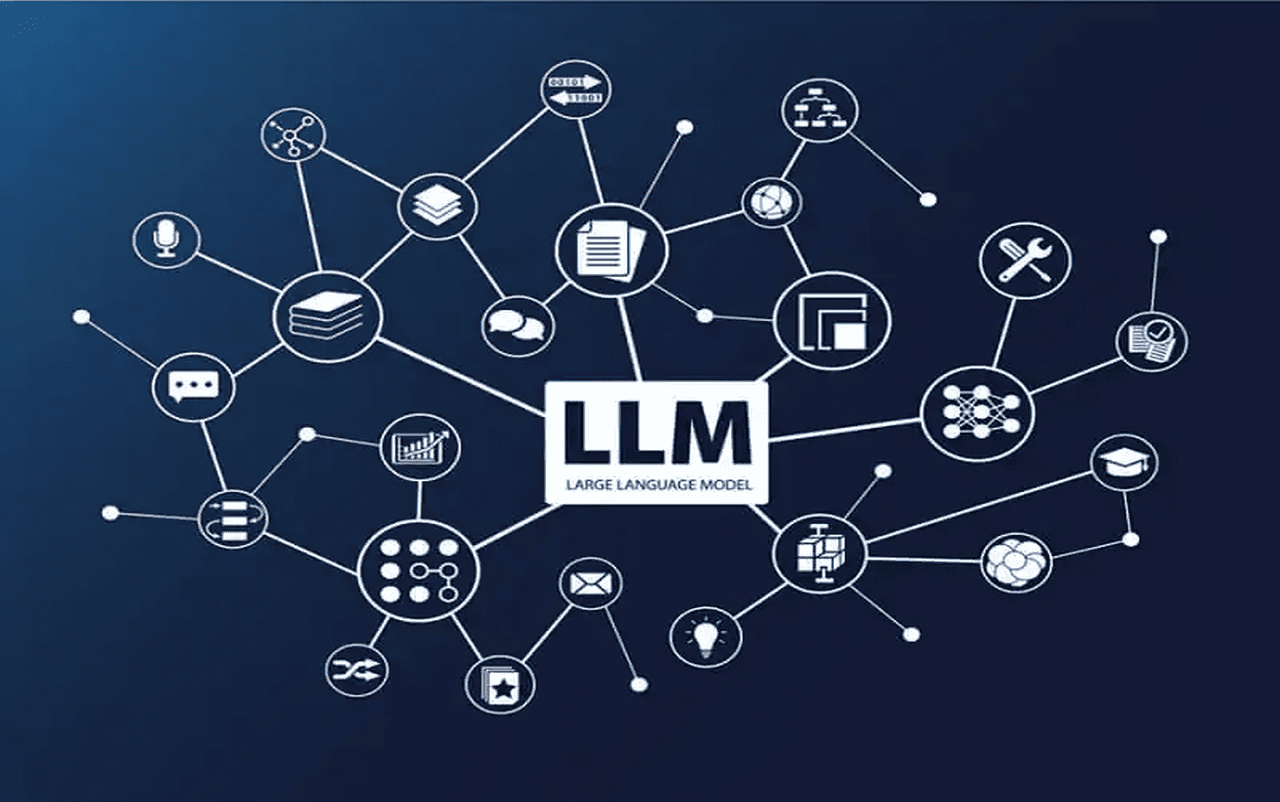
LLM stands for Large Language Model—a large-scale language model trained on massive amounts of data to understand, process, and generate human-like natural language.
Unlike traditional chatbots operating on fixed scripts or keywords, large language models understand context, remember conversation history, and generate more flexible responses. This foundation enables modern enterprise AI Chatbots to consult, answer, and support customers almost in real time.
Popular large language models today include OpenAI's GPT, Anthropic's Claude, Google's Gemini, Meta's Llama, and Mistral AI. These platforms drive the global growth of enterprise Generative AI.
2. How Does a Large Language Model Work?
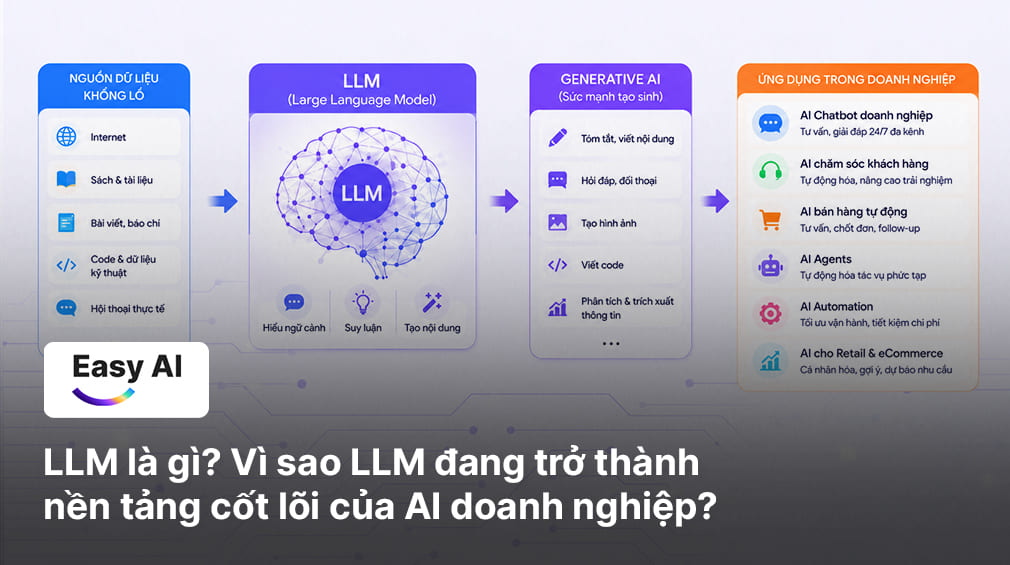
At its core, an LLM works by predicting the next word or token sequence based on prior context. When a user submits a prompt or query, the model analyzes the full content, identifies relationships between words, and generates the most fitting real-time response.
What makes these models unique is that they are trained on vast datasets from the Internet, books, academic papers, source code, and real conversations. Consequently, AI understands linguistic meaning rather than reacting via fixed logic. This represents the single biggest shift in modern AI.
3. Why LLMs Have Exploded in Recent Years
Three primary drivers have propelled Large Language Model development:
First, the launch of ChatGPT in late 2022, which popularized AI for general users and enterprises alike.
Second, the advancement of AI GPUs and cloud infrastructure, allowing the training of models with billions of parameters.
Third, the Transformer architecture, which helps AI grasp context better, handle longer conversations, and deliver more accurate responses.
Thanks to these drivers, enterprise Generative AI has transitioned from experimental stages to live business implementation.
4. Enterprise Applications of LLMs
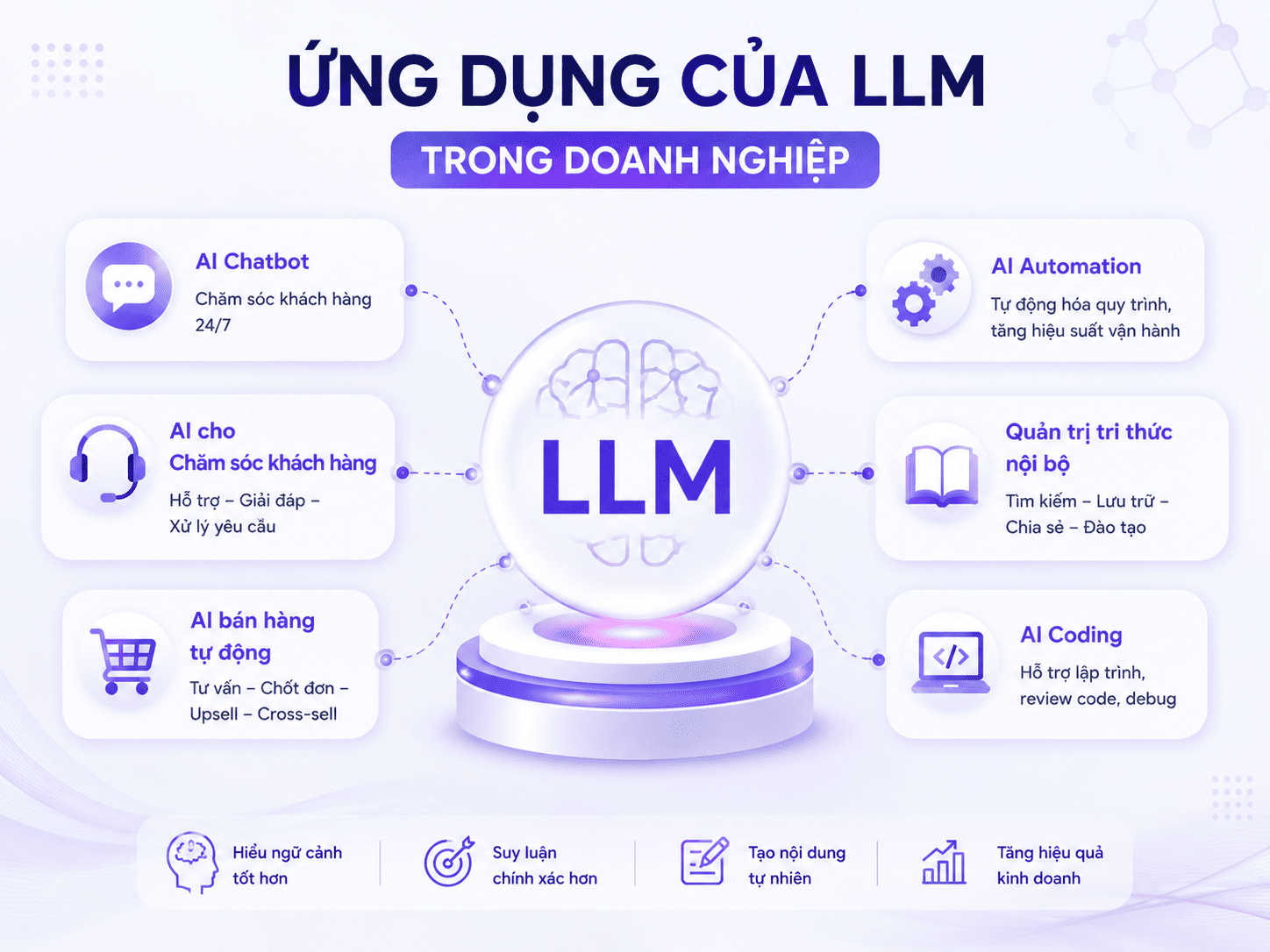
Initially, many assumed LLMs only served content writing or simple Q&A chatbots. Today, however, enterprises apply this technology to practical problems like enterprise AI Chatbots, customer service AI, automated sales AI, AI automation, and internal knowledge management.
Additionally, LLMs serve as the foundation for various Vietnamese AI systems—ranging from internal knowledge retrieval, employee training, and SOP support to knowledge base management and domain-specific AI assistants. For businesses deploying AI for retail and e-commerce, understanding product context, customer needs, and purchasing behaviors forms a critical competitive advantage.
Common LLM applications today include:
Customer service AI Chatbots
Sales and telesales AI assistance
Marketing content generation AI
AI automation for internal operations
AI coding and programming assistance
5. Emerging Trends of Large Language Models in 2026–2027
Following the AI Chatbot surge, the market is entering a new phase centered on AI Agents.
According to the Microsoft Work Trend Index 2025, 82% of business leaders expect to use "digital labor" to expand work capacity within the next 12–18 months. This indicates that AI is shifting from a supportive role to direct participation in execution and operations.
While traditional chatbots stop at answering questions, AI Agents can execute multi-step workflows autonomously—reading data, planning, calling APIs, or completing tasks automatically. For instance, an AI Sales Agent can receive new leads, send emails, create tasks on a CRM, and follow up with customers automatically without requiring manual step-by-step human intervention.
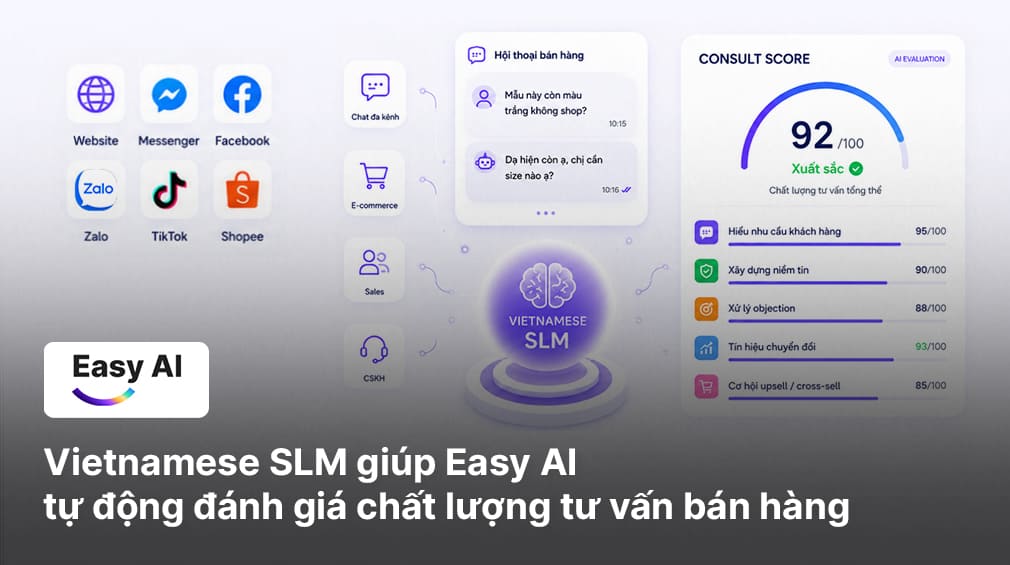
Furthermore, the market is witnessing the rise of SLMs (Small Language Models). Rather than using an oversized model for every task, many enterprises prioritize smaller models optimized for speed, cost, and internal deployment capabilities.
This trend fits Vietnamese AI systems as well as AI solutions for retail and e-commerce, where enterprises need optimized accuracy, lower operating costs, and strong data control.
Prominent current AI market trends include:
AI Agents and multi-step automation
Cost-optimized, internally deployed SLMs
Industry-specific Vertical AI
Enterprise Private AI and On-premise AI
6. Limitations of Current Large Language Models
Despite their power, LLMs have limitations. The biggest challenge is hallucination, where AI generates inaccurate information while presenting it persuasively.
Additionally, LLMs still face difficulties processing real-time data, verifying facts, and performing complex logical tasks. This is why enterprises typically pair LLMs with internal data, structured workflows, and human review mechanisms rather than operating entirely on autopilot.
7. The Future of LLMs in Enterprise
LLMs are fast becoming the new infrastructure layer for modern software. In the near future, most enterprise software will feature default integrated AI rather than operating as legacy standalone tools. AI will not merely act as an answering chatbot, but will serve as the foundation for automated sales AI, customer care AI, AI automation, and intelligent enterprise operational systems.
Particularly in Vietnam, the demand for building Vietnamese AI aligned with internal data and business processes is surging. This explains why more enterprises are moving from a "trial ChatGPT" mindset to "building dedicated AI systems."
8. Easy AI and the Journey of Applying AI into Enterprise Operations
In this new AI wave, successful implementation depends not on "having AI or not," but on the ability to apply AI into actual operations.
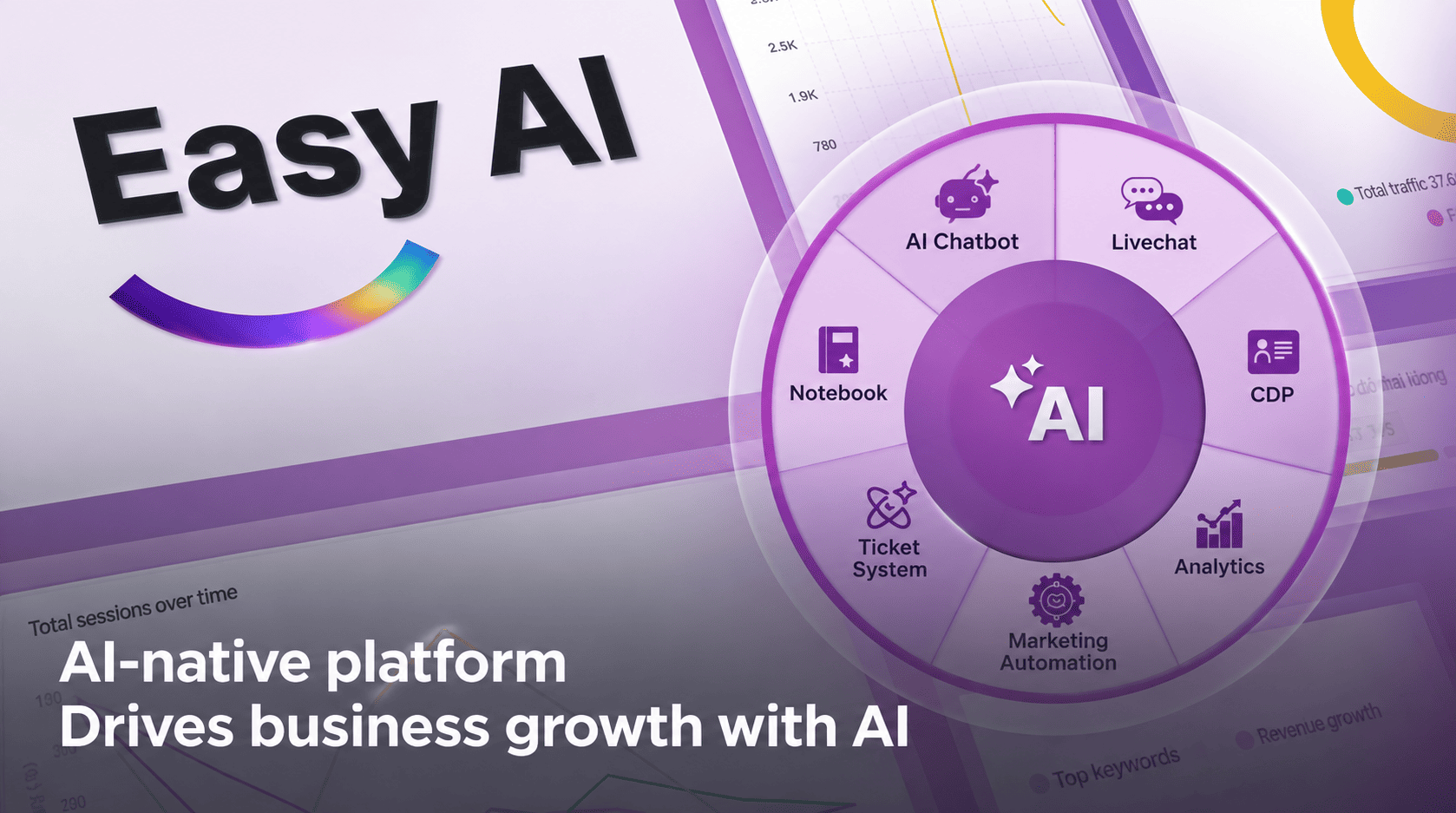
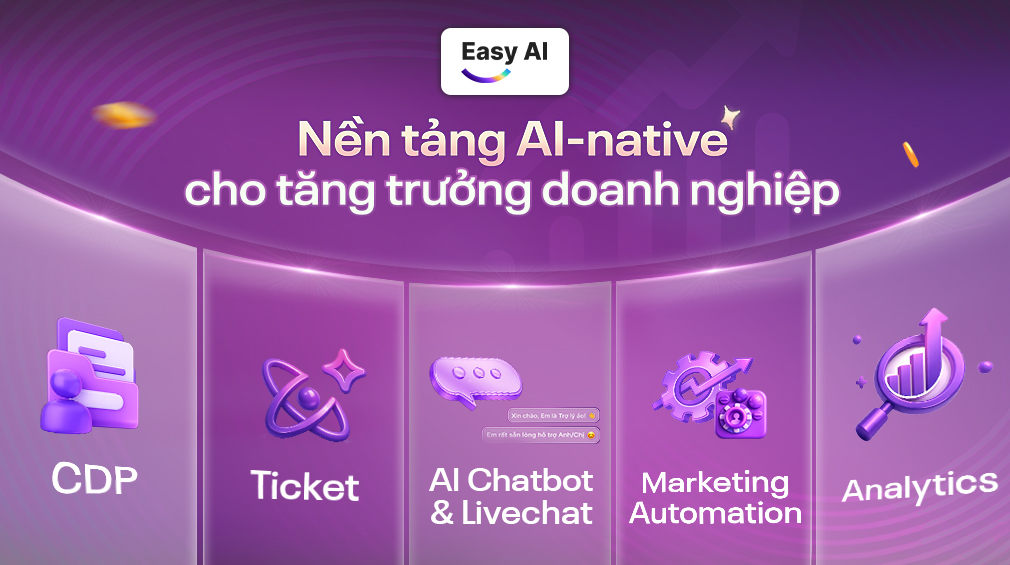
With a strategy focused on building AI-native enterprise solutions, Easy AI is an AI-native platform developing enterprise AI chatbot systems, AI Agents, AI for retail and e-commerce, customer care AI, and automated sales AI.
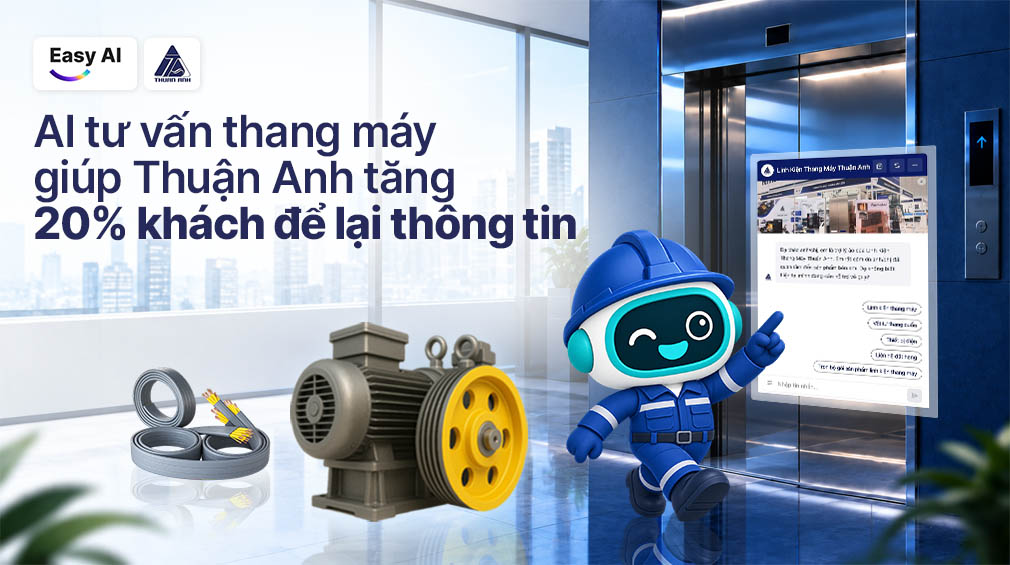
Easy AI has deployed AI solutions for large enterprises like Mobile World (The Gioi Di Dong), Dien May XANH, and Rang Dong, while developing AI systems suited to the practical operational needs of Vietnamese businesses. As AI transitions from experimental tech to operational infrastructure, LLMs will remain the core foundation for the next generation of software and AI systems.
If your enterprise seeks to apply AI more effectively for Sales, CS, and operations, Easy AI can partner with you from strategic consultation to deploying systems tailored to your real data and workflows. Easy AI simultaneously develops Vietnamese AI models, AI automation platforms, and customer care AI solutions to help businesses automate processes, elevate customer experiences, and optimize operational performance.
Contact Easy AI right here to learn how to apply AI to sales, customer service, and business operations effectively, practically, and in alignment with your organization's data.
Topics