
UMC AI Assistant: Digital Receptionist for Online Booking
Patients often need to find information about specialties, doctors, clinic locations, and registration procedures before visiting a hospital. When this information is spread across different pages, looking it up and preparing for an appointment can take extra time, particularly for patients traveling from other provinces.
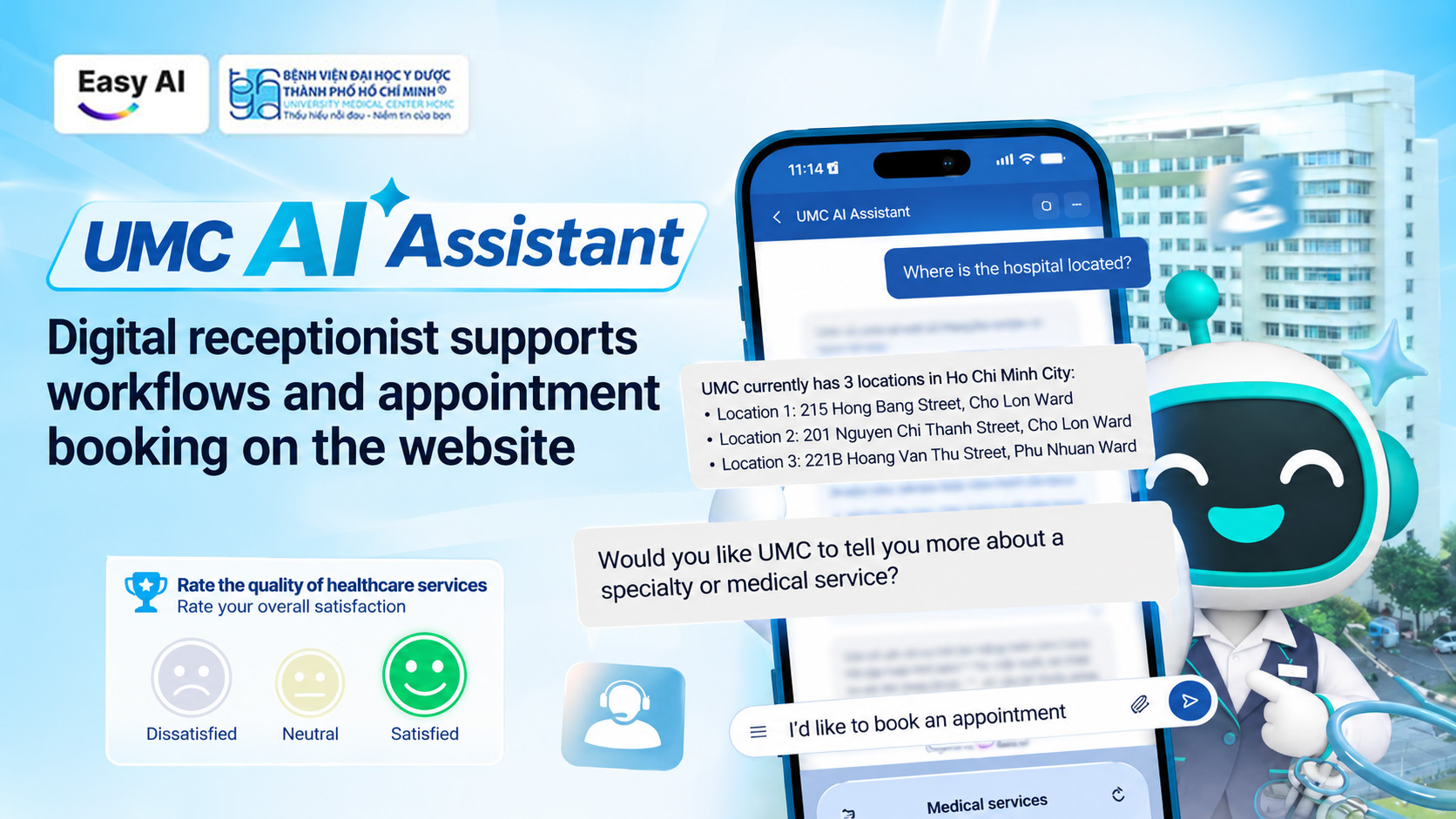
To make hospital information easier to access, the University Medical Center Ho Chi Minh City partnered with Easy AI to launch the UMC AI Assistant on the hospital’s website. The solution combines AI Chatbot and Livechat to answer common questions, guide patients through hospital procedures, and direct users to the official appointment-booking system through the UMC Care app.
1. Overview of the University Medical Center Ho Chi Minh City
The University Medical Center Ho Chi Minh City is a first-class public hospital providing highly specialized, advanced medical services. It is affiliated with the University of Medicine and Pharmacy at Ho Chi Minh City. As one of the country’s busiest healthcare providers, the hospital sees an average of 2.5–3 million outpatient visits per year, equivalent to 7,000–10,000 patients/day.
A pioneer in healthcare digital transformation, the University Medical Center Ho Chi Minh City has gradually introduced technology into management, clinical services, and community support. To advance its goal of making it possible to “go to the doctor with just one phone,” enabling people to register conveniently without taking a traditional queue ticket, the hospital launched the UMC Care app. It supports appointment booking by time slot, doctor selection, online payment, and access to test results. The hospital also maintains a dedicated reception team to assist patients in person, with the aim of making the care process more convenient and accessible.
2. Why did the University Medical Center Ho Chi Minh City partner with Easy AI to launch the UMC AI Assistant?
With a focus on improving the patient experience through digital channels, the University Medical Center Ho Chi Minh City partnered with Easy AI to deploy the UMC AI chatbot on the hospital website. The solution was developed to complement the hospital’s existing patient support ecosystem by providing a convenient way to access information before a visit. Through a combination of AI Chatbot and Livechat, the virtual assistant can answer common questions about specialties, doctors, locations, and examination procedures, while guiding patients to the official appointment-booking system through the UMC Care app.
For patients: Supports access to hospital information, details about specialties and doctors, examination procedures, and the appointment-booking channel through UMC Care.
For the hospital: Extends online support, automatically answers common questions, and routes requests requiring staff attention to the responsible team.
3. UMC AI Assistant: A digital receptionist supporting a more convenient patient journey
The UMC AI Assistant combines AI Chatbot and Livechat. AI handles common information requests using a reviewed knowledge base, while staff directly take over cases that require verification, the handling of unexpected situations, or more specialized support. This approach clearly distinguishes the roles of AI and staff while maintaining continuity in patient support and helping patients access relevant information and services.
3.1. A reviewed knowledge base underpins AI responses
The knowledge base is the foundation of the AI assistant’s response quality. It is compiled from official materials provided or approved by the hospital, then categorized, standardized, and updated through a content management process.
Key knowledge areas include:
Hospital information: addresses, facilities, departments, and directions.
Specialty information: service scope, guidance on accessing a specialty, and related information.
Doctor information: professional profiles, clinic schedules, and information approved for publication.
Examination procedures: registration procedures, payment, and documents to prepare.
Appointment-booking guidance: registration steps, required information, and how to handle common issues.
In addition to maintaining the quality of its input data, the system is configured with response controls to support accuracy and keep AI assistance within defined boundaries. Specifically, the UMC AI Assistant identifies the user’s needs, checks the question against the knowledge base, and selects relevant information to respond. The assistant does not diagnose, prescribe, or provide treatment advice; when patients describe symptoms, the AI only directs them to an appropriate clinic. For questions without available data, questions that cannot be substantiated, or requests outside its configured scope, the system is set up to recognize its limitations, inform users clearly, and direct them to contact the hotline or leave their details for the responsible team to assist.
This approach helps limit AI-generated speculation and unverified information, while maintaining consistency between website guidance and the hospital’s official information. The reviewed knowledge base therefore provides the foundation for the UMC AI Assistant to help patients find information and access relevant guidance as they prepare for a visit.
3.2. AI helps patients find information and book appointments through the UMC Care app
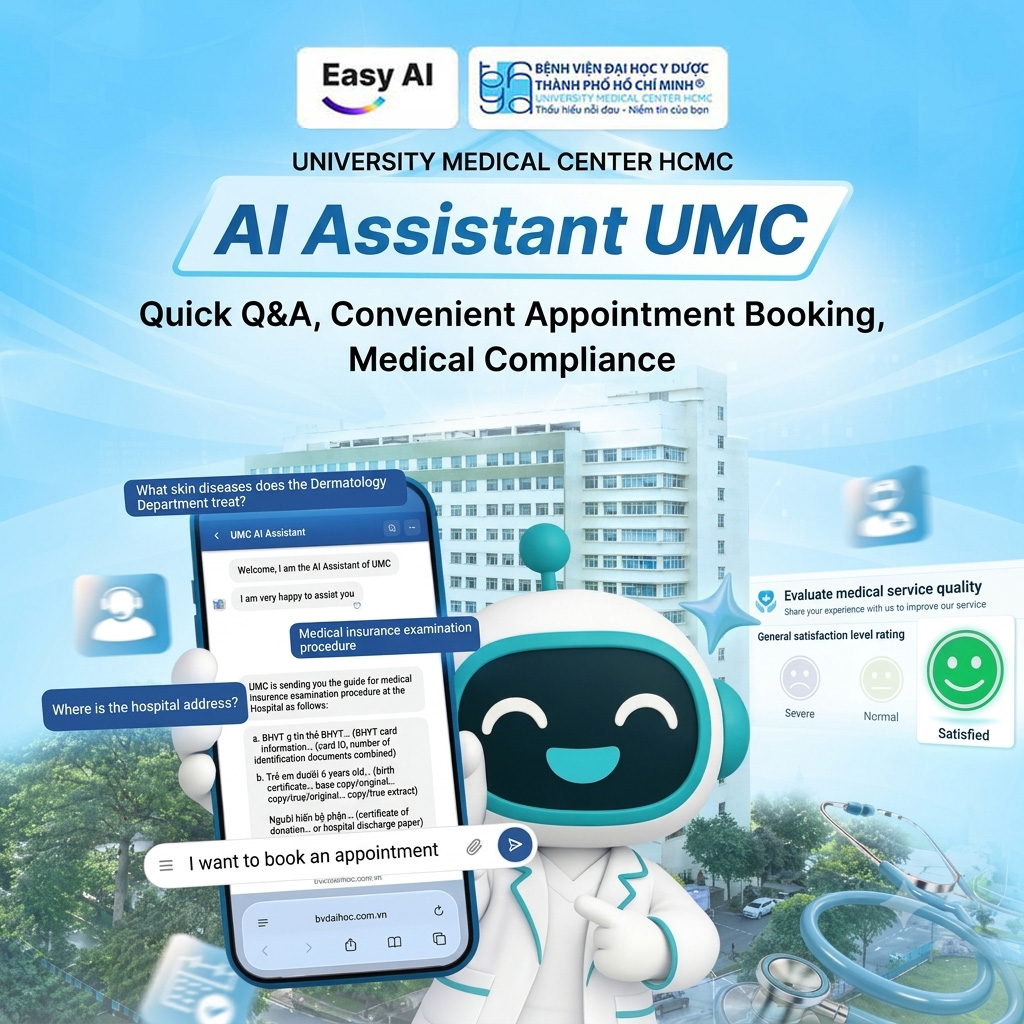
The UMC AI Assistant helps patients book appointments through the UMC Care app. Instead of searching for instructions themselves or visiting the hospital to ask how to use the app, patients can start in the website chat window and follow the UMC AI Assistant’s guidance.
Support includes:
Guidance on registration, login, and getting familiar with the app’s features.
Instructions for booking an appointment and selecting a specialty, doctor, and appointment time.
Answers to common questions about using the app, with directions to the appropriate support channel when an issue arises.
The solution helps bridge the gap between the need for medical care and access to digital services, giving patients greater control over booking an appointment before visiting the hospital.
3.3. Combining an AI chatbot and dedicated staff throughout the patient journey
Patient requests vary in complexity. Common questions can be answered using the reviewed knowledge base, while situations requiring information verification or professional support need the involvement of dedicated staff.
Cases may be escalated when:
An error or issue occurs during the appointment-booking process.
A question falls outside the approved knowledge base.
Guidance is needed from a doctor or an appropriately qualified healthcare professional.
This routing approach allows AI to handle repetitive requests while reserving staff capacity for situations that require assessment and direct support. For signs that may indicate an emergency, the system should guide users to appropriate emergency services rather than continuing with routine information searches or appointment-booking steps.
4. Key results after the UMC AI Chatbot launch
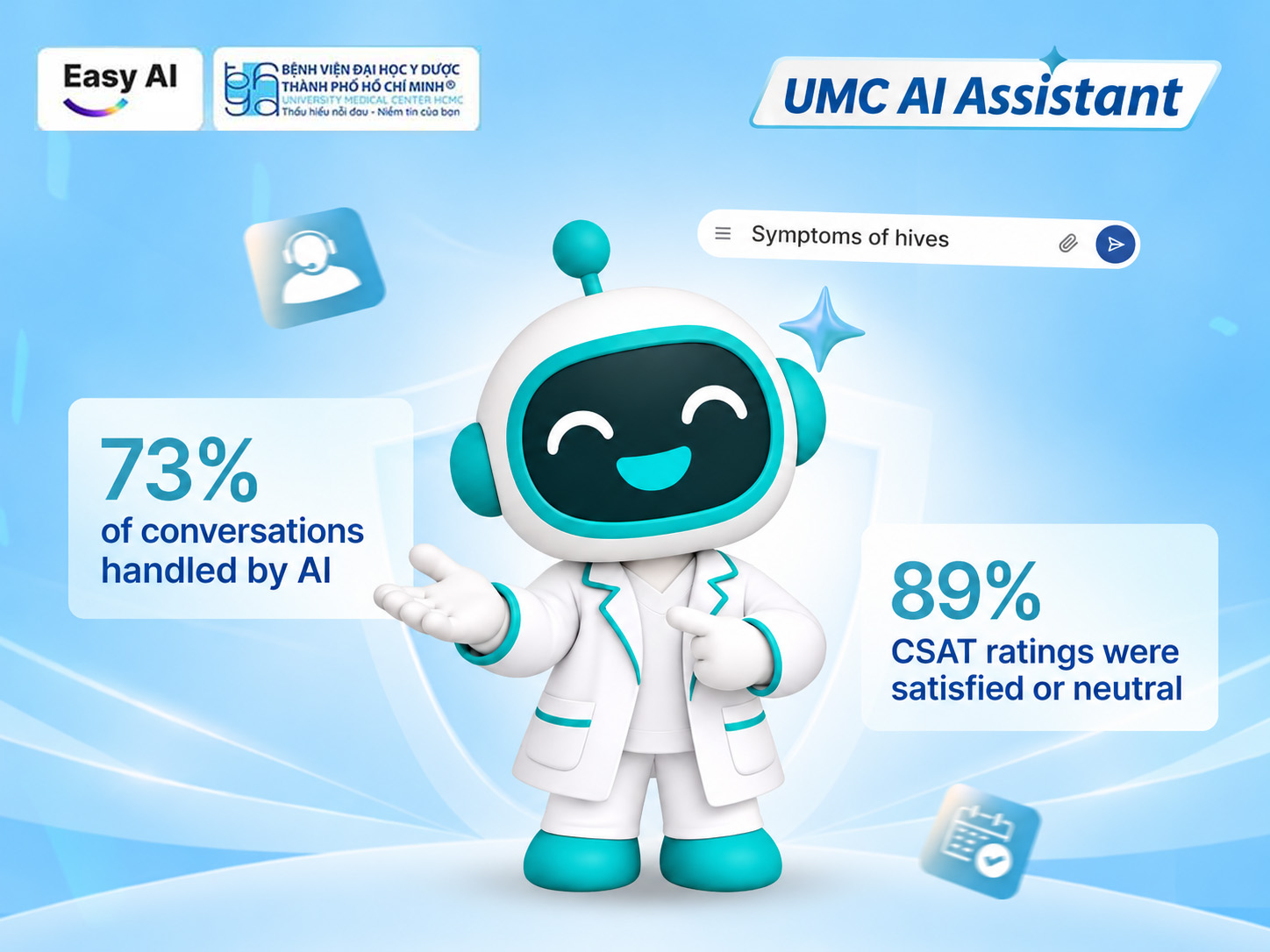
After launch, the UMC AI Assistant recorded positive results in its digital patient-support operations. Specifically, 73% of conversations AI-consulted, helping address information searches and common questions. In addition, CSAT was 89% at satisfied and neutral levels, reflecting users’ assessments of their interactions with the UMC AI Assistant.
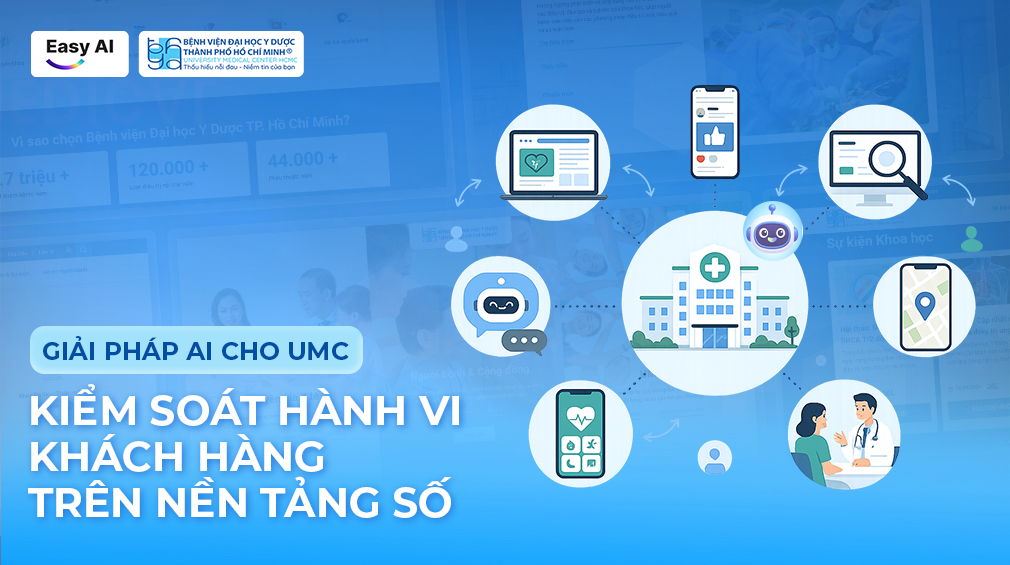
As a partner to the University Medical Center Ho Chi Minh City in its digital transformation journey, Easy AI contributes to a digital healthcare experience ecosystem through three priorities:
Enhancing the UMC website experience: Improving access to information so patients can find what they need more easily and take a more active role in their care journey.
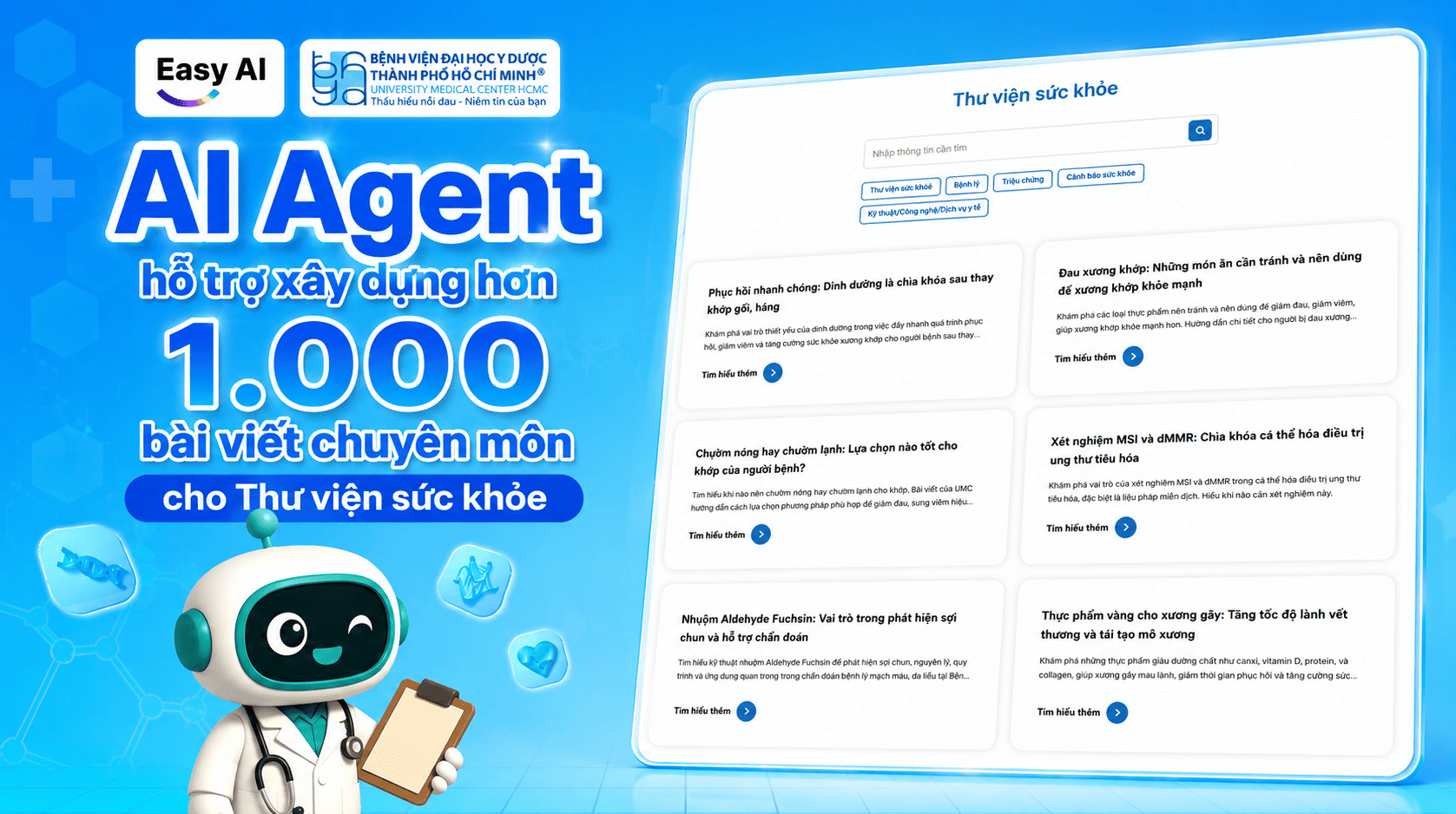
Developing the UMC Health Library: Applying AI Agents to build and share a digital legacy of medical knowledge, bringing trusted health information closer to the community.
Deploying the UMC AI Assistant: Providing guidance on appointment booking and hospital procedures on the website, helping improve the patient experience.
This demonstrates the technological capabilities and innovative approach of a leading hospital applying AI in healthcare operations. With a phone, patients can find information, understand examination procedures, and access essential guidance on the hospital’s digital platform.
With AI, the distance between patients, medical knowledge, and healthcare professionals is narrowing. Technology serves as a bridge, making information easier to access, creating more connected processes, and improving the healthcare experience.
Building on this foundation, Easy AI continues to advance its vision of an all-in-one AI operating system that supports revenue growth and operational efficiency for businesses.
FAQ
Recommended for you