
AI Solution for UMC: Controlling Digital Customer Behavior
1. Medical Communication Is Multi-Channel, Fragmented, and Difficult to Control
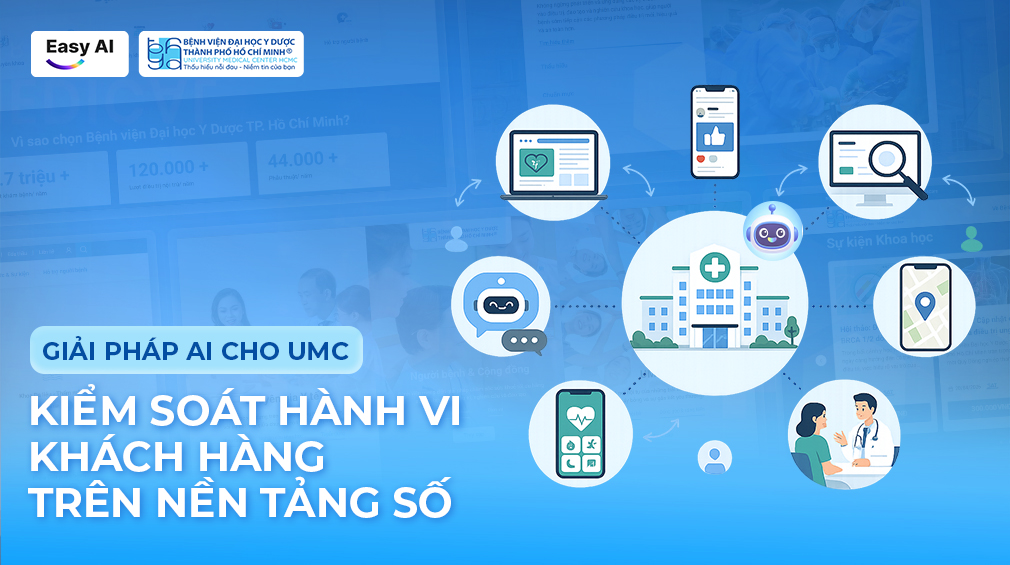
The healthcare sector is entering an era where health information is generated and spread across multiple channels: websites, social networks, search engines, Google Maps, healthcare applications, and direct consultation channels. In Vietnam, at the start of 2025, there were 79.8 million internet users, equivalent to 78.8% of the population; simultaneously, there were 76.2 million social media user identities, representing 75.2% of the population. The digital environment has thus become a major touchpoint in the public's journey to seek, receive, and respond to health information.
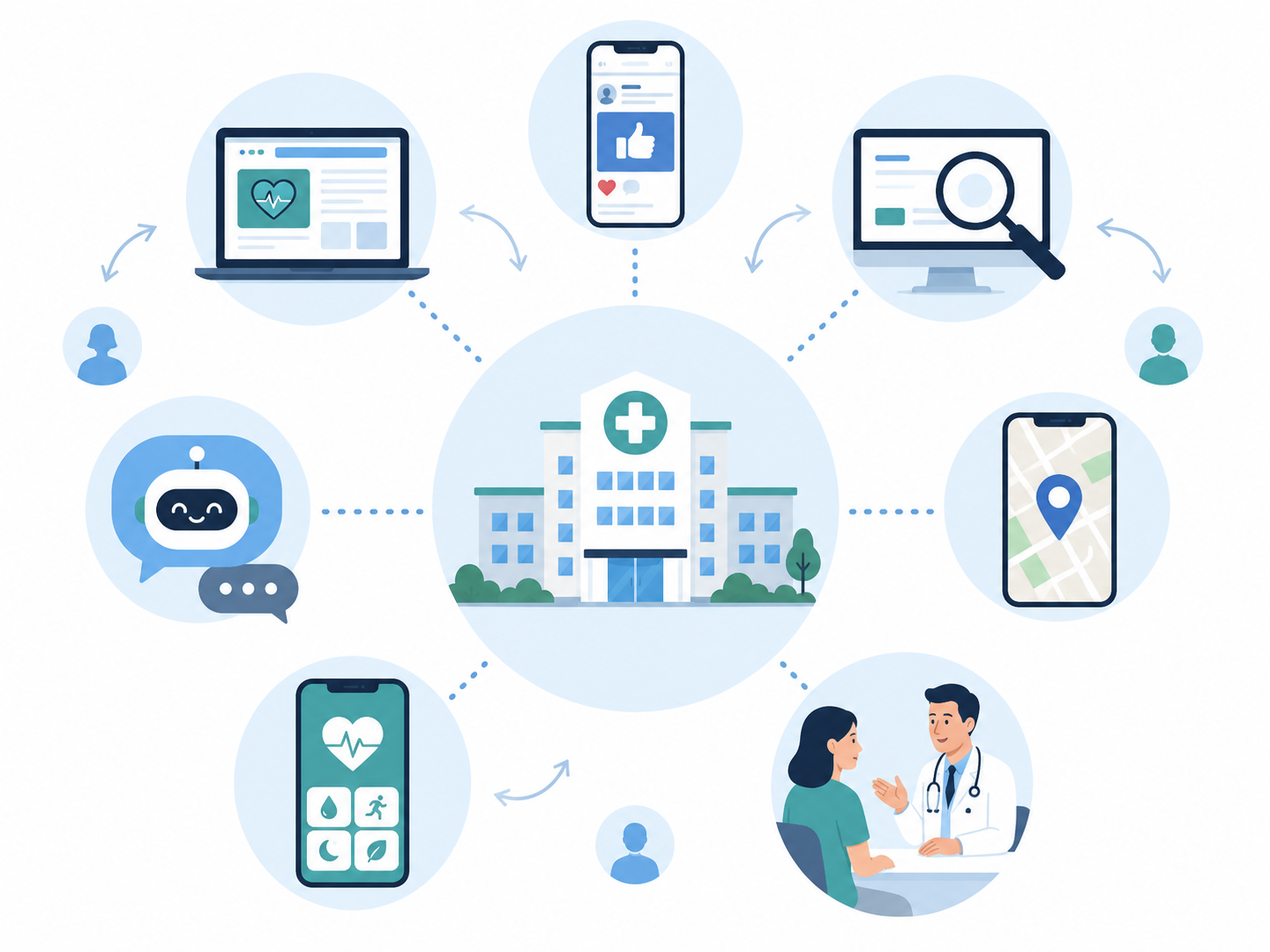
This creates operational pressure across the entire healthcare ecosystem, from hospitals, clinics, and medical centers to pharmaceutical enterprises and healthcare units. Organizations need to provide official, clear, and timely information while monitoring community feedback, detecting sensitive topics early, and measuring communication performance across platforms.
The biggest challenge lies in controlling the flow of information. Internal data, clinical content, patient feedback, service reviews, and communication performance metrics are often scattered across different systems. Without an integrated platform, healthcare organizations resort to manual processing, leading to slow response times and difficulties maintaining consistent messaging.
2. UMC's Operational Challenge: Users Need Fast Lookups, Hospitals Need Digital Behavior Control
As a Grade I public general hospital delivering high-tech specialized care, University Medical Center HCMC handles a massive volume of daily lookup and interaction requests originating from multiple touchpoints, including its website, online advisory channels, social media platforms, Google Maps, and patient feedback channels.
When searching for hospital information, the public typically needs quick answers to basic inquiries such as department details, clinical exam workflows, appointment scheduling guidelines, medical services, common health topics, or access to official hospital resources. If these needs are handled manually, operations teams face overload from repetitive inquiries, while users experience delays or fail to locate the right information at the right time.
Conversely, the hospital needs greater control over user behavior across digital platforms. When interaction data remains fragmented across disconnected channels, UMC struggles to gain a complete view of what topics users care about most, which information categories generate the most inquiries, which touchpoints drive peak demand, and which signals require monitoring to improve the overall lookup experience.
UMC’s primary operational requirements center around three core objectives:
Centralize interaction data from digital platforms into a single system
Assist users with rapid information lookups and basic inquiry resolution
Analyze behavior, topics of interest, and community feedback
Consequently, UMC’s goal extends beyond "replying to messages faster." It focuses on deploying an AI solution for UMC that better serves users, centralizes behavioral data on digital platforms, and converts daily interactions into actionable insights for hospital operations.
3. AI Solution for UMC: AI-Native Platform Supporting Lookups, Data Management, and Behavioral Analytics
Easy AI deployed an AI-Native platform built around three main modules: AI Chatbot & Livechat, Customer 360/CDP, and Analytics, Reporting & Forecasting. These three modules interconnect to form a closed-loop operational workflow: receiving inquiries, supporting lookups, recording interaction data, analyzing behavior, and delivering insights to elevate user experiences.
3.1 AI Chatbot & Livechat: Rapid Information Lookup Support
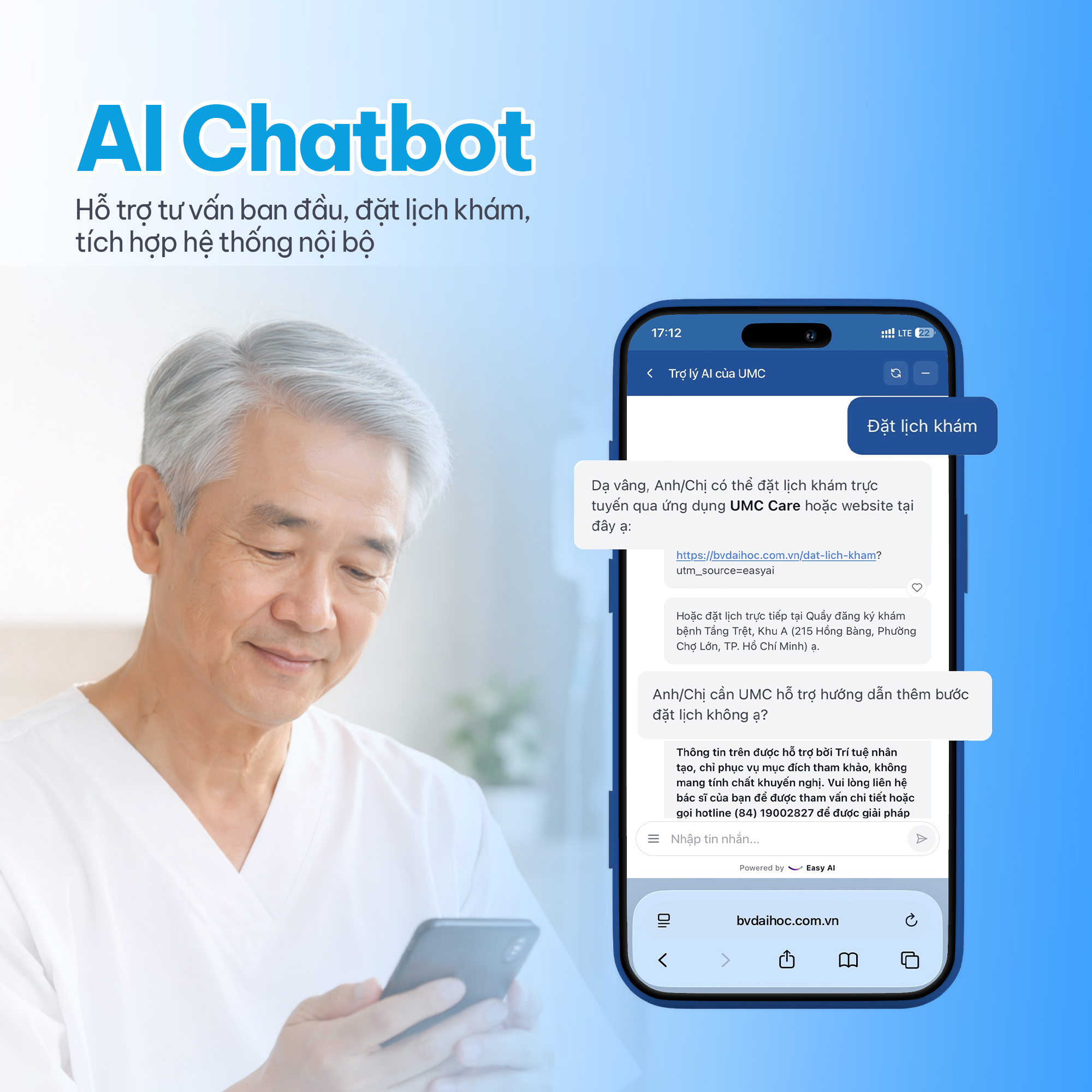
Serving as the initial point of contact between users and the hospital across digital touchpoints, this layer enables the public to look up information quickly, answering routine inquiries regarding medical services, booking instructions, clinical procedures, and relevant specialties.
A critical aspect of the UMC AI chatbot is its support role in basic lookup and inquiry handling. For complex scenarios requiring specialized processing, the system smoothly routes users to appropriate channels or transfers the chat to assigned staff.
3.2 Customer 360/CDP: Controlling Digital User Behavior
Through platform interactions, the system captures vital data points such as key user inquiry groups, conversation histories, interaction sources, frequently searched topics, access behaviors, and interest levels across specific content or service categories. Rather than simply tracking website traffic volume or message counts, UMC gains deeper visibility into: which disease categories users care about, which services are queried most, and where users encounter drop-offs in their journey.
3.3 Analytics, Reporting & Forecasting: Transforming Behavioral Data into Operational Insights
The analytics, reporting & forecasting module helps UMC translate raw interaction data into high-value reports and operational insights. This layer allows the hospital to track digital performance metrics, evaluate interest trends, and identify friction points in the user information lookup process.
The system analyzes data sets including conversation volumes, top inquiry topics, high-interest content groups, response rates, satisfaction levels, access behavior, and individual digital touchpoint performance.
This embodies the core value of healthcare AI solutions: moving beyond rapid response capabilities to empower healthcare organizations with data-driven decision-making based on actual user behavior.
4. Value Delivered: From User Support to Enhanced Digital Governance
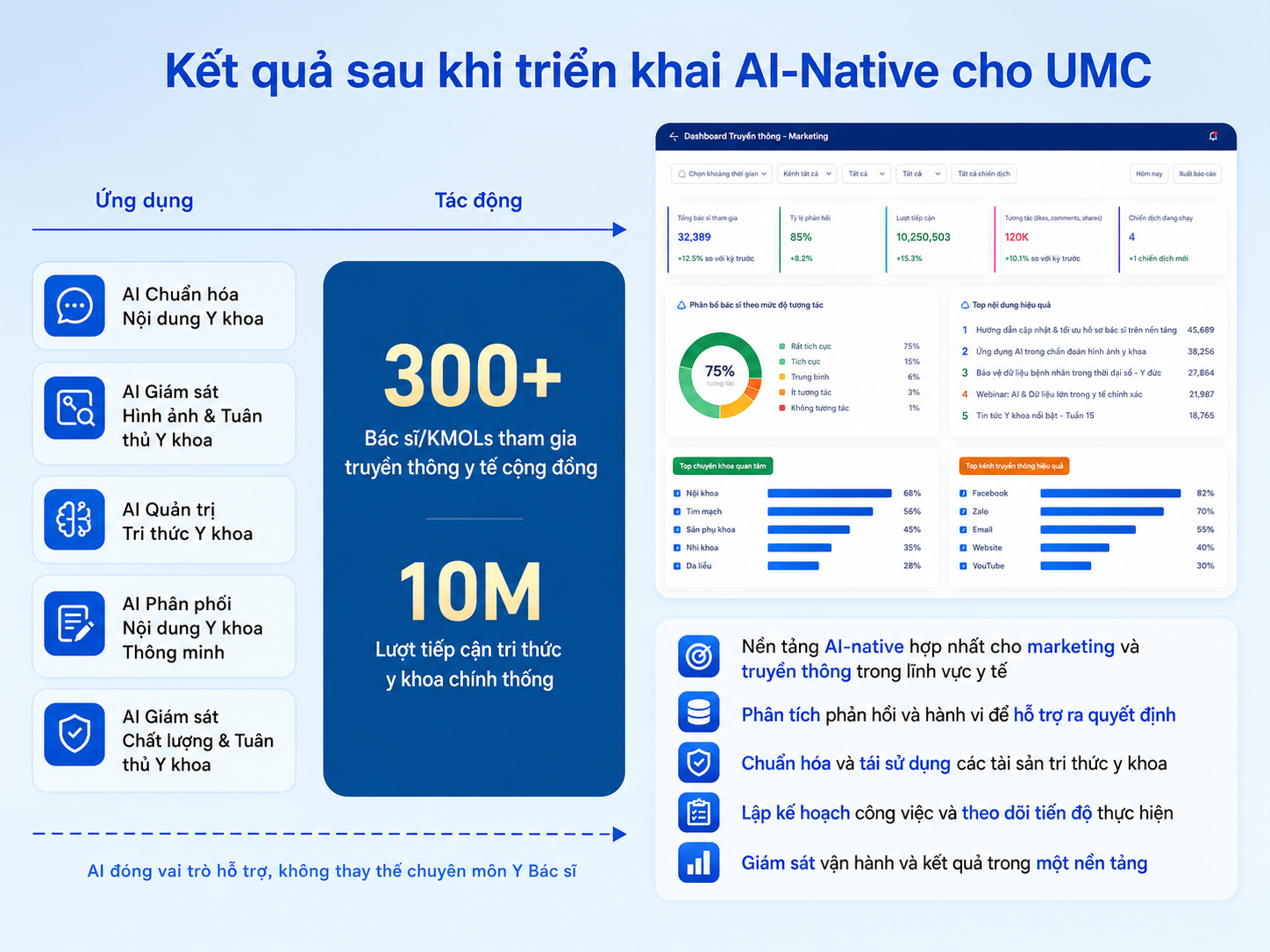
With the AI solution for UMC, Easy AI enables the hospital to construct a digital operational engine that links interactions, data, and analytics. The value extends beyond embedding a website chatbot; it provides systematic control and monetization of user behavior data.
For the Public: The system makes accessing medical information faster, more convenient, and easily accessible. Users can submit questions directly, receive instant responses for routine queries, and get routed to authoritative information sources.
For Hospital Operations Staff: The AI reduces the burden of repetitive inquiries, tracks evolving user demands, and provides structured data to refine content strategies. Previously scattered channel data is now centralized and analyzed within a single interface.
For Hospital Administration: The platform delivers clear visibility into digital user behavior, optimizing the lookup experience, raising healthcare communication standards, and proactively delivering official medical knowledge to the community.
5. Conclusion
The AI solution for UMC demonstrates how an AI-native Platform empowers hospitals to control digital user behavior, elevate information lookup capabilities, and improve data governance efficiency.
Through three core modules—AI Chatbot & Livechat, Customer 360/CDP, and Analytics, Reporting & Forecasting—Easy AI enables University Medical Center HCMC to establish a support framework that accelerates public access to information while deepening hospital insights into community needs, behaviors, and interest trends.
As digital healthcare advances rapidly, healthcare AI chatbots represent much more than automated reply scripts. When deployed strategically, the UMC AI chatbot becomes an integral part of an AI-native platform, helping the hospital manage interactions, leverage data, and enhance the quality of official medical communications. This provides a sustainable, practical, and controllable blueprint for organizations seeking high-value healthcare AI solutions.
If your enterprise or healthcare organization is seeking a practical healthcare AI solution with real-world execution capabilities, Easy AI can partner with you from problem consultation and workflow design to full AI deployment tailored to your operating model. Contact Easy AI today right here.