

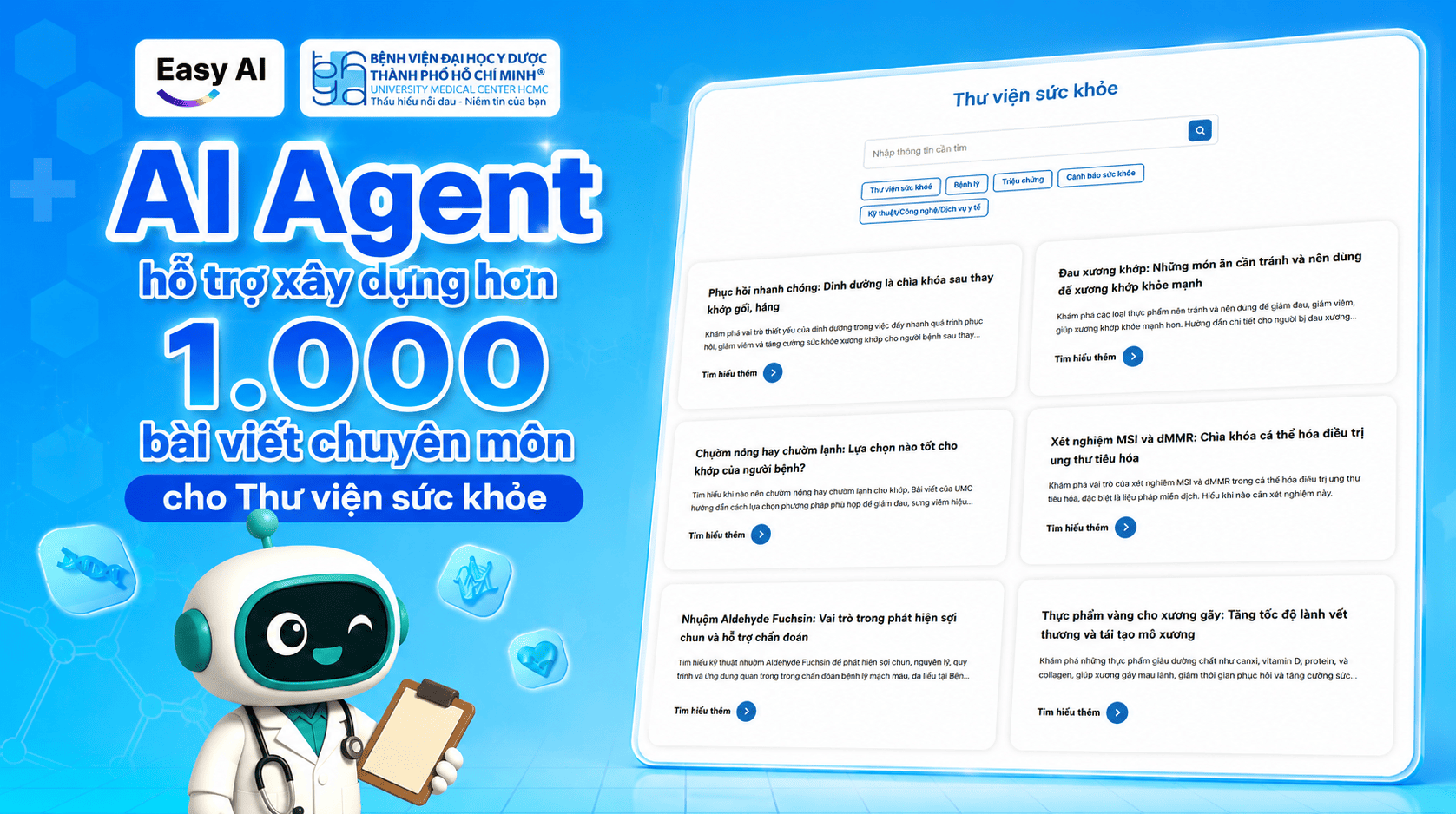
AI Content-Writing Agent for UMC: Over 1,000 Articles Created
1. When hospitals must become trusted sources of authoritative health information
Healthcare is one of the sectors most affected by digital transformation, but it is also one of the sectors at greatest risk when inaccurate information spreads. The WHO defines an “infodemic” as an overload of information, including false or misleading information in digital and physical environments. This phenomenon can cause confusion, encourage risky behavior, and erode trust in health authorities.
In this context, hospitals must do more than provide medical care: they must also serve as “knowledge hubs” for the community. People are increasingly turning to the internet to look up symptoms, diseases, treatments, and health advice. But when medical information is misinterpreted, lacks context, or is overly commercialized, the consequences go beyond a low-quality article. They can include misunderstandings about healthcare, delayed treatment, or a loss of trust in healthcare providers.
At the international level, the WHO emphasizes that digital health initiatives need to be guided by an integrated strategy covering financial, organizational, human, and technological resources. The OECD also notes that digital health, including AI and telemedicine, is playing an increasingly important role in healthcare systems, but implementation must go hand in hand with risk management, equity, and appropriate implementation costs.
This is especially true for hospitals. Medical AI writing cannot simply be a tool to “write faster.” It must be designed as a controlled operational capability: one that understands medical context, respects professional processes, protects data, and ensures that people retain final decision-making authority.
2. UMC’s challenge: Standardizing medical knowledge as the foundation for sustainable healthcare
The University Medical Center Ho Chi Minh City (UMC) is a Grade I public hospital specializing in advanced multidisciplinary care, as well as a training, research, and treatment institution affiliated with the University of Medicine and Pharmacy at Ho Chi Minh City. With its extensive expertise, UMC continuously updates and accumulates a substantial body of medical documents, knowledge, and experience across multiple specialties. However, these knowledge resources primarily support clinical practice, training, and internal operations. They have not yet been fully organized into content that is accessible, easy to understand, and relevant to the public and community.
This was a major challenge in implementing UMC’s AI content-writing agent. Unlike ordinary commercial sectors, medical content requires a high level of accuracy, careful wording, rigorous review processes, and the ability to control knowledge sources. Every AI-assisted piece of content must be professionally accurate while remaining accessible enough for people to understand and apply in their everyday healthcare.
During implementation, we identified four key aspects of UMC’s challenge:
- A large, fragmented body of knowledge: The medical knowledge of a specialized multidisciplinary hospital spans numerous fields, from diseases, symptoms, diagnosis, and treatment to post-treatment care and prevention. Without structured organization, knowledge can become scattered across departments, individuals, or separate communication campaigns, making it difficult to manage, update, and reuse over time.
- The gap between professional and public language: Doctors and healthcare professionals have deep expertise, while the public needs information explained in everyday language that is clear and focused. This is a distinct challenge in health communication: content must be simplified to reach a broad audience without distorting medical facts or creating misunderstandings.
- Strict review requirements: Medical content cannot follow the same publishing process as general communications content. Every article needs mechanisms for professional review, editorial permissions, source tracking, and quality control before it reaches the community. These safeguards are essential to ensure that content is accurate, safe, and aligned with the hospital’s professional standards.
- The need to build trust in digital environments: As people receive health information from many different sources, hospitals need to proactively provide authoritative, accessible, and reliable knowledge. When information is standardized and shared appropriately, UMC can do more than meet people’s information needs: it can proactively guide medical knowledge, strengthen trust in the hospital, and contribute to a sustainable foundation for community health.
3. Easy AI’s solution: AI content-writing agent for UMC — an assistant for medical experts
The AI-powered Health Communication Library project was developed by UMC’s Communications Center in collaboration with Easy AI and JAMstack Vietnam. It operates on three pillars: medical experts are responsible for reviewing content; the AI content-writing agent for UMC supports data processing, language, and presentation optimization; and communications ensure that content reaches the community in an appropriate, human-centered, and effective way.
A key strength of this model is that the AI content-writing agent for UMC does not “play doctor.” AI handles tasks that can be standardized or repeated, or that require rapid data and language processing. Doctors and the professional council retain decision-making authority over the final content. Easy AI defines these roles clearly: AI handles frequently asked questions and supports repetitive tasks such as article writing, ideation, data analysis, and surfacing alerts or insights. People handle sensitive and complex issues, provide final oversight, and contribute medical and industry expertise.
4. How the AI content-writing agent for UMC works
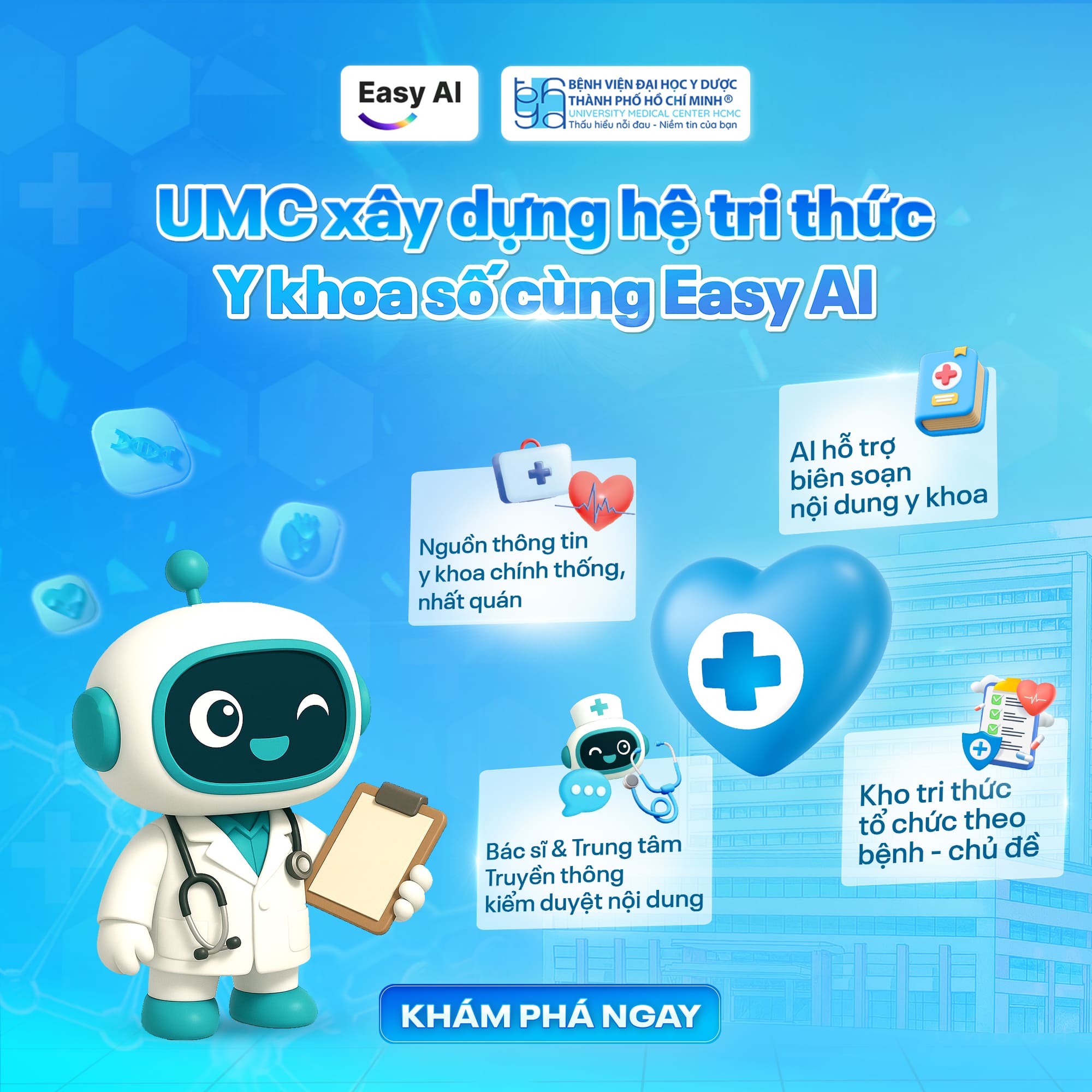
In the UMC project, this structure can be understood as four layers:
4.1. Medical knowledge base layer
The AI content-writing agent for UMC supports the standardization and organization of knowledge by disease, topic, search behavior, and information needs. This is a foundational step in turning the hospital’s professional knowledge into a digital asset that can be reused over time.
4.2. Content drafting support layer
The AI agent helps doctors and communications teams develop content drafts in more accessible language. For complex professional topics, AI reduces the time required for initial tasks such as structuring articles, explaining terminology, suggesting layouts, and standardizing presentation.
4.3. Professional review layer
Content supported by AI still goes through review by medical experts. This is an important distinction between “AI-generated content” and “medical AI writing.” In the UMC project, the hospital’s Expert Council rigorously reviews all content. This safeguards professional quality while helping the hospital maintain its professional accountability and public trust.
4.4. Distribution and information-access layer
Once finalized, content is integrated into the website and AI chatbot, making it easier for people to look up authoritative, safe, and convenient information about diseases, symptoms, and healthcare.
This step turns an internal knowledge base into a digital touchpoint for the community. People no longer have to “filter” through thousands of inconsistent information sources. Instead, they can access a centralized reference source from the hospital.
5. Implementation results: More than 1,000 expert articles in five months
The UMC Health Library editorial team included 267 doctors, nurses, and healthcare professionals. In five months of implementation, the team produced more than 1,000 expert articles with support from AI technology. This result shows that AI can deliver clear value in healthcare when assigned the right role. The AI content-writing agent for UMC accelerates language-processing tasks, standardizes content structures, and supports knowledge organization, while doctors retain final professional oversight.
From an operational perspective, the project delivered four key benefits:
- First, it accelerated the production of authoritative medical knowledge. Rather than starting with a blank page, healthcare and communications teams can work from AI-suggested content structures, then focus on review and professional refinement.
- Second, it standardized how medical knowledge is explained. Specialized terminology is translated into more accessible language, helping people understand information without compromising the necessary accuracy.
- Third, it created a controlled knowledge base. Content is no longer scattered across individual communication campaigns; it is organized into a centralized reference source that can be updated, expanded, and reused.
- Fourth, it affirmed UMC’s commitment to making knowledge the foundation of sustainable healthcare. The Health Communication Library not only helps share authoritative information with the community but also lays the groundwork for the hospital’s digital healthcare legacy.
6. Easy AI’s capabilities in implementing medical AI agents in Vietnam
Easy AI demonstrated its ability to implement AI in a healthcare environment through the UMC project, which required a high level of expertise, data management, review processes, and scalability. Easy AI did not approach this as a standalone chatbot project. Instead, it built an AI content-writing agent for UMC to support the entire health communication process: standardizing knowledge, supporting content drafting, managing content, reviewing it, and distributing it through the website and AI chatbot.
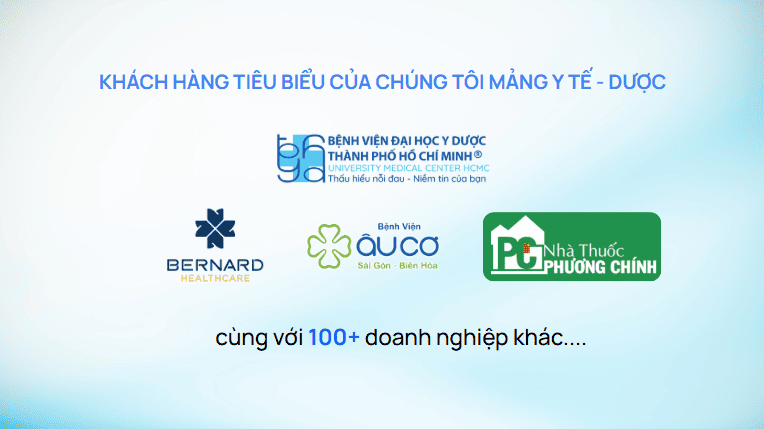
At the same time, major customers in the healthcare and pharmaceutical sectors are also implementing solutions with Easy AI and have reported positive outcomes from applying AI agents to communications operations, customer care, and data management.
7. Recommendations for organizations before implementing a medical AI agent
The UMC use case offers five lessons for hospitals considering AI solutions:
- Choose use cases with clear value and manageable risk: Hospitals should start with use cases that have available data, clear processes, and measurable outcomes, such as standardizing medical knowledge, supporting content drafting, analyzing patient feedback, or providing a chatbot for authoritative information.
- Design a “AI supports, experts decide” model: AI can write medical articles, but doctors or a professional council must review medical content before publication.
- Build a standardized knowledge base before expanding AI: AI chatbots and assistants are only reliable when they operate using knowledge sources that have been reviewed, updated, and organized in a structured way.
- Prioritize secure data architecture: For sensitive healthcare data, hospitals need access controls, logging, data governance, and appropriate infrastructure, such as private cloud or on-premise, when needed.
- Measure AI using operational KPIs: Hospitals should track not only chat volume or the number of articles, but also processing time, content approval rates, knowledge reuse, response quality, and the ability to detect risky topics early.
8. Conclusion: Easy AI partners with hospitals in the digital health knowledge era
Easy AI provides an AI-native platform specialized for healthcare to optimize operations, improve care quality, and support more effective decision-making. The UMC AI content-writing agent project, which created the digital Health Library for the University Medical Center Ho Chi Minh City, shows that medical AI agents can deliver significant value when assigned the right role: they do not replace doctors, automate blindly, or pursue publishing speed at any cost. Instead, AI agents act as knowledge assistants, helping hospitals standardize content, accelerate drafting, organize knowledge bases, support review, and deliver information.
If your hospital, clinic, or healthcare business wants to standardize knowledge, improve operations with AI, and build a sustainable digital healthcare ecosystem, contact Easy AI to work with our expert team on everything from strategic consulting and process design to real-world implementation and operations.