
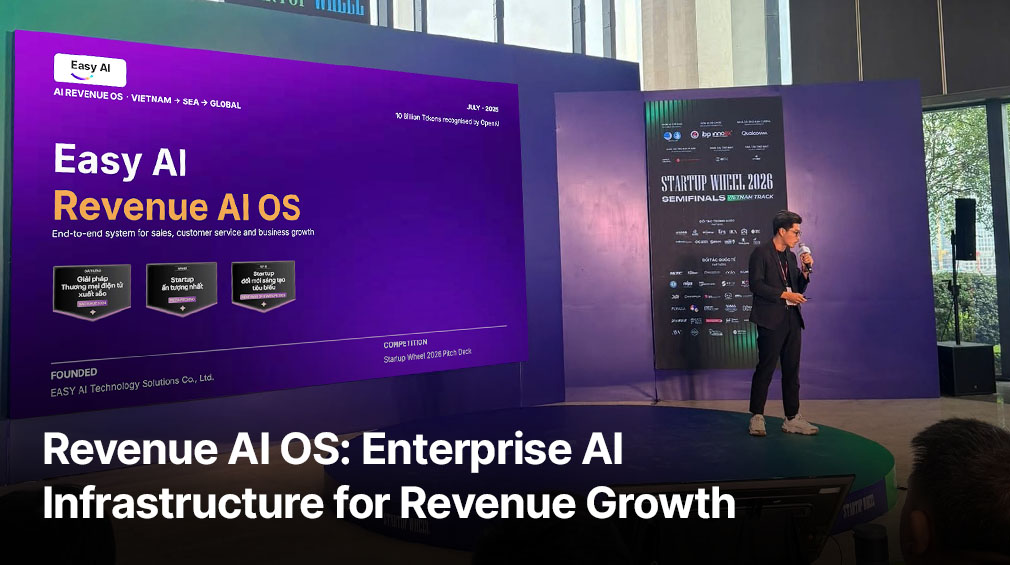
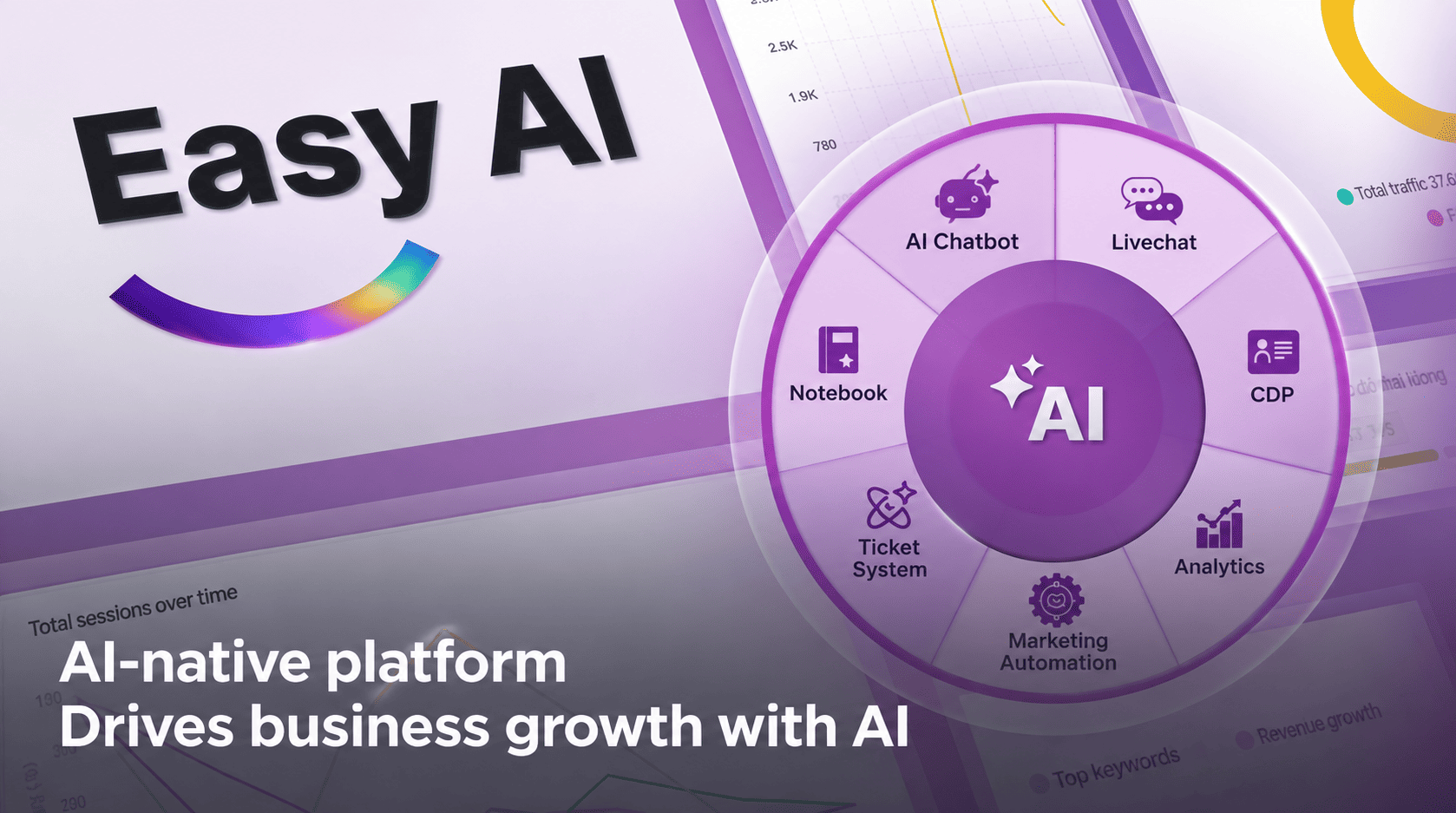
AI-Native Platform – The Key to Growth in the AI Era
An AI-native platform helps businesses optimize operations, personalize customer experiences, and drive sustainable revenue growth in the era of data and artificial intelligence.
Topics
Share knowledge, practical experience, and stories of AI adoption in business, from technology trends to how AI supports sales, customer service, and daily operations.
38 results
Topics
An AI-native platform helps businesses optimize operations, personalize customer experiences, and drive sustainable revenue growth in the era of data and artificial intelligence.
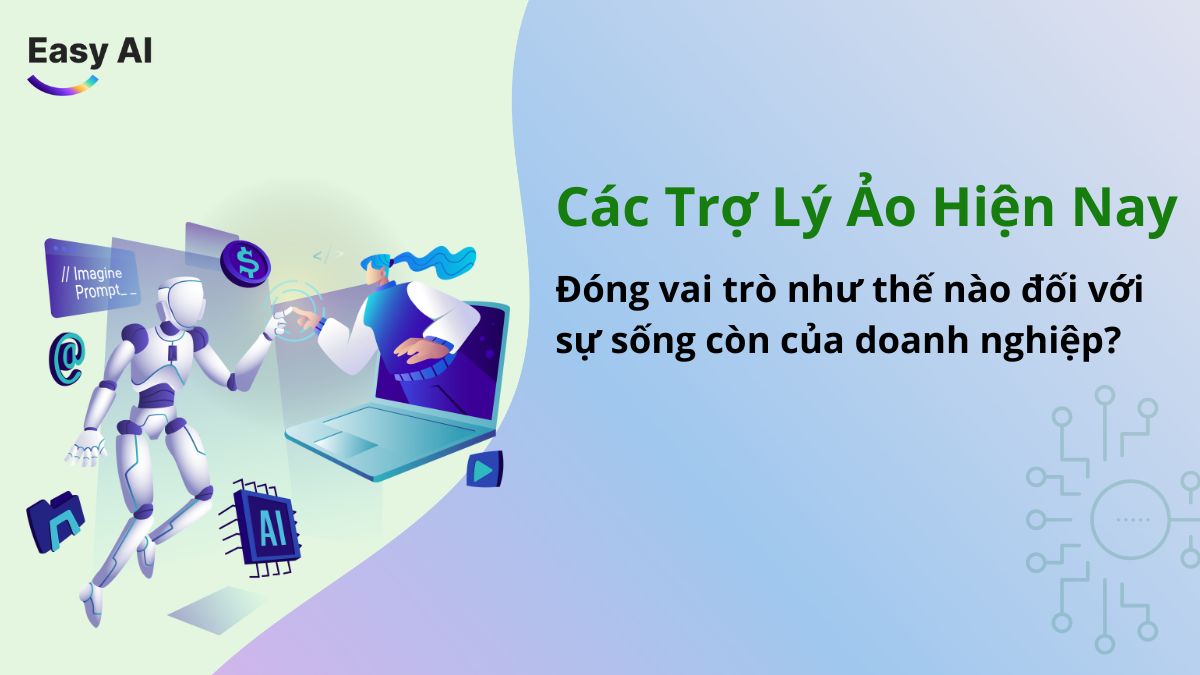
Virtual assistants are no longer a distant concept – they have become an essential part of how many businesses operate. Built on artificial intelligence (AI) platforms, especially AI Agents, these assistants are unlocking new opportunities to streamline workflows, increase efficiency, and deliver superior customer experiences.
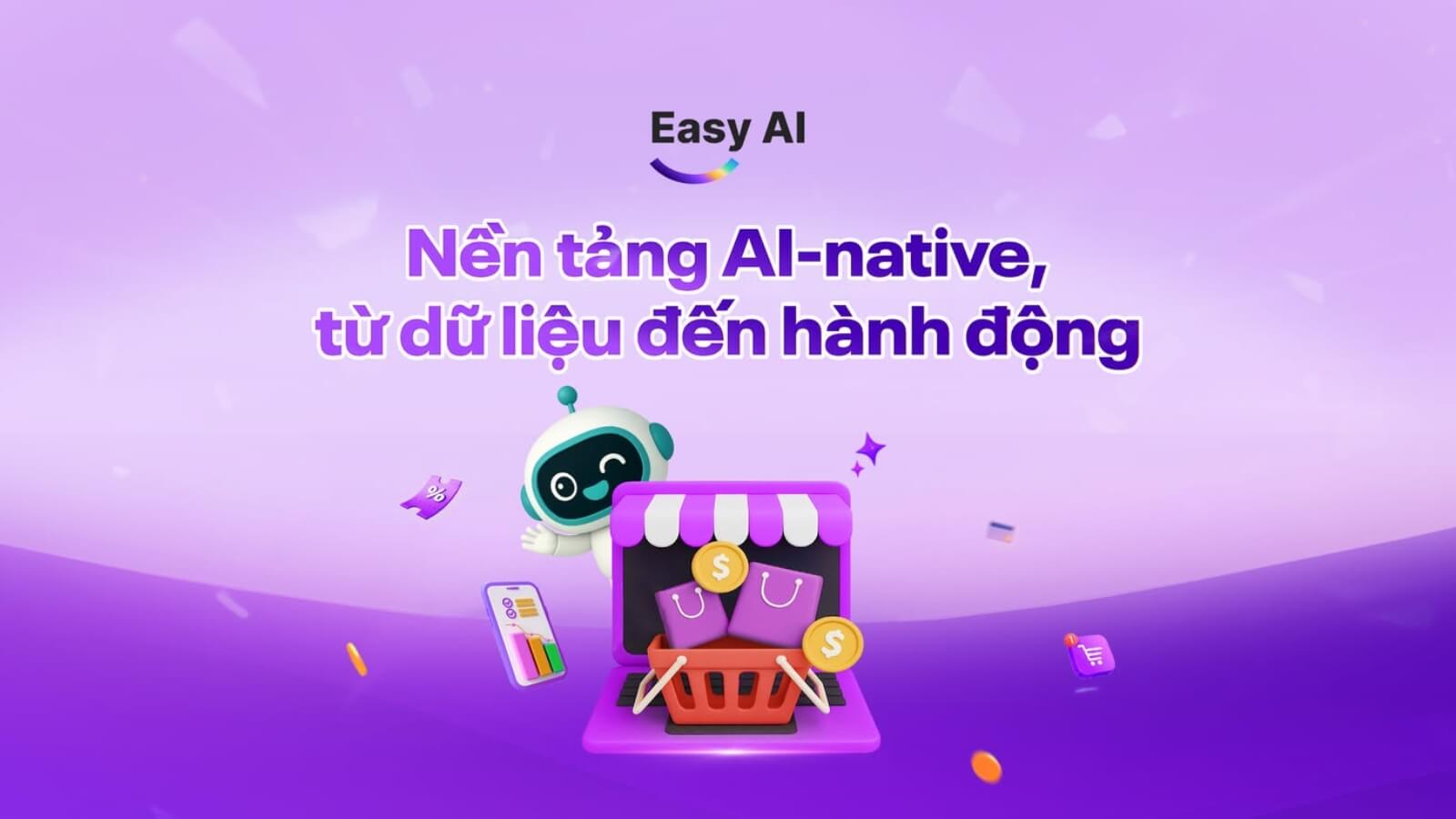
Easy AI chính thức giới thiệu Nền tảng AI-Native Easy AI, một nền tảng trí tuệ nhân tạo được thiết kế để giúp doanh nghiệp Việt ứng dụng AI một cách dễ dàng – nhanh chóng – hiệu quả – an toàn. Kiến trúc nền tảng được xây dựng theo 4 tầng: Tầng nền tảng – Tầng dữ liệu – Bộ xử lý trung tâm – Tầng ứng dụng, giúp AI vận hành xuyên suốt toàn bộ hệ thống doanh nghiệp.

The benefits of artificial intelligence are becoming increasingly evident in today’s business landscape. From simple applications like customer-support chatbots to more advanced systems such as AI Agents that automate workflows, AI is opening a new era for businesses.

Have you ever imagined an education system where each student can learn at their own pace and in their own way? A learning environment where teachers can spend more time interacting with and personally supporting every single learner?

Virtual assistants are gradually becoming an essential part of modern life. They offer a wide range of benefits, from supporting daily tasks to optimizing complex workflows. In this article, we will explore how virtual assistants are being used, the advantages they bring, and the trends shaping their future development.

Have you ever wondered what virtual assistants AI has created that are transforming our daily lives and work? From simple chatbots to advanced assistants capable of understanding complex natural language, artificial intelligence (AI) has revolutionized the way we interact with technology.

In recent years, artificial intelligence (AI) has become an essential part of every industry and sector. One of the most notable applications of AI today is generative AI.

Artificial intelligence (AI) is no longer an unfamiliar concept. It is increasingly present in every aspect of modern life. We often hear about AI in self-driving cars, intelligent virtual assistants, and facial recognition systems.

Artificial intelligence in education is no longer a distant concept but has become an inevitable trend, ushering in a promising era of Education 4.0. From personalizing learning experiences and optimizing management processes to providing tools for teaching and assessment, artificial intelligence (AI) is steadily proving its essential role in enhancing the quality and effectiveness of education.
Amid the ongoing Industry 4.0 revolution, artificial intelligence (AI) is no longer a distant concept but has become a crucial factor, determining the success or failure of many AI-powered businesses across all sectors.

In the era of rapid digital transformation, AI has emerged as a beacon in the field of artificial intelligence technology, especially with the remarkable development of AI Agent.

Netflix uses AI to deliver highly personalized content, with approximately 75–80% of users’ viewing time driven by AI-generated recommendations, increasing engagement and reducing churn.

Spotify leverages AI to personalize music discovery and playlist creation, using machine learning to analyze user data and provide relevant recommendations, significantly increasing engagement and subscriber numbers.
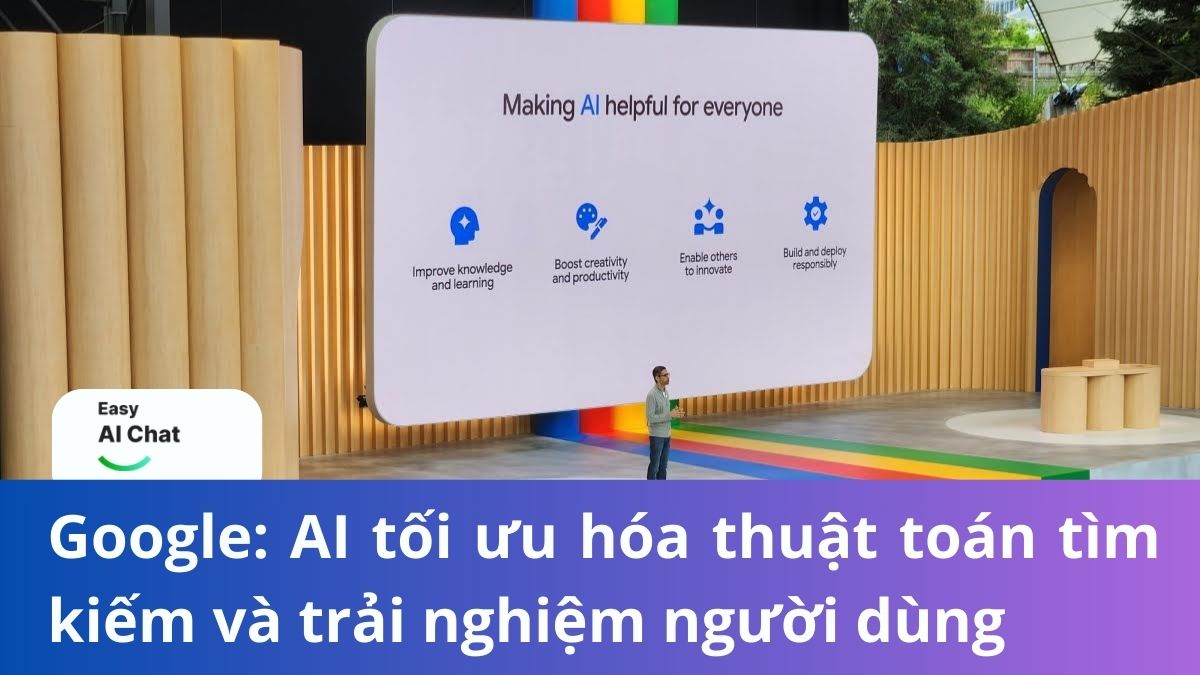
Google leverages advanced AI, including deep learning and natural language processing (NLP), to optimize search algorithms, ensure accurate and relevant results, enhance user experience with features like featured snippets, and maintain its leading position in the search market.
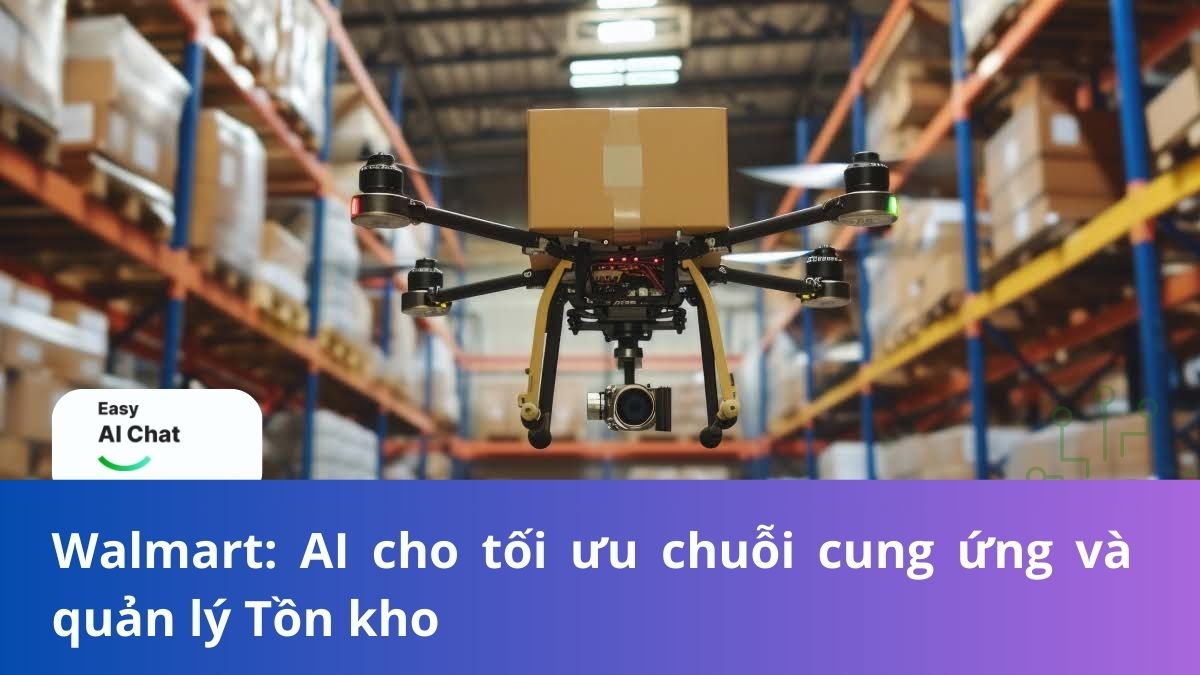
Walmart applies AI to optimize its supply chain, leveraging predictive analytics and machine learning to improve inventory management, logistics, and overall efficiency, helping reduce costs and enhance customer satisfaction.

L'Oréal uses AI to transform the beauty shopping experience through personalized recommendations and virtual try-on, leveraging AR and machine learning to drive online sales and increase customer engagement.

Salesforce Einstein AI improves sales productivity by providing accurate forecasting, lead scoring, and opportunity analysis, enabling sales teams to make data-driven decisions and drive revenue growth.

The phrase “today’s AI technologies” has become an integral part of modern life and business operations. From familiar applications such as virtual assistants and customer service chatbots to more advanced solutions like big data analytics and market trend forecasting, artificial intelligence (AI) is increasingly proving its critical role in enhancing competitiveness and optimizing operational efficiency.
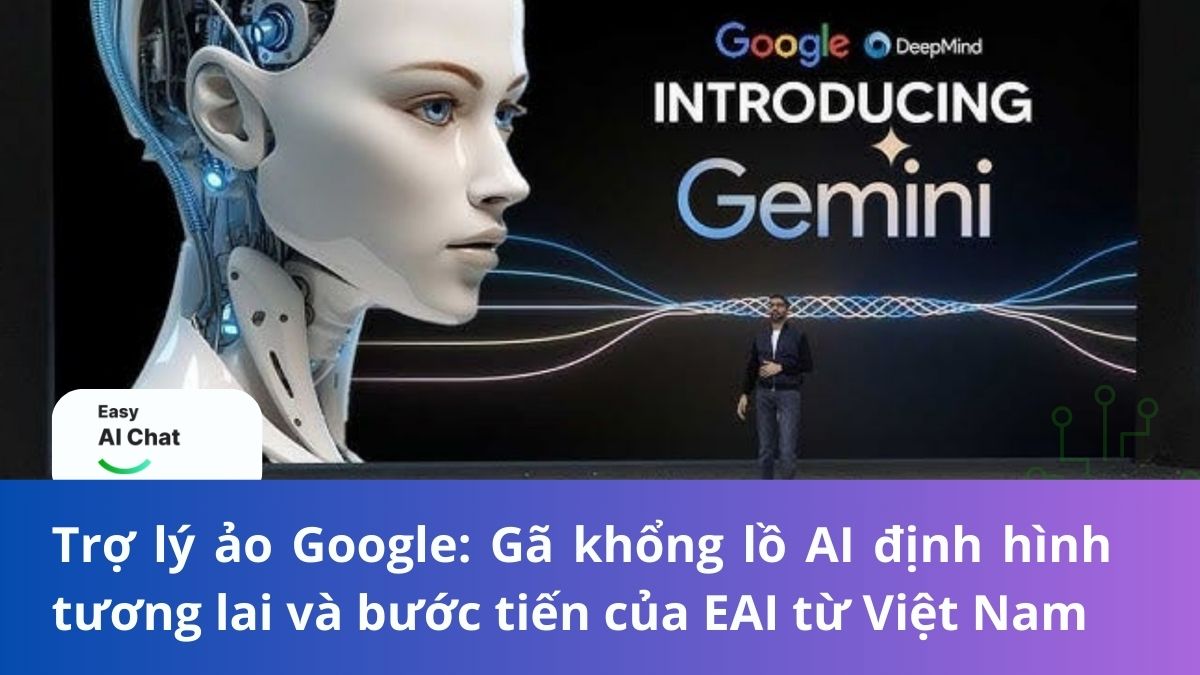
Did you know that, according to a report by eMarketer, nearly 40% of smartphone users in the United States used a voice assistant at least once a month in 2024? This figure shows that voice based interaction with machines is no longer unfamiliar, but is becoming a familiar part of the digital lives of billions of people worldwide.
Since 2023, virtual assistant roles have emerged as a highly promising and potential career field. From supporting the automation of office tasks and customer service to data analysis and decision making, AI virtual assistants are gradually transforming how businesses operate and opening a new chapter in the labor market.
AI technology in banking is becoming an essential factor in improving operational efficiency and enhancing customer experience. The banking sector is facing multiple challenges, ranging from maintaining competitiveness to ensuring information security. With the power of AI, banks can optimize workflows, thereby reducing costs and processing time.