

In the digital era, artificial intelligence (AI) is no longer a distant concept but has permeated every aspect of life. One of the most prominent and familiar AI applications is virtual assistants. In particular, Vietnamese virtual assistants are becoming a highly promising technology trend, opening up new opportunities for both users and Vietnamese businesses. This article will take an in-depth look into the world of Vietnamese virtual assistants, analyzing development trends, application potential, and the role of pioneering companies such as Easy AI.
What Are Vietnamese Virtual Assistants and Why Are They Important?
Vietnamese virtual assistants are software or applications designed to understand and respond to commands and questions in Vietnamese in a natural way. They are capable of performing various tasks such as providing information, scheduling appointments, controlling smart devices, sending messages, and even engaging in simple conversations. The biggest difference between Vietnamese virtual assistants and international ones lies in their ability to process the Vietnamese language, which is complex and diverse in context and regional accents.
Why are Vietnamese virtual assistants important?
- Convenience and ease of use: Vietnamese users can interact with technology in their native language naturally, without needing to learn complex commands or syntax.
- Improved productivity and efficiency: Vietnamese virtual assistants help automate many daily tasks, freeing users from repetitive work so they can focus on more important tasks.
- Personalized experience: Vietnamese virtual assistants can learn user habits and preferences, providing information and services tailored to each individual.
- Market potential in Vietnam: With a young, tech-savvy population and high smartphone penetration, Vietnam is a fertile market for the development of Vietnamese virtual assistants.

Global AI Trends and the Rise of Virtual Assistants
Globally, the AI market is experiencing explosive growth. According to a report by Statista, global AI market revenue is expected to reach USD 500 billion by 2024 and continue to grow rapidly in the coming years. Among these, virtual assistants are one of the fastest-growing segments.
Statistics:
- 70% of businesses are expected to deploy AI technology by 2025 (Source: Gartner).
- 80% of customer interactions are expected to be handled by AI by 2026 (Source: Gartner).
- The global virtual assistant market is expected to reach USD 19.6 billion by 2025 (Source: Grand View Research).
Global virtual assistant trends include:
- Cross-platform integration: Virtual assistants are expanding beyond smartphones to smart speakers, smart TVs, cars, wearables, and IoT devices.
- Advanced natural language processing (NLP): Virtual assistants are becoming smarter in understanding natural language, tone, and complex context.
- Specialized applications: In addition to general-purpose assistants, there is a rise in specialized assistants for sectors such as healthcare, education, finance, retail, etc.
- Focus on security and privacy: Users are increasingly concerned about personal data protection, prompting developers to enhance security and transparency.
Vietnamese Virtual Assistant Trends in Vietnam: Potential and Challenges
Vietnam is not outside the global AI trend, and the Vietnamese virtual assistant market is showing notable growth.
Statistics:
- Internet penetration in Vietnam reached 73.2% of the population in January 2024 (Source: DataReportal).
- Smartphone usage reached 70.9% of the population in January 2024 (Source: DataReportal).
- Vietnam’s digital services market is expected to reach USD 57 billion by 2025 (Source: Google and Temasek).
These figures highlight the strong potential of the Vietnamese virtual assistant market. Vietnamese users are increasingly open to technology and have growing demand for convenient and intelligent solutions.
Development trends of Vietnamese virtual assistants:
- Customer service applications: Widely used in customer service centers to automate FAQs, provide 24/7 support, and enhance user experience.
- Smart home applications: Increasingly integrated into smart home devices, enabling voice control and creating a modern living environment.
- Education and training: Acting as virtual tutors to support students with learning, providing information and answering questions.
- E-commerce applications: Helping users search for products, compare prices, and receive shopping advice.
Challenges:
- Natural language processing: Vietnamese is complex, making it difficult to develop assistants that fully understand and respond naturally.
- Security and privacy: Protecting user data and personal information remains a major concern.
- Competition from global tech giants: Companies like Google, Amazon, and Apple are also expanding Vietnamese language support, increasing competition.
Easy AI: A Pioneer in Vietnamese Virtual Assistant Development
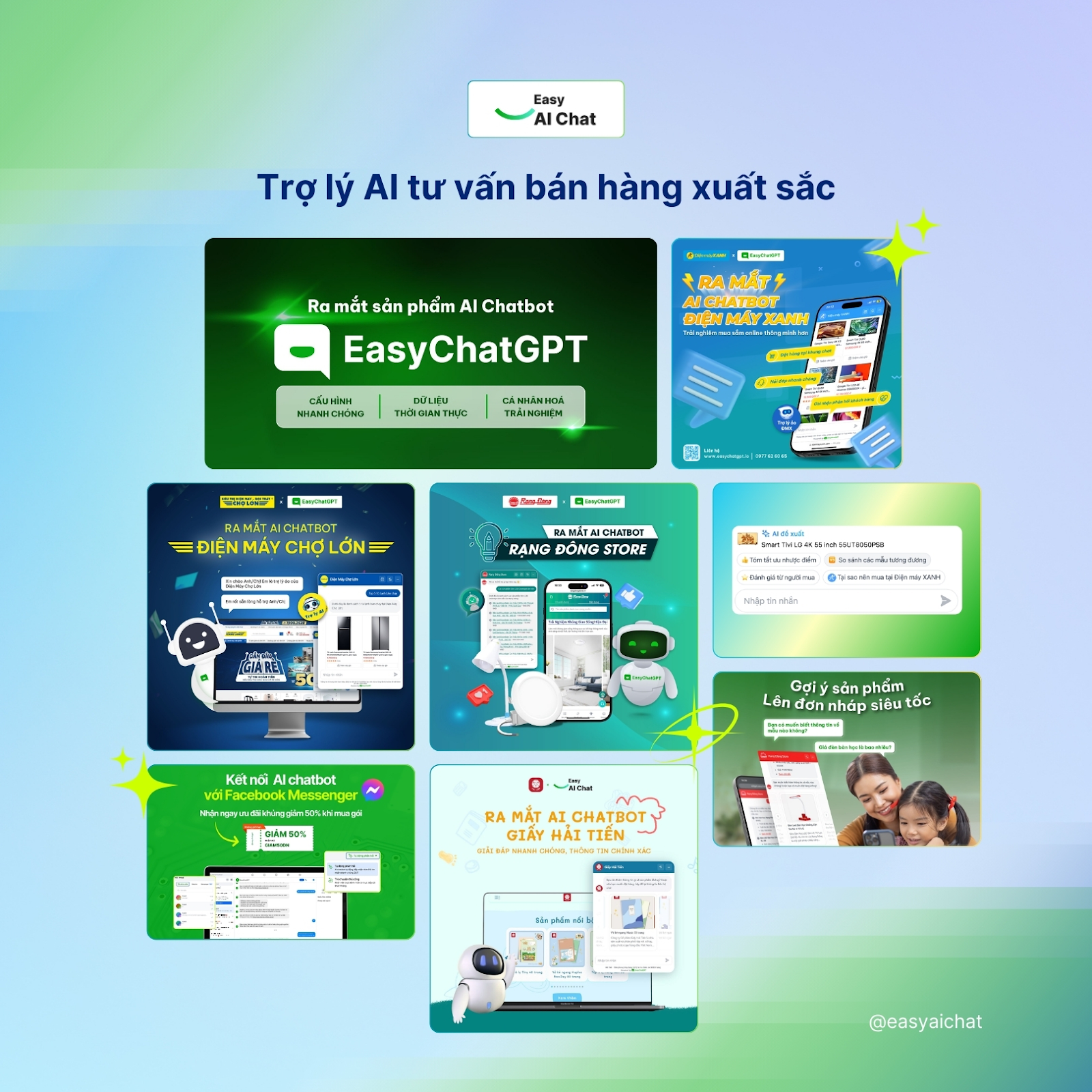
In this competitive and high-potential market, Easy AI stands out as a pioneer, delivering high-quality Vietnamese virtual assistant solutions for users and businesses.
Easy AI is a Vietnamese technology company specializing in AI research and development, particularly in natural language processing and virtual assistants. With a team of experienced engineers, Easy AI has developed impressive Vietnamese virtual assistant products recognized for strong language processing, diverse features, and user-friendly interfaces.
Key products of Easy AI include:
- EasyCall virtual assistant: A solution for customer service call centers, automating calls, reducing workload, and improving efficiency.
- EasyLife personal assistant: A smartphone-based assistant helping users manage tasks, entertainment, and daily activities.
- EasyBot development platform: A platform enabling businesses to build and customize their own Vietnamese virtual assistants.
Easy AI not only provides quality solutions but also focuses on building a partner ecosystem, collaborating with organizations to develop the Vietnamese virtual assistant market.
>>> Try Easy AI here: https://geteasy.ai/en/book-a-demo
The Future of Vietnamese Virtual Assistants: Toward a Smarter Life
The future of Vietnamese virtual assistants is very promising. With continuous advancements in AI, they will become more intelligent, versatile, and an integral part of daily life.
Future expectations:
- Natural human-like communication: Assistants will understand and respond with nuance, even recognizing emotions and intent.
- Wider integration across industries: From healthcare, education, transportation to entertainment and tourism.
- Highly personalized assistants: Each user will have a fully customized assistant based on their preferences and needs.
- A trusted companion: Beyond a tool, assistants will become companions for problem-solving, communication, and even emotional support.
Vietnamese virtual assistants represent a highly promising technology trend, bringing significant benefits to users and businesses. With the efforts of pioneers like Easy AI and strong market adoption, they are expected to transform how we interact with technology and live in the digital era. Be ready to embrace a smarter future with Vietnamese virtual assistants.